
Overview
The Race Plan defines how this athlete will race this event.
It connects preparation, execution, and review into a single system. Race Readiness prepares the athlete, Race Fueling supports the athlete, Race Environment adjusts for the conditions, Race Execution turns the plan into decisions under pressure, and Race Plan defines how the athlete intends to race.
This protocol is not just about tactics. It is about purpose, role, race intelligence, execution planning, and review.
A strong race plan creates clarity before the race, improves decision-making during the race, and gives the athlete and coach a framework for learning after the race.
The race plan is not just for the race - it is for what comes after the race.
Related protocols: Race Execution • Race Readiness • Race Fueling • Race Cooling / Environment
Who This Guide Is For
This is an athlete-facing planning protocol supported by coaches and team staff where relevant.
You do not need to have read the Racing Framework to use this protocol. If you have, Race Plan is the event-specific planning layer that connects purpose, positioning, energy use, awareness, decisions and review.
- Athletes use this to turn race information into simple decisions.
- Coaches use this to connect purpose, role, course demands and learning goals.
- Teams use this to align individual development with team execution.
Protocol Guidance
This protocol provides a structured system for building and reviewing race plans.
The full protocol is a manual. The Quick Start and Checklist are the execution layer. Athletes do not need to remember every detail - they need to understand the race clearly enough to act simply.
Race plans should be specific to the rider, the event, the level of racing, the support available, and the purpose of the day. A plan for a new rider in Europe may be very different from a plan for a protected rider targeting a result.
Race Plan should connect to Race Readiness, Race Fueling, Race Cooling, Race Execution, and downstream review into training, skills, tactical practice, and athlete development.
Keep the full thinking detailed. Keep the in-race cues simple.
- Build the full plan before race day
- Reduce the plan to simple cues before the start
- Focus on key moments, not every moment
- Align the plan with role, strengths, and development needs
- Use the race plan to review performance and guide improvement
- Do not confuse a detailed plan with a usable plan
How This Protocol Fits
| Question | What this protocol defines | Useful linked protocol |
|---|---|---|
| What is the purpose? | Goal, role and success definition | Race Plan |
| Where are the key moments? | Course features, timing, positioning and likely selections | Race Plan |
| Where is energy worth spending? | Effort priorities and tactical decisions | Race Fueling / Race Execution |
| What if the race changes? | Plan A, Plan B and if/then decisions | Race Plan |
| What do I need ready? | Equipment, fueling, cooling, logistics and communication | Race Readiness |
| What will I learn? | Post-race review points | Race Review |
Race Plan Rules
These rules summarise the whole protocol.
- Plan before race day, not at the start line
- Keep the plan simple enough to remember
- Focus on key moments, not every moment
- Position before the problem, not in it
- Do not spend energy where the race is loud but not meaningful
- Use the course to shape the race, not just survive it
- Know your role and your purpose
- Know what success looks like before you start
- Review the race against the plan, not just the result
- Translate race review into training, skills, and practice
Race Plan Quick Start
Use this section to build the simple version of the plan.
This is the version the athlete should be able to remember on race day. The full protocol explains the thinking underneath it.
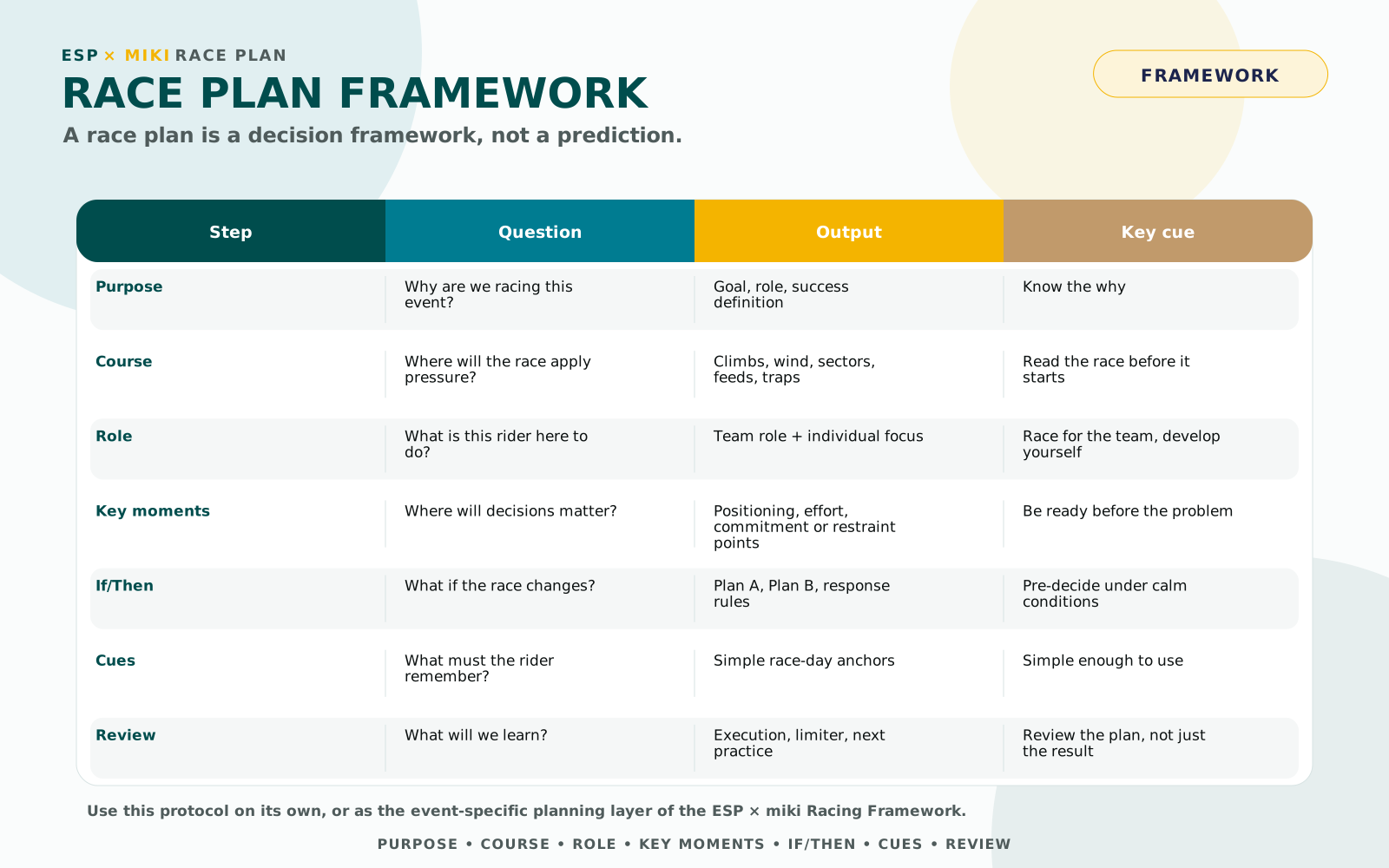
Quick Start Build
| Element | What to define | Example prompt |
|---|---|---|
| Race Purpose | Why this race matters for this athlete | Learn, develop, support team, or target result? |
| Role | What the athlete is there to do | Protected rider, support rider, breakaway rider, learner? |
| Race Shape | How the race is likely to unfold | Hard from the gun, selective, controlled, chaotic, tactical? |
| 3 Key Moments | Where the race matters most | First climb, first gravel entry, exposed crosswind section? |
| 3 Key Actions | What the athlete must do well | Move up early, fuel early, protect position? |
| Non-Negotiables | What must not break | Do not get caught behind splits, do not miss feeds, stay calm? |
| Key Risks | What is most likely to go wrong | Poor position, wasted matches, missed bottle, panic? |
| Primary Cue | One simple line to anchor the race | Position early. Stay smooth. Commit late. |
Race Card
| Field | Your Race Card |
|---|---|
| Role | |
| 3 Moments | |
| 3 Actions | |
| 2 Risks | |
| 1 Cue |
Visual Quick Start
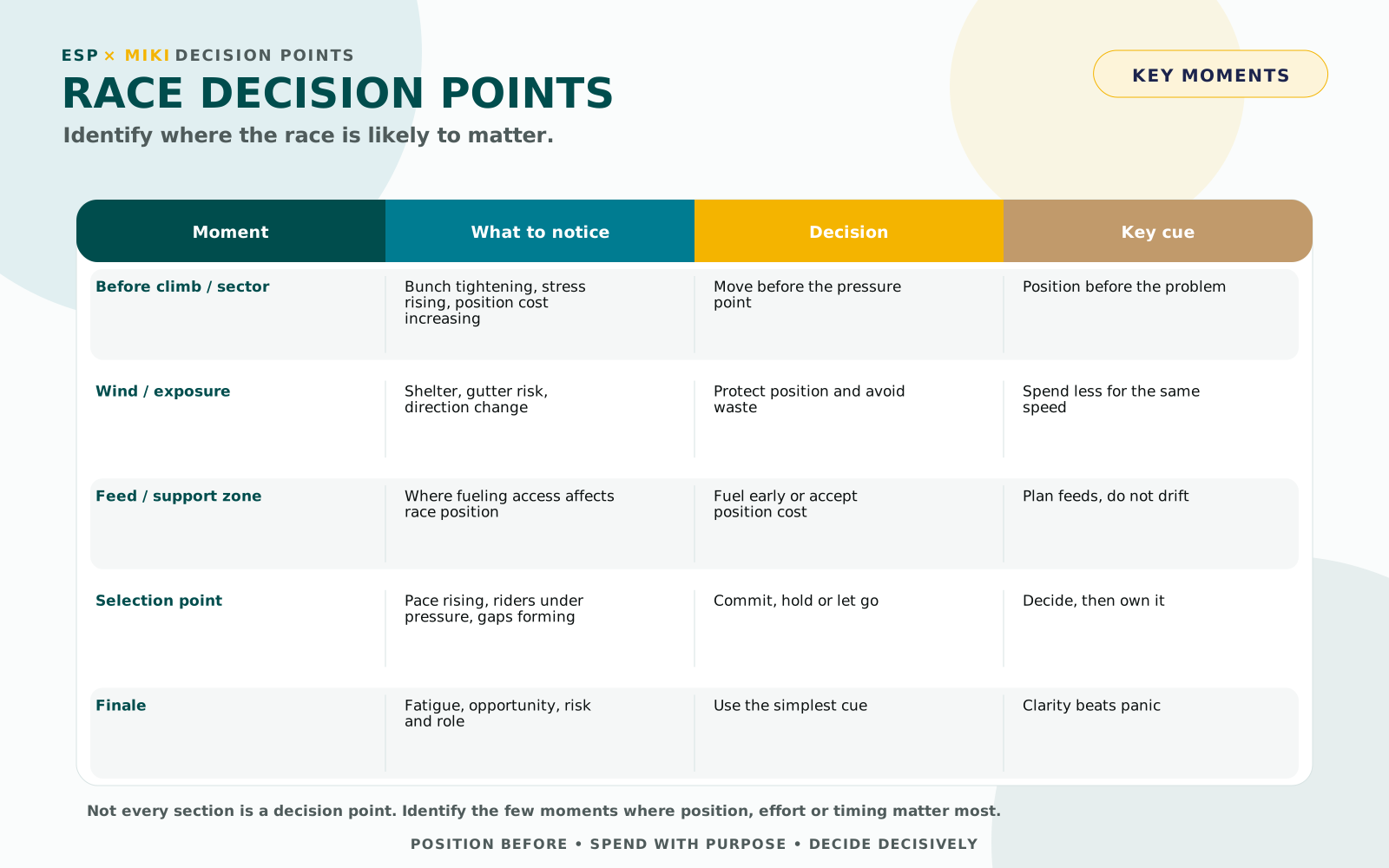
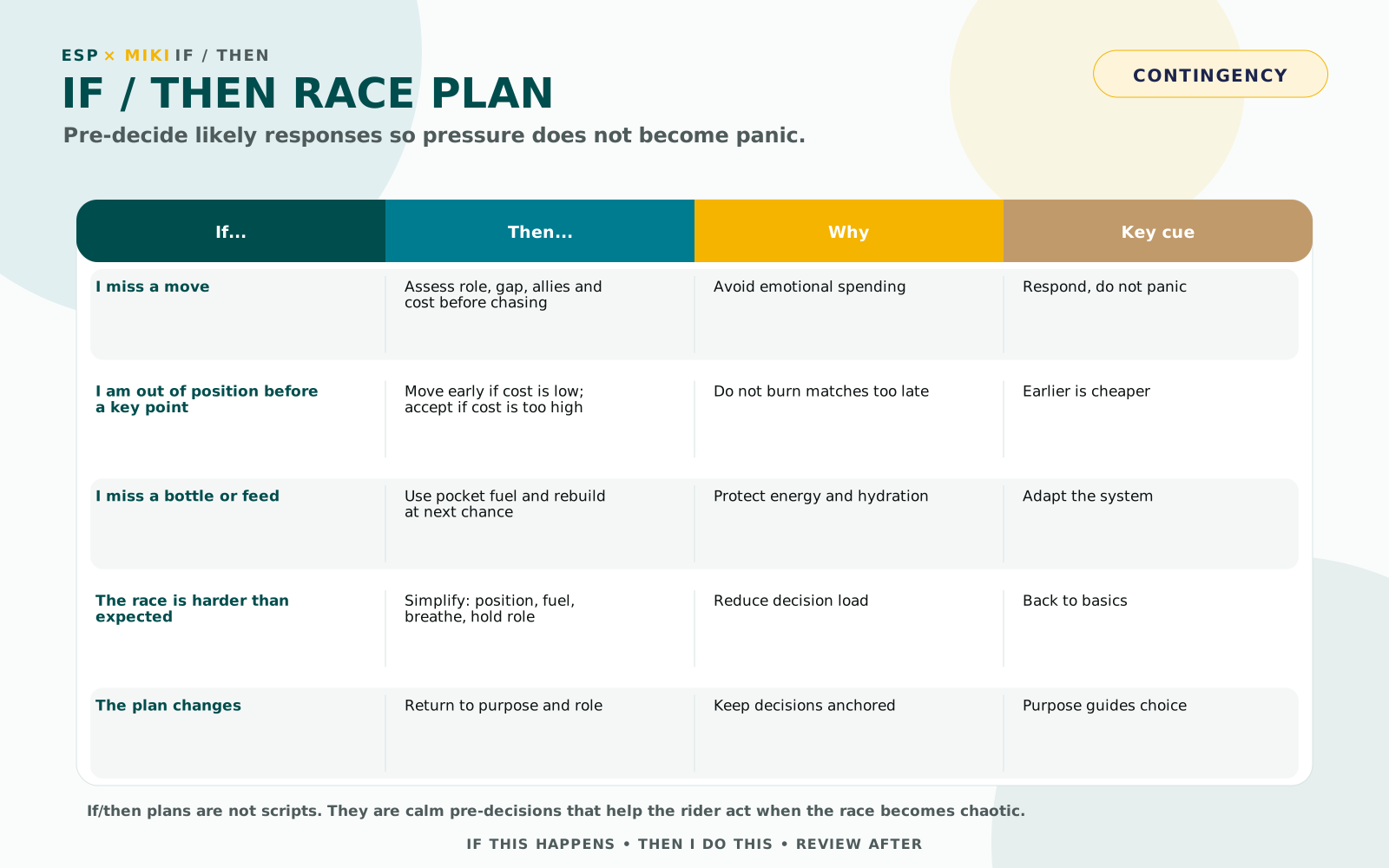
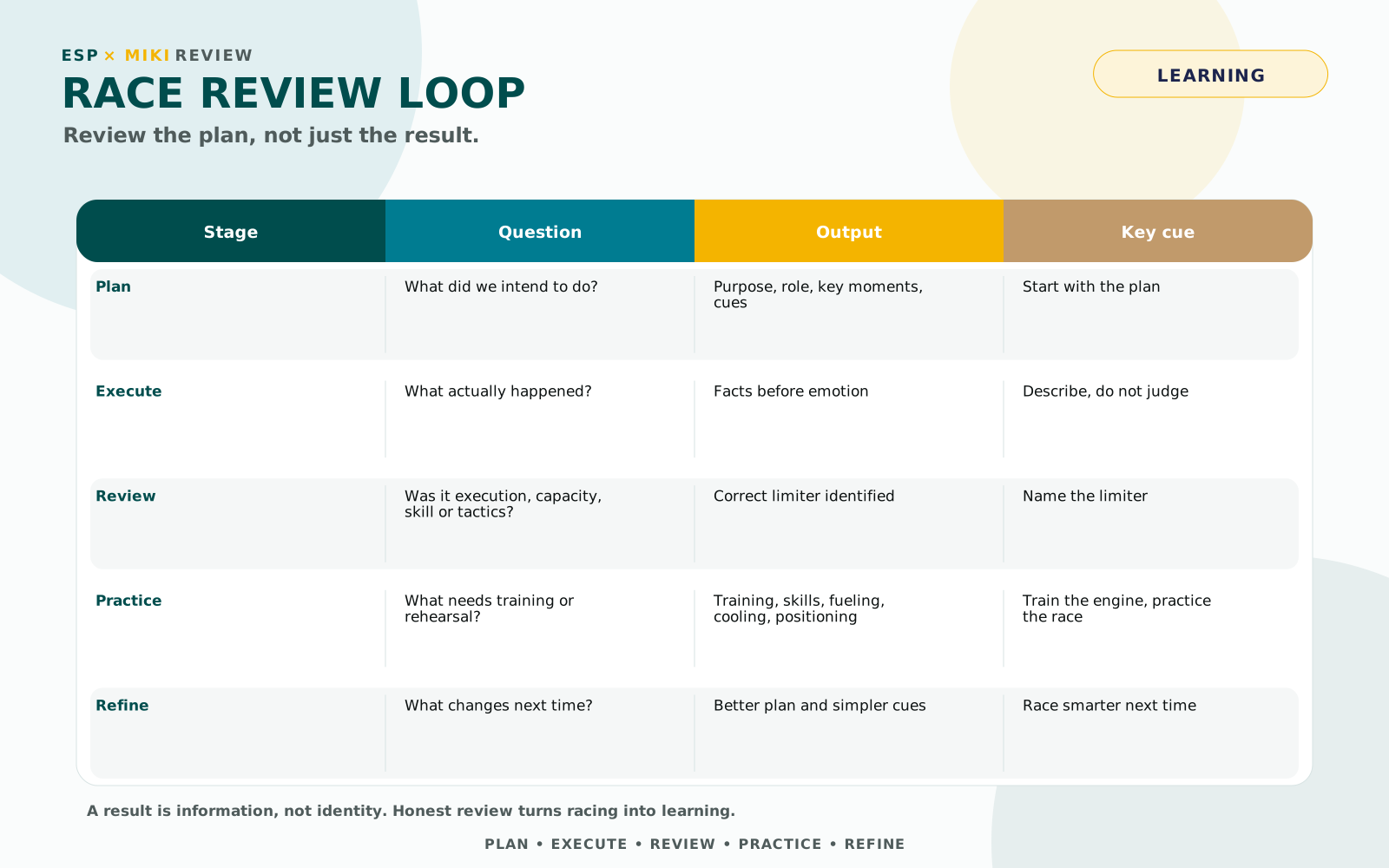
Use these visuals as the field guide: build the plan, identify decision points, prepare if/then responses and review the race honestly afterwards.
Race Plan Checklist
Use this checklist before racing.
The aim is not to tick every possible box. The aim is to confirm that the athlete understands the race clearly enough to race with intent.
Plan Understanding Checklist
- I know why I am doing this race
- I know my role
- I understand the likely race shape
- I know the 3 key moments of the race
- I know where position matters most
- I know where I can use my strengths
- I know where I must save energy
- I know the major risks and likely traps
Execution Readiness Checklist
- I have clear non-negotiables
- I know my primary cue
- I know my fueling and support plan
- I know my contingency plan if something goes wrong
- I know how I will define success after the race
Race Purpose & Context
Every race plan should begin with one question: What is the purpose of this race for this athlete right now?
The same race can serve different purposes for different riders. A new rider may be there to learn, a developing rider may be there to practice specific skills, a protected rider may be there to target an outcome, and a support rider may be there to serve a team plan while still learning inside that role.
Race plans should be as goal-focused and process-driven as possible. Outcome matters, but outcome is not the only measure of a good race.
Plan Type
| Plan Type | Primary Focus | Typical Success Lens |
|---|---|---|
| Learning / Exposure | Experience the race and engage with it | Did the rider get involved, move up, and learn the demands? |
| Development / Skill | Practice specific race skills under pressure | Did the rider execute the target skill or behaviour? |
| Performance / Result | Target a race outcome | Did the rider arrive in position to deliver the planned result? |
| Team Role | Execute a role within team objectives | Did the rider fulfil the role while still learning inside it? |
Purpose Questions
- Why is this rider doing this race?
- What would make this race useful even if the result is not strong?
- What is the main developmental aim of the day?
- Is this a learning race, a practice race, a support race, or a target race?
- What outcome matters, and what process matters more?
Goal Hierarchy
| Layer | Question |
|---|---|
| Race Purpose | Why am I here? |
| Primary Objective | What am I trying to do in this race? |
| Success Markers | How will I know I did it well? |
Examples
| Athlete Context | Primary Objective | Process-Based Success |
|---|---|---|
| New rider in Europe | Get involved and learn bunch movement | Moved up before key sectors, held wheels, stayed engaged |
| Developing gravel rider | Practice race positioning and technical confidence | Entered key sectors well, descended with commitment, fueled consistently |
| Protected rider | Arrive at finale in best possible position | Stayed protected, conserved energy, hit key moments in position |
| Support rider | Execute team role while growing race craft | Covered moves, positioned leader, still learned where the race mattered |
Define the Race
The race plan starts by defining what kind of race this actually is.
The athlete should not just know the distance or elevation. They should understand the likely demands, the type of stress, the support available, and how the race is likely to unfold.
Race Definition
| Element | What to Define | Why it Matters |
|---|---|---|
| Race Type | Road race, gravel, criterium, MTB, stage, TT, kermesse | Changes support, tactics, technical demands, and race flow |
| Duration | Likely race time, not just official distance | Shapes fueling, pacing, and timing of key efforts |
| Terrain | Flat, rolling, mountainous, technical, mixed surface | Shapes where the race can split and where strengths matter |
| Support Level | Fully supported, partially supported, self-supported | Changes logistics, fueling, and risk tolerance |
| Weather | Heat, cold, wind, rain, exposure | Changes race cost, setup, and tactical value of sections |
Race Shape Questions
- Is this likely to be hard from the gun or selective later?
- Will terrain decide the race, or will positioning and chaos decide it first?
- Is this likely to be attritional, tactical, stochastic, or controlled?
- Does the finish favour a group, a reduced selection, or a solo rider?
- How much support will the athlete really have in this race?
Support Level
| Support Level | What It Means for Planning |
|---|---|
| Full team support | More options for bottles, equipment, and tactical protection |
| Partial support | Some support exists, but the athlete must still self-manage |
| Self-supported | The athlete must plan more conservatively and independently |
Applied Reminder
- A race is not defined only by the profile
- The same course can race very differently depending on level, weather, and field
- Define the race the athlete is actually entering, not the race that exists on paper
Course Analysis & Race Intelligence
This section turns course information into usable race intelligence.
The rider should not just know where the climbs are. They should know where the race is likely to tighten, split, stall, accelerate, expose riders, or reward certain skills.
The race is often decided before riders realise it.
Tools and Preparation
- Use Veloviewer, Strava, GPX files, maps, profiles, race manuals, rider recon, and videos where possible
- Look beyond elevation profile - use maps and satellite view to understand road width, corners, surface, and exposure
- Use race manuals or tech guides to identify feed zones, sprint points, KOM points, time bonuses, sector changes, and support rules
- Use Strava or segment data to identify likely speeds, split points, and how sections are typically ridden
- Preview the course or key sections in person where possible
What to Analyse
| Course Feature | What to Look For | What It Usually Means |
|---|---|---|
| Choke Points | Narrowings, bridges, gravel entries, road furniture, tight turns | Position before the section, not in the section |
| Pre-Hill Positioning | Road width, speed, corners, bunch compression before climbs | The climb may not decide the race - the run-in may |
| Descents | Straight vs technical, road width, visibility, surface, run-out | Technical descents reward front position and skill; straight descents may allow riders to come back |
| Surface Changes | Cobbles, gravel, mud, broken road, transitions | Stress rises and the bunch may split unexpectedly |
| Wind Zones | Open roads, ridgelines, coastal exposure, crosswind direction | Echelons and positioning can matter more than climbing |
| Feed Zones | Terrain, speed, safety, run-in, road width | The location may determine whether a feed is usable |
| Sprint / KOM / Bonus Points | Where they sit in race context | Can trigger moves, change intensity, and reshape priorities |
| Finish Approach | Corners, road width, technicality, gradient, final km shape | Defines what sort of finale suits the rider |
Choke Points and Traps
- Identify every section where the bunch will compress, narrow, or hesitate
- Look for gravel entries, cobbles, pinch points, road furniture, sharp turns, gutters, and transitions from wide road to narrow road
- Ask where poor position could cost more than poor fitness
- Treat these as pre-problems: the important work is usually done before the section itself
- Write down exactly where the athlete must already be near the front
Climbs
- Decide whether each climb is selective, rhythm-based, positioning-sensitive, or fatigue-building
- Assess gradient, length, surface, run-in, and whether the bunch can fan out or will enter compressed
- Identify which climbs are likely to split the field and which merely stress the field
- Ask whether the climb suits the athlete's physiology or just exposes the athlete's weaknesses
- Look at what happens after the climb - many climbs matter because of what they lead into
Descents
- Separate straight, fast descents from technical descents
- On straight descents, ask whether riders can come back using speed and draft at the bottom
- On technical descents, ask whether front position gives a major skill and safety advantage
- Look for corners, visibility, road width, grip, gravel, mud, and changes in line choice
- Identify whether the descent is a chance to recover, gain ground, create gaps, or reduce risk
Wind and Exposure
- Check likely wind direction, strength, and where the course is exposed
- Identify crosswind roads, open ridgelines, bridges, coastal sections, and sheltered-to-exposed transitions
- Ask where the race could split without climbing
- Note where teams may use wind to create selection or where isolated riders may get caught out
- Treat crosswind risk as a positioning issue before it becomes a physical issue
Surface and Technical Stress
- Look for cobbles, gravel, mud, broken road, drains, painted lines, and changing grip
- Ask whether the section rewards stability, technical skill, confidence, tyre choice, or front position
- Identify where the race becomes more technical than physical
- Consider how surface changes affect bottle access, feeding, cornering, and confidence
Feed and Logistics Intelligence
- Mark all feed zones and support opportunities
- Check the terrain before, through, and after the feed zone
- Ask whether the athlete can safely finish bottles, rearrange, and take a new bottle there
- Note where a feed is more likely to be missed because of speed, bunch tension, or positioning
- Link feed zones to key sections, not just kilometres
Opportunity vs Danger Mapping
| Section Type | Danger Question | Opportunity Question |
|---|---|---|
| Narrow sector | Could I lose the race here through position? | Can I gain places by anticipating it early? |
| Selective climb | Could I get distanced by bad entry or repeated surges? | Does this suit my physiology or my team role? |
| Technical descent | Could I get caught behind weaker handlers? | Can I gain through skill and confidence here? |
| Crosswind road | Could I get split if I hesitate? | Can my team or role use this to shape the race? |
| Finale approach | Could I be boxed in or arrive too late? | Where does this finale reward my strengths? |
Applied Interpretation
- Where must I already be near the front?
- Where can I move up without wasting too much energy?
- Where does my physiology matter most?
- Where does my technical ability matter most?
- Where is the race likely to become smaller?
- Where can I win time, create selection, protect position, or reduce risk?
Team & Individual Alignment
In team racing, the athlete must balance two layers at once.
External layer: what the team needs. Internal layer: what the athlete is developing.
The rider should execute the team role fully, but never switch off their own learning. Personal development does not need to be visible to be valuable.
Race for the team. Develop for yourself.
Two-Layer Race Plan
| Layer | Focus | Typical Questions |
|---|---|---|
| Team Layer | Role and responsibility | What does the team need from me? What is non-negotiable? |
| Individual Layer | Development and growth | What am I trying to learn, improve, or practice today? |
Team Role Questions
- What is my role?
- What must I do for the team regardless of how the race feels?
- What should I cover, protect, control, or support?
- What parts of the race matter most for the team plan?
Individual Focus Questions
- What am I trying to learn in this race?
- What skill or behaviour am I practicing today?
- What part of the race usually challenges me most?
- What would count as growth even if the team outcome dominates the day?
Guardrails
- Individual development must not compromise the team role
- The team role should not switch off the athlete's own awareness and learning
- The rider should leave the race having served the team and learned from the race
Tactical Application & Role Execution
This section turns course intelligence into race craft.
The aim is not just to know the course. The aim is to know where this athlete can actually do what they are here to do.
This includes role execution, use of strengths, opposition analysis, and identification of meaningful action zones.
Where Can I Fulfil My Role?
- Identify the parts of the course where the athlete's role can actually be executed
- Support riders should identify where they may need to cover moves, position leaders, take wind, or manage support tasks
- Protected riders should identify where they must stay sheltered, where they can stay patient, and where they need to be visible
- Aggressive riders should identify where early moves can form, where the course naturally stretches, and where attacks are likely to have value
- Breakaway-focused riders should identify where the field is disorganised, where teams may hesitate, and where terrain supports commitment
Action Zones
| Zone Type | Typical Use | Questions to Ask |
|---|---|---|
| Go Zone | Meaningful opportunity to attack, cover, or commit | Why here? Does this suit me? Can it stick? |
| No-Go Zone | Poor value area for attacks or unnecessary spending | Would this just waste energy? Who benefits if I go here? |
| Protection Zone | Section where the rider must conserve and stay safe | Should I hide, hold, or stay patient here? |
| Position Zone | Section where placement matters more than power | Where must I already be before the section starts? |
| Selection Zone | Section where the race can split | Do I need to follow, survive, or cause the split? |
Using Physiological Strengths
| Athlete Strength | Best Race Use | What to Avoid |
|---|---|---|
| Climber | Selective climbs, sustained pressure, hard gradients | Wasting energy on flat solo attacks into headwind |
| Diesel / durable rider | Long hard pressure, attritional terrain, breakaways | Repeated short pointless spikes |
| Punchy rider | Short climbs, accelerations, reduced-group moves | Long steady efforts that drain the rider before the finale |
| Technical rider | Descents, gravel sectors, corners, rough surfaces | Staying boxed in behind weaker handlers |
| Sprinter / fast finisher | Controlled or reduced finales | Burning matches too early fighting every move |
Opponent Analysis
Good race plans do not only analyse the athlete. They analyse the opposition.
The rider should know who is likely to control the race, who wants what outcome, who is dangerous in certain terrain, and who may be vulnerable in others.
- Identify the favourites, GC threats, strong teams, and key domestiques
- Ask who wants a controlled race, who wants an early split, and who wants a sprint or selective finale
- Identify who is strong on climbs, who is technical, who is durable, and who is likely to commit early
- Identify where strong teams may control and where smaller teams or isolated riders may struggle
- Look for opposition weaknesses such as poor technical skill, isolation, reliance on one race type, or over-marking
How to Outsmart the Race
- Attack where the race is awkward, not just where it is hard
- Use transitions, hesitation, technical exits, and moments of confusion
- Do not attack only because a section is steep - attack because the section changes the race
- Use terrain to reduce the field before trying to deliver a result
- Sometimes the smartest move is not going - it is waiting for the better moment
Questions to Ask
- Where can I likely fulfil my role?
- Where can I cover moves?
- Where can I realistically get in a break?
- Where would a solo move be logical, and where would it be pointless?
- Where should I stay protected or avoid working?
- Where does the finale start for me, not just on paper?
- Where should I attack if the race is small enough?
- Where does the opposition want the race to go, and how can that help or hurt me?
Energy Management & Effort Discipline
This section defines how the athlete will protect energy and spend it with purpose.
Many races are not lost through lack of fitness. They are lost through poor energy management: bad position, repeated spikes, emotional chasing, unnecessary time in the wind, missed recovery, poor cadence management, and spending matches before the race truly matters.
Energy is your currency. Spend it wisely.
Core Principles
- Do not confuse effort with effectiveness
- Good position saves energy repeatedly
- Poor position creates repeated surges
- Protect cadence and smoothness early where possible
- Out-of-saddle efforts should have purpose
- Save your hardest efforts for when they change the race
Match Management
- Treat hard accelerations, repeated surges, and full commitments as matches
- Do not burn matches early just because the race feels loud
- Ask whether the effort changes position, outcome, or safety
- If the answer is no, the effort is likely too expensive
- The rider should know where they are willing to spend heavily and where they are not
Early Race Discipline
- Keep cadence high enough early to reduce muscular damage and avoid grinding unnecessarily
- Stay smooth in accelerations where possible
- Avoid repeated out-of-the-saddle surges unless they serve positioning, safety, or a meaningful move
- Use the early race to protect freshness, not burn it
- Do not ride emotionally because the bunch is nervous or the names are big
Position vs Effort
- Positioning is energy management
- A rider who sits too far back often pays repeatedly through closing gaps, braking, and re-accelerating
- Good position usually costs less than repeated recovery from bad position
- Move before the bunch compresses, not after
Where to Save
- Protected sections with low tactical value
- Headwind solo sections unless the move is highly justified
- Calm middle phases where steady intake and recovery matter more than visibility
- Points where another rider or team is happy to do the work
- Sections where being patient creates better options later
Where to Spend
- Before choke points and selection zones
- When a truly important move goes
- When the role demands it
- In terrain that suits the rider and disadvantages others
- In the lead-in to the decisive phase when position must be protected
Cadence and Torque Awareness
- High torque efforts may be necessary, but should not become the athlete's default too early
- Repeated grinding often creates hidden fatigue
- Protect rhythm where the race allows it
- Recognise when the rider is starting to force speed through muscular cost rather than race value
Signs of Poor Effort Discipline
- Repeated pointless surges
- Frequent time in the wind without tactical value
- Emotional chasing
- Missing fueling because of poor rhythm
- Riding out of the saddle too often before the race matters
- Feeling 'active' but arriving empty
Key Moments & Decision Points
The athlete should know where the race matters and what decisions those moments require.
Not every section is a decision point. The plan should identify the few moments where position, commitment, restraint, or timing are most important.
Key Moment Types
| Type | What It Means | Typical Question |
|---|---|---|
| Positioning Moment | A section where entry position matters | Where must I already be near the front? |
| Selection Moment | A section where the race may split | Do I need to survive, follow, or force it? |
| Opportunity Moment | A section where a move can gain value | Does this suit me and my role? |
| Risk Moment | A section where the race can be lost | What must I avoid here? |
| Fueling Moment | A section where intake must happen before the next stress | Have I taken what I need before this? |
Decision Point Questions
- If a key move goes here, must I follow?
- If I miss it, do I chase, settle, or wait for the race to come back?
- If I arrive in poor position, what is the least costly correction?
- If the race is calmer than expected, where should I reset and prepare?
- If the race is already harder than expected, where should I simplify?
Decision Hierarchy
| Decision Layer | Question |
|---|---|
| Safety / Position | Do I need to act now to avoid getting caught out? |
| Role | Does my role require me to follow or stay patient? |
| Energy | Can I afford this cost here? |
| Outcome | Does this effort improve the race for me or my team? |
Tactical Plan by Race Phase
Break the race into simple phases and define how the athlete should think and act within each phase.
This gives the rider a practical structure without pretending the race will unfold perfectly.
Start Phase
The start phase is often about safety, position, and immediate race shape.
- Know whether the start is neutral, rolling, technical, uphill, or immediately selective
- Protect position without over-spending
- Understand whether the opening minutes are about staying near the front, moving up quickly, or surviving the first split
- If the race is likely to go hard immediately, start mentally and physically ready for that
Early Race
This phase often decides whether the athlete enters the real race in a useful position.
- Move into useful position before the first major stress point
- Avoid panic spending
- Read how teams, favourites, and stronger riders are behaving
- Start fueling if the race allows
- Stay engaged - do not hide passively and let the race happen in front of you
Middle Race
This phase is often where poor plans drift and strong plans stabilise.
- Maintain baseline intake and support systems
- Stay alert to changes in race shape, weather, terrain, or rider behaviour
- Use calmer sections to recover, drink, and reposition gradually
- Be clear on whether this phase is for conservation, coverage, or shaping the race
Decisive Phase
This is the point where the race really matters for this athlete.
- Know when the finale begins for this rider, not just according to the profile
- Increase commitment to position and timing
- Reduce unnecessary complexity
- Be ready to follow, launch, protect, or commit depending on role
- Use the terrain and race state to express strengths
Finale
The finale should be raced intentionally, not emotionally.
- Know whether the rider wants a sprint, a reduced group, a late move, or a solo finish
- Know where the last meaningful move can go
- Know where the finish approach requires position, patience, or early speed
- Do not wait until the finish line to start thinking about the finale
Phase Review Prompt
| Phase | Main Question |
|---|---|
| Start | How do I begin safely and in useful position? |
| Early | How do I enter the race rather than chase it? |
| Middle | How do I stay effective without drifting or wasting? |
| Decisive | What must I do when the race truly matters? |
| Finale | What outcome am I now trying to create? |
Linked Support Systems
Race Plan depends on other systems being solved.
This protocol should connect to those systems without duplicating them.
The Race Plan is the input into Race Execution. Planning selects the likely moments; execution gives the athlete the simple cues and decisions for handling them.
Linked Systems
| System | What Must Be Clear | Protocol |
|---|---|---|
| Race Readiness | Timeline, admin, warm-up, equipment, logistics | Race Readiness |
| Race Fueling | Pre-race, in-race, feed strategy, bottle plan | Race Fueling |
| Race Environment | Heat, cold, wind, rain, clothing, cooling | Race Cooling and related environment protocols |
| Race Execution | Live operating system during the race | <a href="/protocols/raceexecution">Race Execution</a> |
Questions to Confirm
- Is the fueling plan aligned with the race phases and feed points?
- Is the equipment setup aligned with terrain, conditions, and support level?
- Are environment and cooling plans aligned with the likely race stress?
- Does the athlete know how the race plan connects to their readiness and execution cues?
Contingencies & If-Then Plans
No race unfolds exactly as planned. Good race plans include contingencies.
The goal is not to predict every outcome. The goal is to avoid panic by pre-deciding likely responses to common race problems.
If-Then Planning
| Scenario | If This Happens | Then My Response Is |
|---|---|---|
| Poor start position | I am too far back early | Move up before the next major choke point without panic spending |
| Missed bottle or feed | I lose planned intake | Use pocket fuel, simplify, and re-establish the plan at the next safe opportunity |
| Early split | The race goes harder earlier than expected | Decide quickly whether my role requires follow, settle, or regroup |
| Move goes without me | A dangerous move leaves | Use role, race context, and rider composition to decide whether it must be followed |
| Mechanical or puncture | I lose momentum or position | Stay calm, solve the problem efficiently, then re-enter the race with the new reality |
| Weather changes | Rain, wind, or heat changes cost | Adjust risk, intake, and expectations immediately |
| Better-than-expected position late | I arrive at the finale with opportunity | Commit to the scenario that best suits my strengths |
Common Contingency Questions
- If I miss the key move, what is my smartest next step?
- If the race is harder than expected, what do I simplify first?
- If the race is easier than expected, where can I stay patient?
- If I am alone, how does my tactical freedom change?
- If my role changes mid-race, what becomes the new priority?
Contingency Rule
- Calm response beats emotional reaction
- The first problem is rarely the last - do not make it bigger
- A changed race still needs a clear plan
Execution Cues
Execution cues are the short lines the athlete returns to during the race.
They are not a replacement for the full plan. They are the simple anchors that help the athlete act under pressure.
Cue Types
| Cue Type | Purpose | Examples |
|---|---|---|
| Position Cue | Protect placement | Front before the sector. Move before the compression. |
| Energy Cue | Control spending | Stay smooth. Do not burn matches here. |
| Awareness Cue | Read the race | What is actually happening? Who is forcing this? |
| Decision Cue | Act clearly | Go, hold, or let it go. |
| Mindset Cue | Protect composure | Stay calm. Keep racing. |
Example Cue Set
- Position early
- Stay smooth
- Fuel before the next stress
- Do not chase noise
- Commit when it matters
Build Your Cue Set
- Choose 3-5 cues only
- Use language the athlete already uses
- Make sure each cue drives action, not just mood
- Tie cues to the key moments of the race
Definition of Success
Success should be defined before the race starts.
Outcome matters, but success should not depend only on placing. A good plan defines what success looks like in process, role execution, and learning terms.
Success Layers
| Layer | Question | Example |
|---|---|---|
| Outcome Success | What result would be a strong day? | Top result, key move, protected rider in finale |
| Process Success | What behaviours define a good race? | Positioned well, fueled well, conserved well, committed well |
| Learning Success | What would growth look like? | Moved up better, cornered better, read the race more clearly |
| Role Success | Did I do what the team needed? | Covered, protected, supported, or controlled effectively |
Success Marker Questions
- What would make this race good even if the placing is not?
- What specific behaviours should be visible?
- What should the coach be able to say the rider did well?
- What should the rider be proud of regardless of result?
Race Review Framework
The race should be reviewed against the plan, not just the result.
Review should identify what happened, why it happened, what kind of limiter it was, and what should change next.
This is where Race Plan becomes a framework for learning rather than just a pre-race document.
Review Sequence
| Step | Question |
|---|---|
| 1 | Did I execute the plan? |
| 2 | What worked? |
| 3 | What did not work? |
| 4 | Why did it happen? |
| 5 | Was the limiter physical, technical, tactical, execution, environmental, or support-based? |
| 6 | What should change next time? |
What to Review
- Race purpose and whether the race served it
- Role execution
- Positioning at key moments
- Use of strengths and exposure of weaknesses
- Energy management and match spending
- Fueling and support execution
- Decision quality
- Composure under pressure
Execution Failure vs Capacity Limiter
| Issue Type | Typical Meaning | Example |
|---|---|---|
| Execution Failure | The athlete had the capacity but did not apply it well | Poor position, missed feed, wrong cue, hesitation |
| Capacity Limiter | The athlete's current ability was not enough for the demand | Could not respond physically even when positioned well |
| Technical Limiter | Skill, control, or confidence limited performance | Lost wheels in corners, hesitant on descents |
| Tactical Limiter | Race reading or decision-making was poor | Chased the wrong move, missed the key one |
| Environmental Limiter | Conditions changed the athlete more than planned | Heat, cold, wind, mud, clothing error |
| Support / Logistics Limiter | Setup or support reduced execution | Bottle issue, feed problem, equipment issue |
Pattern Recognition
- Do not overreact to one race
- Look for repeated problems across races
- Some issues are race-specific; others are recurring development needs
- Strong reviews identify patterns, not just emotions
From Race to Training, Skills & Practice
Race review must lead somewhere.
Not all race problems are fitness problems. Some require physical training, some require technical practice, some require tactical learning, and some require better execution systems.
Train the engine. Practice the race.
Development Lanes
| Lane | What It Includes | Typical Examples |
|---|---|---|
| Physical Training | Physiological capacity and repeatability | Threshold, VO2, sprint, durability work |
| Technical Practice | Bike handling and control | Cornering, descending, gravel handling, bottle handling |
| Tactical Practice | Reading and navigating the race | Positioning, moving up, following moves, bunch behaviour |
| Execution Practice | Applying systems under pressure | Fueling at race pace, race simulations, decision drills |
Review to Development Mapping
| Race Observation | Limiter Type | Likely Development Need | Practice / Training Direction |
|---|---|---|---|
| Lost position before key sector | Tactical / execution | Move-up timing and bunch navigation | Group riding, race simulation, positioning practice |
| Could not respond to repeated surges | Physical | Repeatability and high-end capacity | VO2, anaerobic repeat, race-specific intervals |
| Hesitant on technical descent | Technical | Descending skill and confidence | Skills sessions, course-specific practice |
| Stopped eating late | Execution | Fueling routine under pressure | Fueling practice at race intensity, simpler systems |
| Overheated or mismanaged conditions | Environmental / support | Better environment integration | Race cooling execution, clothing and setup practice |
| Made wrong move choice | Tactical | Race reading and decision quality | Video review, coached race review, tactical debriefs |
Questions for the Next Block
- What did the race say about current physical capacity?
- What did the race say about technical skill?
- What did the race say about tactical understanding?
- What did the race say about execution under pressure?
- What needs training?
- What needs skills practice?
- What needs race simulation or group practice?
- What needs to be simplified?
Prioritisation Rule
- Do not try to fix everything at once
- Choose 1-2 key development priorities from the race
- A good next block is targeted, not reactive
- If it is not trained or practiced, it will not improve
Common Mistakes
These are the most common race planning mistakes.
- Building a plan around the result rather than the purpose
- Trying to plan every metre of the race instead of the key moments
- Ignoring team role or ignoring personal development
- Not analysing the course deeply enough
- Not identifying choke points, crosswinds, or hidden selection zones
- Attacking where the move is unlikely to stick
- Failing to match tactics to physiological strengths
- Ignoring opposition and race control dynamics
- Burning matches early through poor position or emotional riding
- Having no clear non-negotiables or cue set
- Reviewing the result without reviewing the plan
- Assuming every race problem is a fitness problem
- Failing to turn review into training, skills, or practice
Review and Refine
Race planning should improve over time.
The best race plans are built through repeated use, honest review, and better understanding of how the athlete races, learns, and performs.
Refinement should improve not only future race plans, but also training focus, technical work, tactical development, and athlete confidence.
Review and Refine Questions
- Did the quick start and cue set actually help?
- Was the plan too complicated or too vague?
- Did the athlete understand the race better because of the plan?
- Did the plan improve decision-making under pressure?
- What would make the next plan clearer, simpler, or smarter?
- What patterns are emerging across races?
Progress Markers Over Time
| Marker | What Improvement Looks Like |
|---|---|
| Race Reading | The athlete identifies key moments earlier and more accurately |
| Positioning | The athlete arrives at important sections more consistently in useful position |
| Energy Management | The athlete spends less energy on low-value efforts |
| Technical Confidence | The athlete is less limited by terrain and race stress |
| Decision Quality | The athlete hesitates less and chooses better moments |
| Review Quality | The athlete and coach identify limiters more clearly and act on them |
Final Reminder
- The race plan is a living tool
- Use it to prepare the race
- Use it to understand the race
- Use it to review the race
- Use it to improve the next one