
Overview
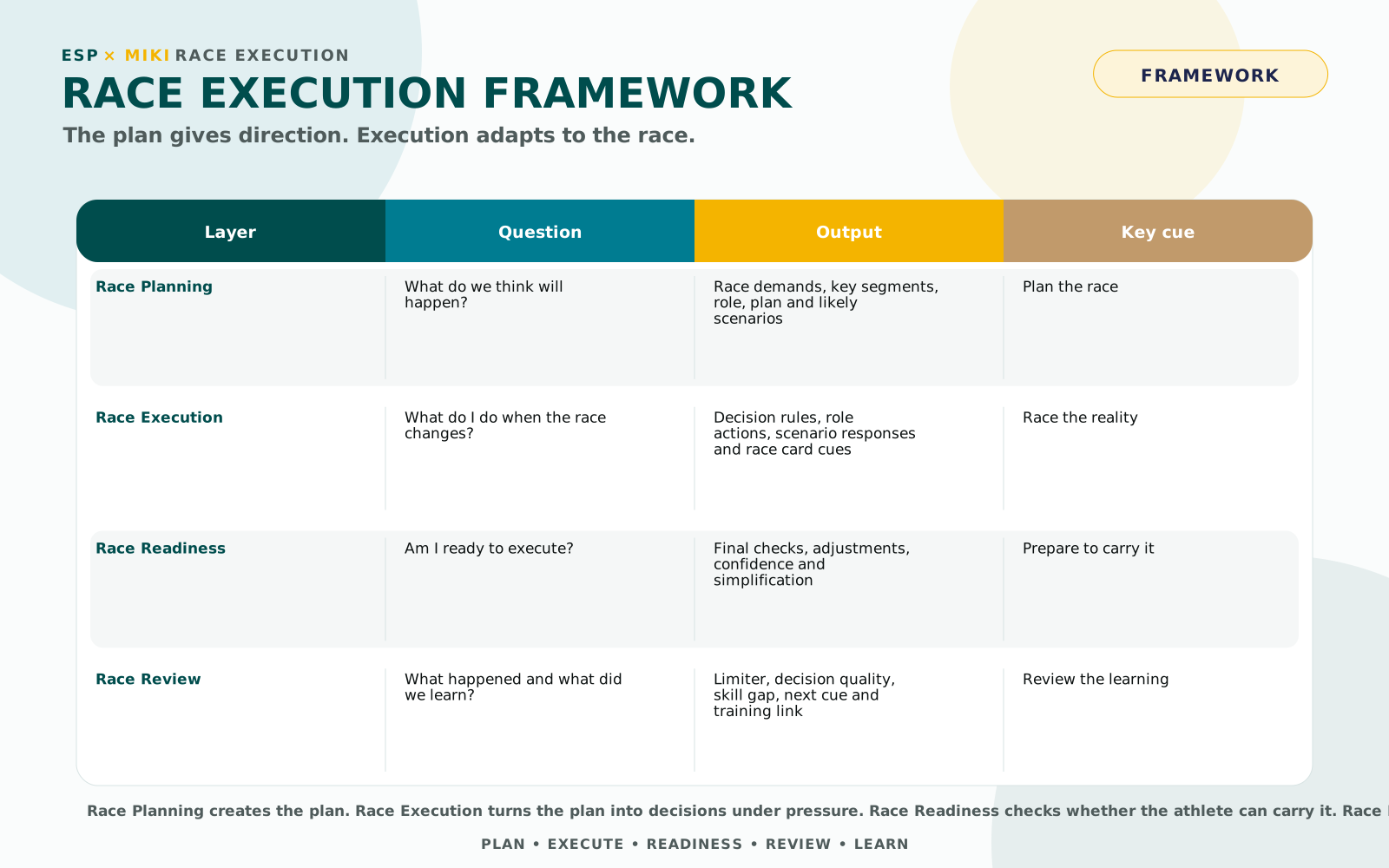
Race Execution is the ability to make useful decisions while the race is unfolding.
Race Planning answers: What do we think will happen, and what is the plan?
Race Execution answers: Given the plan, what do I do when the race starts changing?
Race Readiness answers: Am I prepared to carry the plan and cues into the race?
Race Review answers: What happened, what did I do, and what do we learn?
A race plan is never a script. Once the race starts, the athlete must manage pressure, uncertainty, emotion, positioning, energy, fueling, conditions, team roles, mistakes, and moments of commitment.
The plan gives direction. Execution is how you adapt without losing the purpose.
Race Execution sits between Race Plan and Race Review. The Race Plan is the input. Race Execution turns it into decisions, cues, and scenario responses. Race Readiness then checks whether the athlete is prepared to execute that plan on the day. It also connects directly with Race Fueling and Race Cooling / Environment.
Who This Guide Is For
This protocol is for athletes and coaches who want a clear, repeatable way to race with intent under pressure.
It is especially useful for riders learning to race in bigger bunches, faster races, European-style racing, team environments, technical courses, stage races, and races where conditions or tactics change quickly.
It is not designed to be a long tactical textbook. It is designed to create simple, athlete-friendly rules, cues, and scenario responses that can be reviewed and improved over time.
- Development riders learning race craft
- Riders stepping into larger or more aggressive bunches
- Athletes racing in Europe, kermesses, cobbles, narrow roads, crosswinds, or technical courses
- Protected riders, support riders, breakaway options, sprinters, climbers, and road captains
- Coaches building Race Files, Race Cards, review notes, and training skill links
Protocol Guidance
This protocol should be adapted to the athlete, the race, the team role, and the purpose of the day.
The full protocol is the learning layer. The Race Card is the execution layer. Athletes should not try to remember every scenario during the race. They should select the few most relevant cues before the start.
For each race, choose 2–5 likely execution scenarios. These scenarios should connect to the athlete’s role, the team plan, the race profile, the likely conditions, and the main development focus.
Race Execution should be clear enough to use before the race, simple enough to remember during the race, structured enough to review after the race, and flexible enough to adapt to reality.
Keep the thinking detailed. Keep the in-race cues simple.
- Use Race Plan to define purpose, role, race shape, and key moments
- Use Race Execution to prepare for what may change under pressure
- Use Race Fueling and Race Cooling to support decisions around energy, hydration, heat, and logistics
- Use Race Review to classify what happened and carry learning forward
- Select a small number of race-specific scenarios rather than overwhelming the athlete
How This Protocol Fits
Race Execution connects the preparation system to the learning system.
Race Plan defines the intended strategy, role, key moments, and likely scenarios. It is the primary input into Race Execution.
Race Execution does not recreate the plan. It translates the plan into simple decisions, Race Card anchors, scenario responses, and reset cues the athlete can use when the race changes.
Race Readiness checks whether the athlete is prepared to carry the plan and execution cues into the race, including health, confidence, equipment, fueling, cooling, environment, and role clarity.
Race Review then turns what actually happened into learning, training links, and future Race Card cues.
The clean loop is:
Plan the race → prepare to execute → race the reality → review the decisions → carry the learning forward.
System Fit
| System Area | Question it answers | Race Execution link |
|---|---|---|
| Race Readiness | Am I prepared to race? | Reduces avoidable uncertainty before the start |
| Race Plan | What is the plan? | Defines role, key moments, risks, and intended responses |
| Race Fueling | How will I fuel and hydrate? | Supports energy decisions under pressure |
| Race Cooling / Environment | How will I manage conditions? | Supports heat, cold, wind, altitude, and weather responses |
| Race Execution | What do I do when the race changes? | Turns the plan into decisions, actions, and resets |
| Race Review | What happened and what do we learn? | Turns execution into training, cues, and future planning |
Race Execution Rules
- The plan gives direction; execution adapts the plan without losing the purpose
- Not every move is the race, but some moves are
- Position is energy
- Fuel before pressure, not during panic
- Race the role, not just the moment
- Safe first, connected second, fueled third, decisive fourth
- Own your space calmly
- Do not chase emotion
- When the moment matches the plan, commit
- After a mistake, breathe, reset, reconnect
- Recognise it, train it, trust it
- Every race teaches the next race
Visual Quick Start
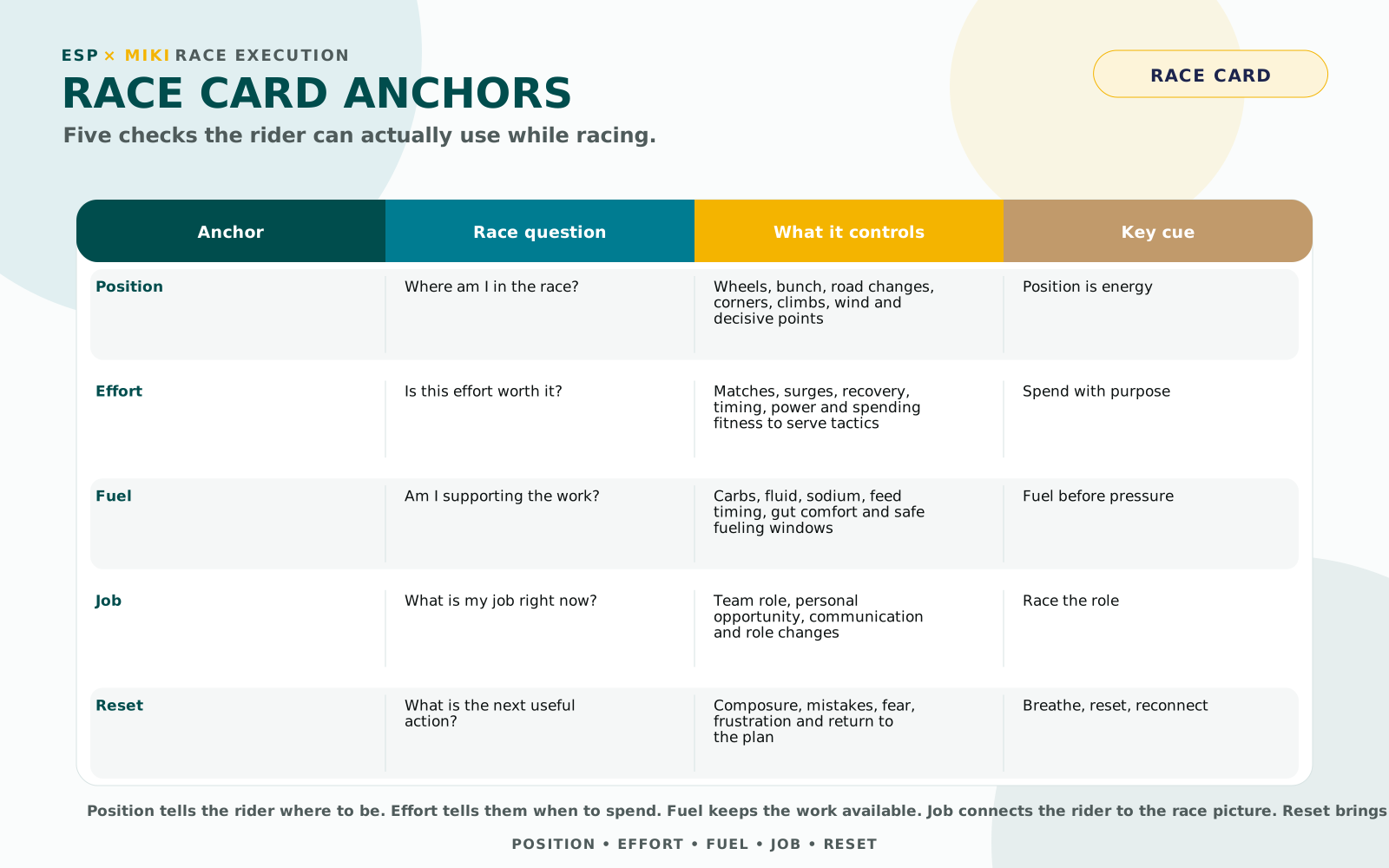
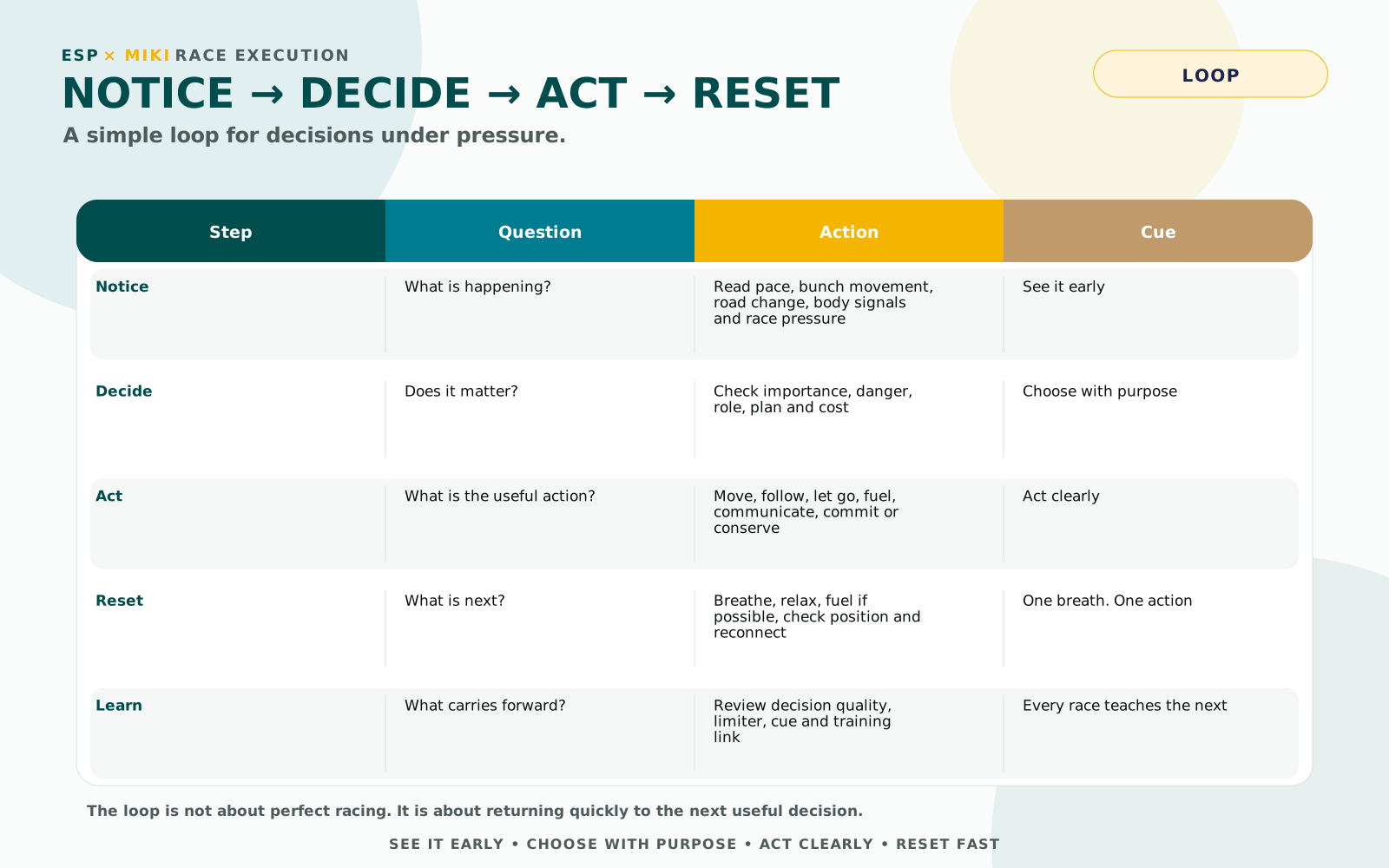
Use these three visuals as the fastest way into the Race Execution Protocol. They show where Race Execution sits, what the athlete carries on the Race Card, and how to make decisions when the race changes.
The visuals introduce the Quick Start before the detailed protocol sections.
Visual Quick Start Sequence
| Visual | What it explains | Why it matters |
|---|---|---|
| Race Execution Framework | Plan → Execute → Readiness → Review | Clarifies that Race Planning creates the plan, Race Execution adapts it, Race Readiness checks it, and Race Review learns from it. |
| Race Card Anchors | Position → Effort → Fuel → Job → Reset | Gives the rider five simple checks they can actually use under pressure. |
| Execution Loop | Notice → Decide → Act → Reset | Gives the rider a repeatable process for changing race situations. |
Race Execution Quick Start
Use this when the athlete needs the shortest path from the Race Plan to race-day execution.
The Quick Start turns the full protocol into a small number of useful actions and cues.
Race Execution in Five Steps
| Step | What to do | Output |
|---|---|---|
| 1. Start with the Race Plan | Know the key moments, role, likely scenarios, fueling needs and environmental risks. | Clear input from Race Planning. |
| 2. Choose 2–5 likely scenarios | Select the situations most likely to shape the race. | Scenario responses to prepare. |
| 3. Build the Race Card | Use the five anchors: Position, Effort, Fuel, Job and Reset. | A small set of cues the rider can remember. |
| 4. Race the loop | Notice what is happening, Decide if it matters, Act with purpose, then Reset. | A repeatable process under pressure. |
| 5. Review the limiter | Identify whether the limiter was energy system, energy use, skill, tactics, fueling, role, composure or environment. | One learning, one training link, one next cue. |
Simple Race Card Build
| Anchor | Race Card cue |
|---|---|
| Position | |
| Energy | |
| Fuel | |
| Role | |
| Reset | |
| Environment modifier | |
| Likely scenarios | |
| Review focus |
Race Card Anchors
The Race Card should not carry the whole protocol. It should carry the few reminders the athlete can actually use while racing.
The five Race Card Anchors are:
Position. Effort. Fuel. Job. Reset.
These are the athlete’s simple in-race checks. They help the rider stay connected to the plan without overthinking.
Position tells the rider where to be. Effort tells them when to spend. Fuel keeps the work available. Job connects the rider to the race picture. Reset brings them back to the next useful action.
The anchors help the rider race. The execution domains help the coach teach. The review limiters help both of them learn.
The Five Race Card Anchors
| Anchor | Question | What it covers | Useful cues |
|---|---|---|---|
| Position | Where am I in the race? | Bunch position, wheels, corners, narrow roads, cobbles, wind, climb entry, sprint position, safety and opportunity. | Position is energy. Move before the road narrows. Do not donate wheels. |
| Effort | Is this effort worth it? | Effort, power, energy systems, repeated surges, recovery, durability, matches, timing, and spending fitness to serve tactics. | Spend with purpose. Every effort needs a reason. Good legs still need good choices. |
| Fuel | Am I supporting the work? | Carbohydrate, fluid, sodium/electrolytes, feed timing, gut comfort, bottle management, cooling opportunities, and safe fueling windows. | Fuel before pressure. Eat before you need it. Next safe chance. |
| Job | What is my job right now? | Team role, personal goal, protected rider, moves to follow, moves to ignore, when to work, when to sit on, role changes, and communication. | Race the role. Race the team picture. If you are there, you are live. |
| Reset | What is the next useful action? | Composure, mistakes, fear, hesitation, breathing, confidence, adapting when the plan changes, and returning to the next cue. | Breathe, reset, reconnect. One breath. One action. Race from here. |
How Anchors Relate to the Deeper Protocol
The Race Card Anchors are not the whole protocol. They are the simple checks the athlete can remember during the race.
Behind these anchors sit the deeper execution domains: tactical decisions, race craft, bunch skills, fueling habits, role clarity, effort and energy use, environment handling, and composure.
After the race, review identifies which area limited execution and what needs to change for next time: the plan, cue, skill, energy system, fueling strategy, team role, environment plan, or reset process.
Race Execution Checklist
Use this checklist before the race to confirm that the athlete has enough clarity to execute under pressure.
Before the Race
- I know my role
- I know my personal goal
- I know the team goal
- I know who is protected
- I know what moves I follow and what moves I ignore
- I know where position matters most
- I know when I need to fuel before pressure
- I know 2–5 likely scenarios and my planned response
- I know my primary cue
During the Race
- I will notice changes early
- I will decide through role, plan, and context
- I will act clearly and safely
- I will reset after mistakes
- I will communicate when it helps the team picture
- I will adapt the plan without losing the purpose
After the Race
- I will review decisions, not just results
- I will separate decision, skill, energy, fueling, communication, and confidence issues
- I will identify what needs training
- I will carry one cue forward to the next race
Race Context Changes the Right Answer
The right execution choice depends on the race context.
The same situation can require a different response depending on the athlete’s role, team plan, race phase, event type, course, conditions, support available, and development purpose.
A key rider attacking may mean follow immediately in one race, let the team cover it in another, or communicate and hold position in another. Race Execution is not a fixed script. It is a decision system.
- One-day race vs stage race
- Team target vs individual development race
- Protected rider vs support rider vs breakaway option
- Early race vs final phase
- Flat kermesse vs mountain stage vs technical circuit
- Heat, wind, rain, cobbles, altitude, or cold conditions
- Athlete confidence, skill level, and experience
The Execution Loop
The Race Execution loop is:
Notice → Decide → Act → Reset
This is the athlete’s in-race operating system. It keeps the athlete connected to what is happening now without losing the purpose of the plan.
Notice
What is happening?
- Pace change
- Bunch movement
- Key rider moving
- Wind direction or road narrowing
- Body warning sign
- Fueling opportunity
- Technical risk
- Teammate up the road
- Chase forming
- Final phase beginning
Decide
Does this matter?
- Is this important?
- Is this dangerous?
- Is this my role?
- Is this a key rider or key moment?
- Does this match the plan?
- Can I respond without destroying the next section?
- Do I act now or wait?
Act
Make the useful choice.
- Move up
- Follow
- Let it go
- Fuel
- Drink
- Communicate
- Sit in
- Reset position
- Commit
- Protect a teammate
- Save energy
Reset
Return to the next useful action.
- Breathe
- Relax the upper body
- Fuel or drink if possible
- Check position
- Reconnect with the plan
- Return to the next cue
Execution Domains
The Race Card Anchors are the simple in-race checks. The execution domains are the deeper areas that good execution depends on.
Use these domains to teach the protocol, select scenarios, and review what limited execution after the race.
Execution Domains
| Domain | What it means | Primary Race Card anchor |
|---|---|---|
| Position | Where the athlete is relative to the bunch, key riders, teammates, terrain, wind, corners, and decisive points. | Position |
| Energy Use | How the athlete uses fitness, energy systems, repeatability, recovery, and matches to serve the race plan. | Energy |
| Fueling & Hydration | How the athlete keeps energy, fluid, sodium, gut comfort, and cooling available while the race changes. | Fuel |
| Role & Team Execution | How the athlete connects personal goals, team role, team picture, and communication. | Role |
| Tactical Decisions | When to follow, let go, attack, sit on, work, wait, or commit. | Position / Energy / Role |
| Race Craft & Skills | Cornering, descending, bunch positioning, cobbles, crosswinds, rough roads, and holding wheels under pressure. | Position / Reset |
| Environment Handling | How heat, cold, wind, rain, altitude, surface, and visibility change the cost and timing of decisions. | Modifier across all anchors |
| Composure & Reset | How the athlete manages pressure, mistakes, fear, hesitation, emotion, and the next useful action. | Reset |
Execution Priorities
When everything is happening at once, the athlete needs a decision hierarchy.
Safe → Connected → Fueled → Decisive
This does not mean the athlete is passive. It means the athlete protects the basics before committing to the decisive moments.
Priority Hierarchy
| Priority | Question | Cue |
|---|---|---|
| Safe | Can I make this choice without creating unnecessary risk? | Firm, not reckless |
| Connected | Am I connected to the wheel, group, role, or plan? | Stay in the race |
| Fueled | Have I used the safe opportunities to eat and drink? | Fuel before pressure |
| Decisive | Is this the real moment to commit? | When the moment is real, commit |
Environment Modifier
Environment is not usually a sixth thing to remember. It is the condition that changes the other five Race Card Anchors.
Heat, cold, wind, rain, altitude, cobbles, gravel, road surface, and visibility can all change the value of position, the cost of effort, the timing of fuel, the team job, and the reset needed under pressure.
The Race Plan should identify the likely environmental demands. Race Readiness should check that the athlete is prepared for them. Race Execution helps the athlete adapt when the conditions are worse, different, or more decisive than expected.
If the environment is race-defining, add one Environment Modifier cue to the Race Card.
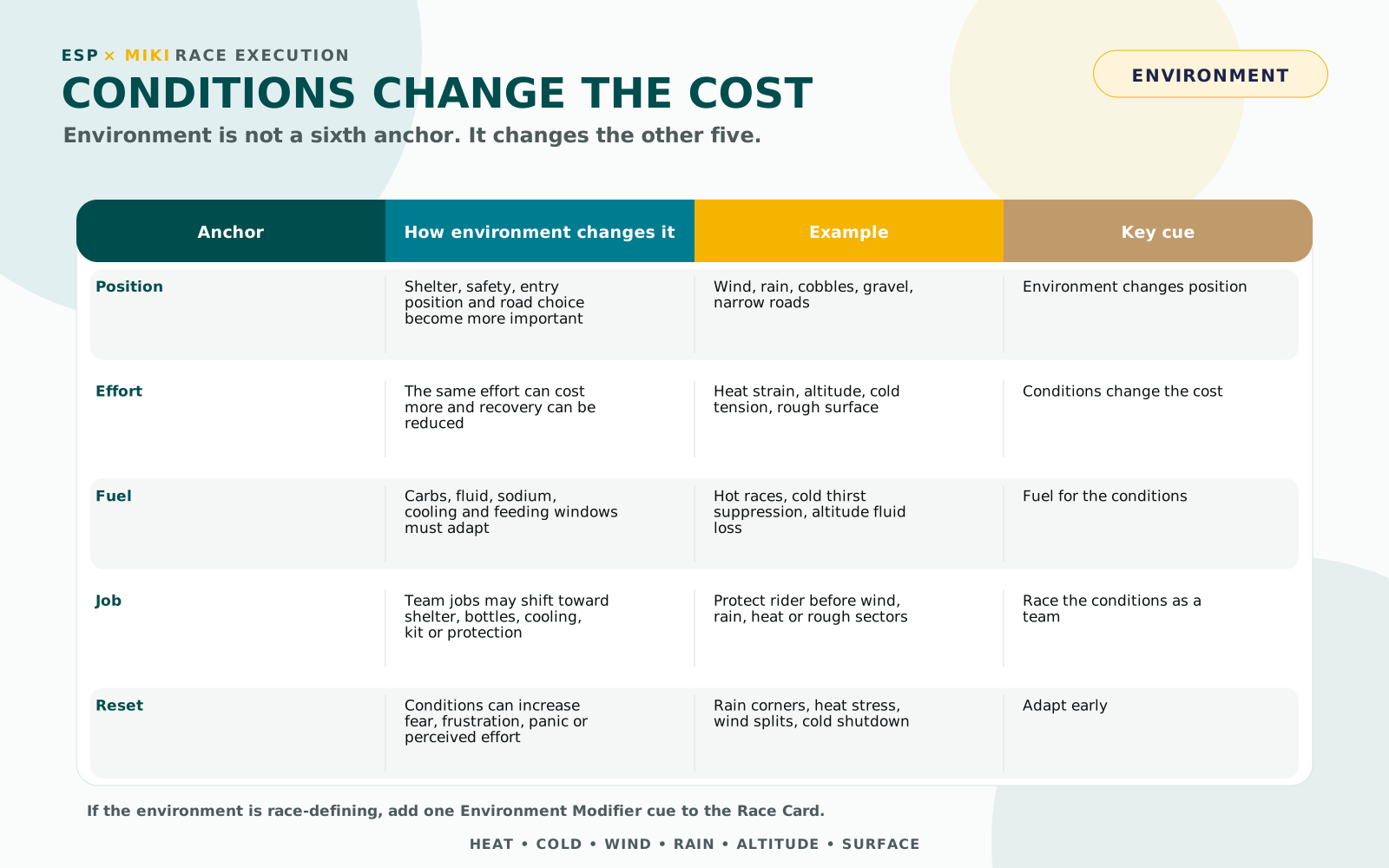
How Environment Changes the Anchors
| Anchor | How environment changes it | Example cue |
|---|---|---|
| Position | Wind, rain, rough surface, heat, and visibility change where the rider needs to be and how early they need to move. | Environment changes position. |
| Effort | Heat, cold, altitude, wind, rough roads, and repeated braking change the cost of each effort and the ability to recover. | Conditions change the cost. |
| Fuel | Heat, cold, altitude, rough racing, and technical sections change fluid, sodium, carbohydrate, gut, and safe feeding demands. | Fuel for the conditions. |
| Job | Conditions can create team jobs around bottles, cooling, shelter, kit, positioning, safety, and protecting the team card. | Race the conditions as a team. |
| Reset | Conditions change the mental load. Heat, cold, wind, rain, cobbles, and altitude can all make normal efforts feel different. | Reset to the conditions. |
Race-Specific Environment Modifier Examples
| Condition | Race Card modifier |
|---|---|
| Heat | Cool early. Drink early. Do not chase panic. |
| Cold | Keep eating. Stay connected. Stay warm before decisive moments. |
| Wind | Shelter early. Move before exposure. Organise fast. |
| Rain | Smooth braking. Clear lines. Soft body. |
| Altitude | Respect the cost. Avoid early spikes. Recover before the next effort. |
| Cobbles / rough roads | Enter clean. Stay light. Ride through. |
Team Execution and Role Clarity
Race Execution is not only individual. In team racing, every rider’s decisions affect the race picture.
A rider may have a personal goal, but they also have a team role. The best execution connects both.
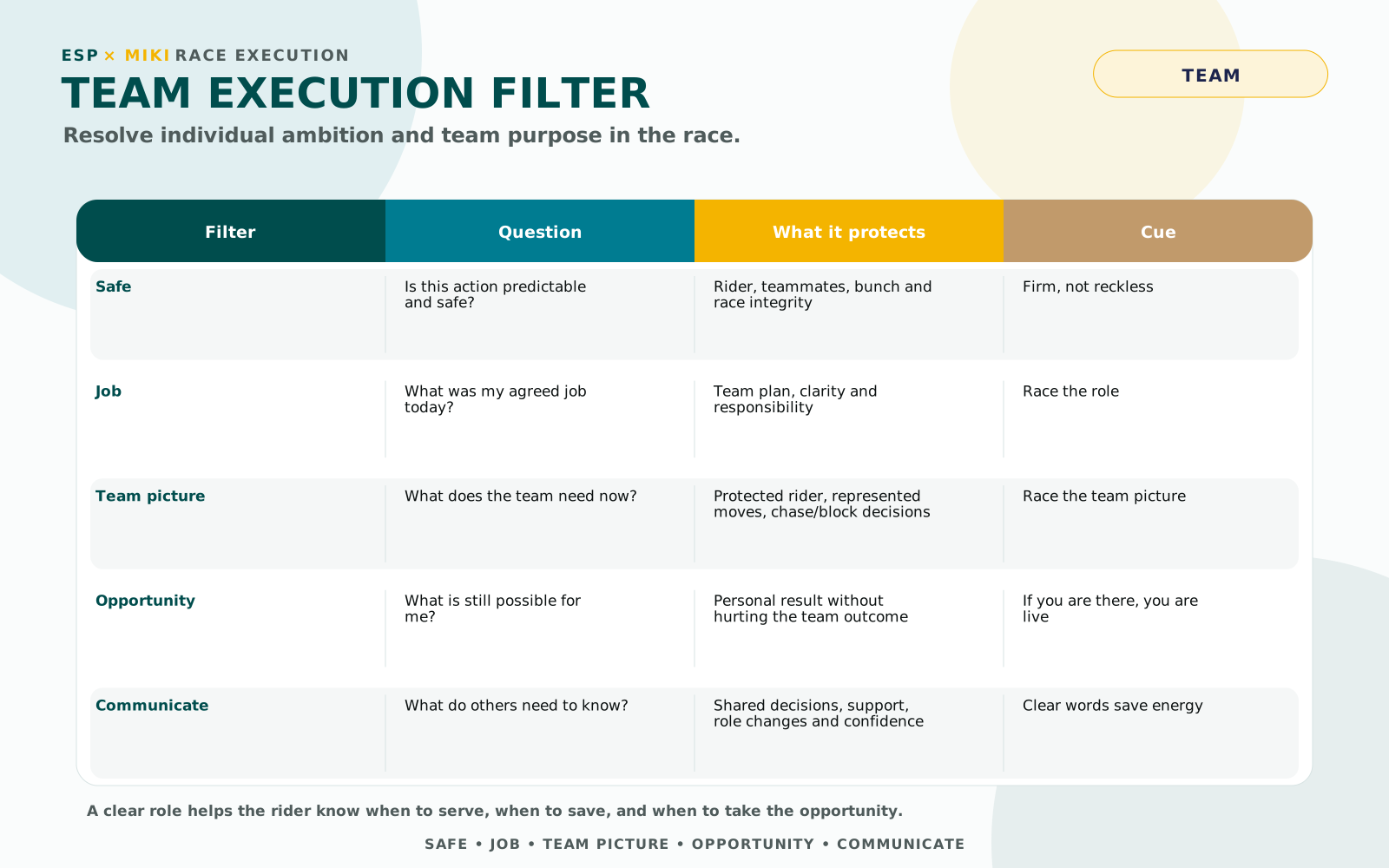
The goal is not to remove individual ambition. The goal is to align individual decisions with the team purpose so the rider can serve the team and still recognise their own opportunity when it appears.
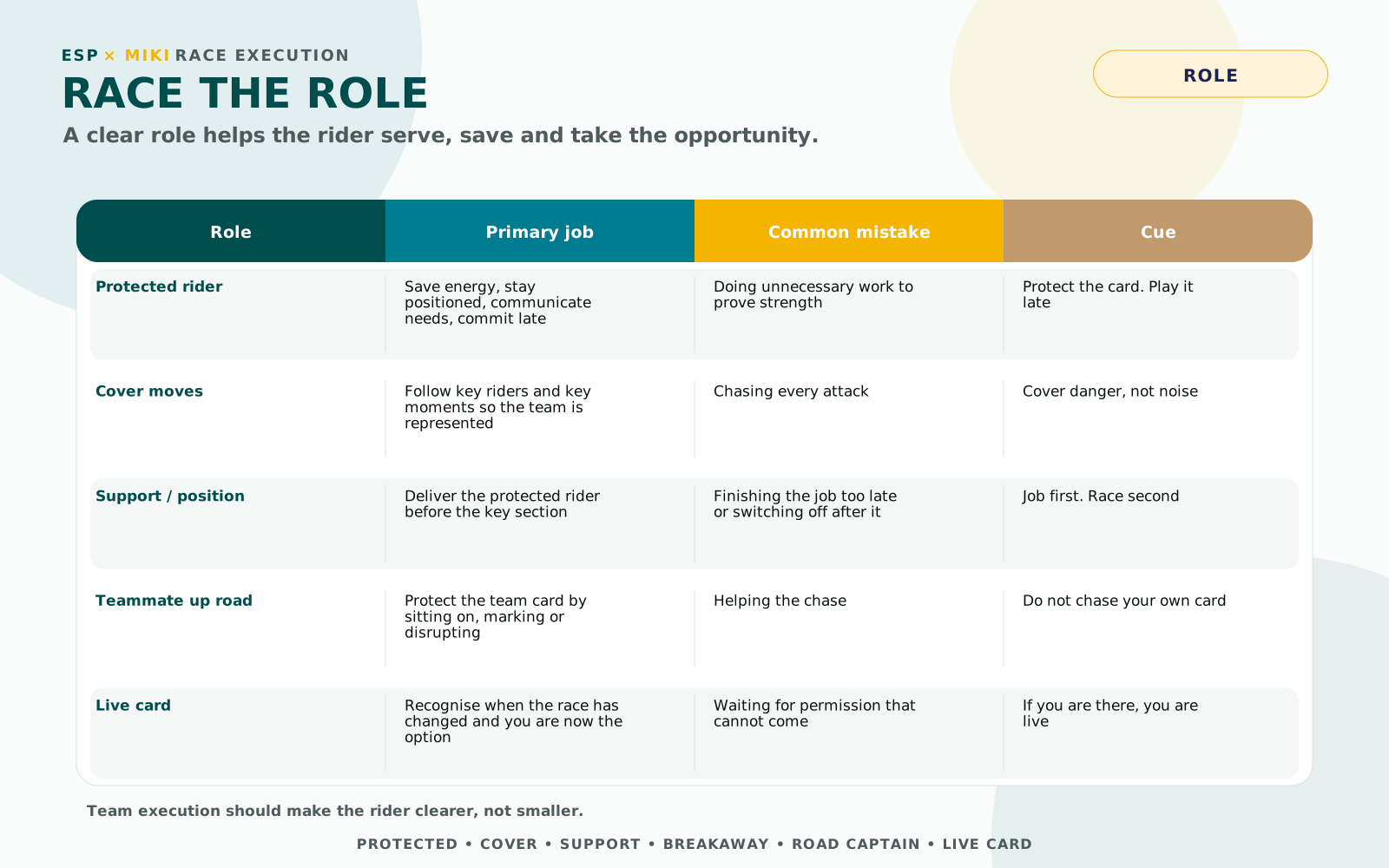
Team execution should make the rider clearer, not smaller.
Before the Race, Each Rider Should Know
- What is my job?
- What is my personal goal?
- What is the team goal?
- Who is protected?
- What moves do I follow?
- What moves do I ignore?
- When do I work?
- When do I sit on?
- When does my role change?
- What do I communicate?
Common Team Roles
| Role | Primary execution focus | Useful cue |
|---|---|---|
| Protected rider | Save energy, stay positioned, use support, commit at the planned moment | Protect the card. Play it late. |
| Support / positioning rider | Deliver protected rider to key section while staying available if possible | Job first. Race second. |
| Cover moves | Follow dangerous moves and key riders without chasing noise | Cover danger, not noise. |
| Breakaway option | Use opportunity when it supports the team plan | Your move is the team move. |
| Road captain | Read the race, communicate, organise, and help the team adapt | Race the team picture. |
| Development / learning role | Execute the agreed learning focus while contributing to the team where possible | Learn the race while racing the role. |
Resolving Individual vs Team Conflict
Many execution conflicts happen because riders do not know which plan has priority in the moment.
The athlete needs a simple filter for resolving tension between personal goals and team goals.
Conflict Resolution Filter
| Step | Question | Cue |
|---|---|---|
| Safety | Can I act without unnecessary danger? | Firm, not reckless |
| Role | What was my agreed job today? | Know the job before the race starts |
| Team Picture | Has the race changed? Are we represented? Is the leader safe? | Race the team picture |
| Opportunity | Can I take this opportunity without hurting the team outcome? | Serve the team without switching off |
| Communication | Can I make the situation clearer for teammates? | Clear words save energy |
Conflict Examples
| Situation | Execution rule | Cue |
|---|---|---|
| Individual and team goals align | When your opportunity supports the team plan, commit fully | Your move is the team move |
| Team role comes first | Complete the agreed role before chasing personal opportunity | Job first. Race second |
| Rider becomes the team opportunity | If the race changes and you are now the best card, race responsibly for the team result | If you are there, you are live |
| Teammate is up the road | Do not help bring back your own rider unless the team plan has changed | Do not chase your own card |
| Personal ambition could hurt the team | Ask whether the move helps the team outcome or creates confusion | Do not race against your own plan |
| Team plan is no longer possible | Reset quickly and race the best team outcome from here | Race from here |
Decision Rules
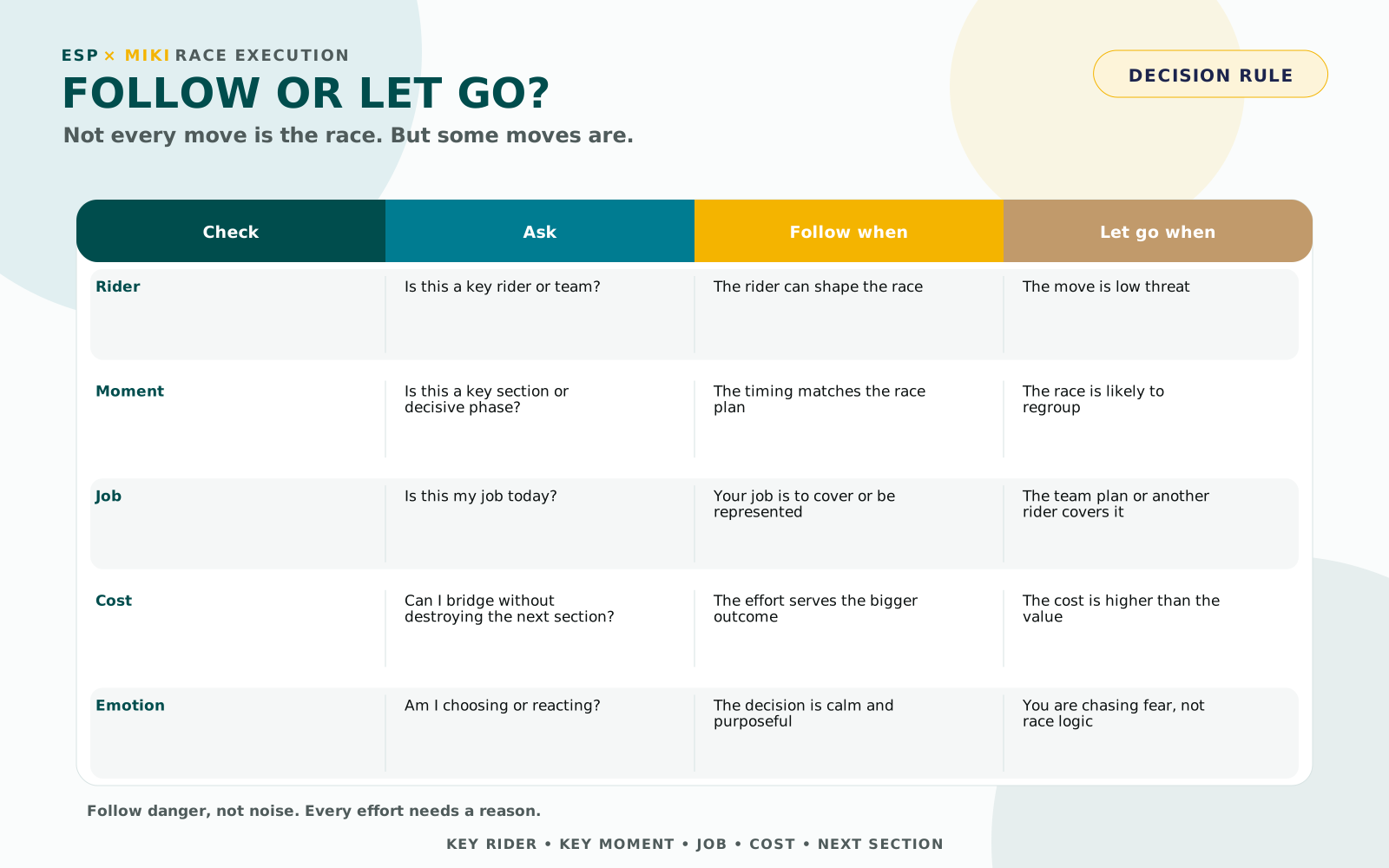
Decision rules are filters. They reduce panic and help the athlete choose useful actions under pressure.
Follow or Let Go?
- Is this a key rider?
- Is this a key moment?
- Is this my role?
- Can I bridge without destroying the next section?
- Am I reacting to the race or reacting to fear?
Move Up or Conserve?
- Is a key section coming?
- Is the road narrowing?
- Is wind exposure increasing?
- Will poor position cost more later?
- Is it safer to spend energy now than fight later?
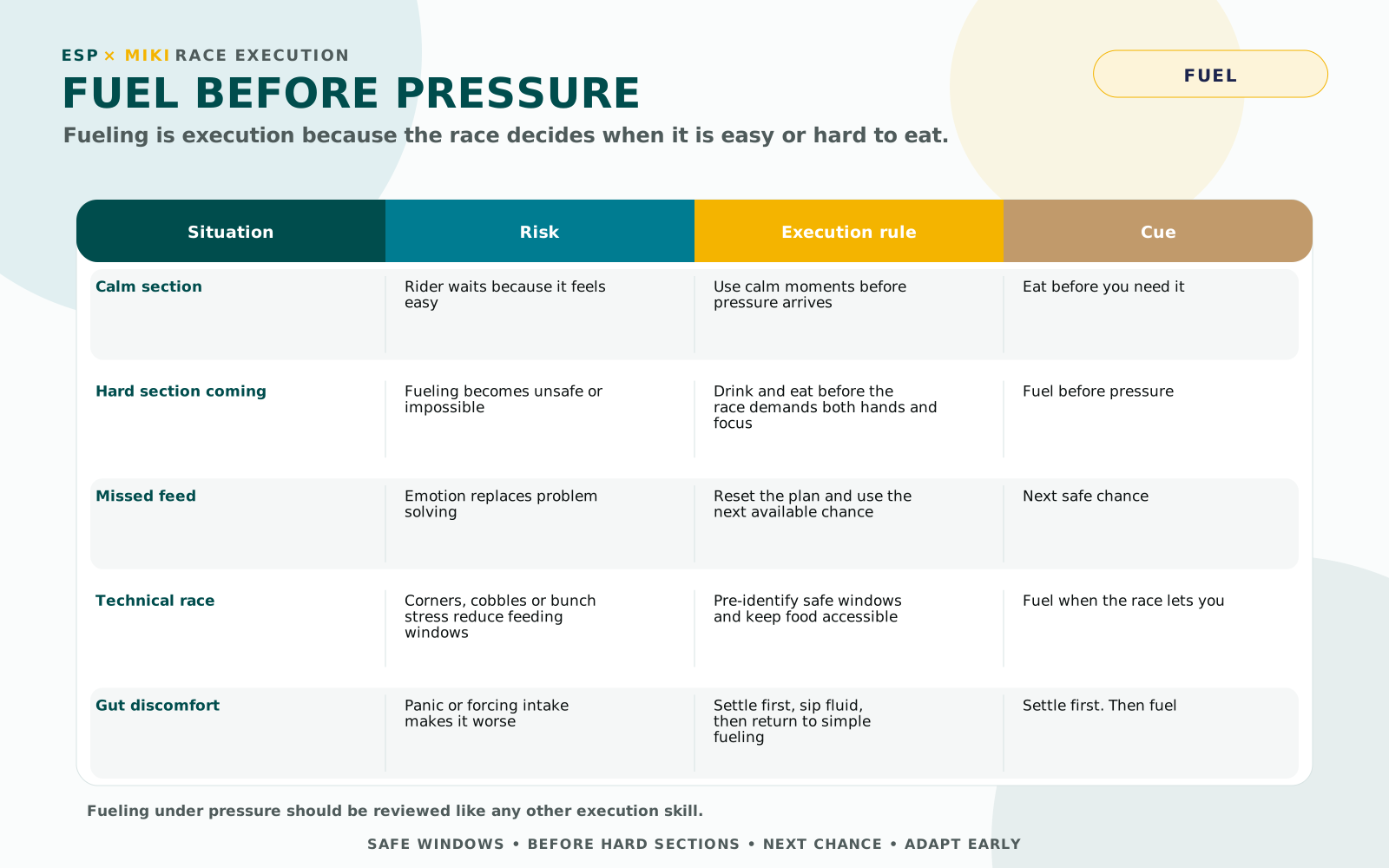
Fuel Now or Wait?
- Is this section safe?
- Is a hard section coming?
- Can I eat or drink without losing position?
- Have I missed the last cue?
- Will waiting make fueling harder?
Commit or Wait?
- Is this the planned moment?
- Is hesitation more costly than effort?
- Am I waiting because it is smart or because I am afraid?
- Does this match my role?
- Is the opportunity closing?
Reset After a Mistake?
- What happened?
- What is still possible?
- What is the next useful action?
- Do I need position, fuel, composure, or communication?
- Can I stop replaying the mistake and return to racing?
Bunch Craft and Position Protection
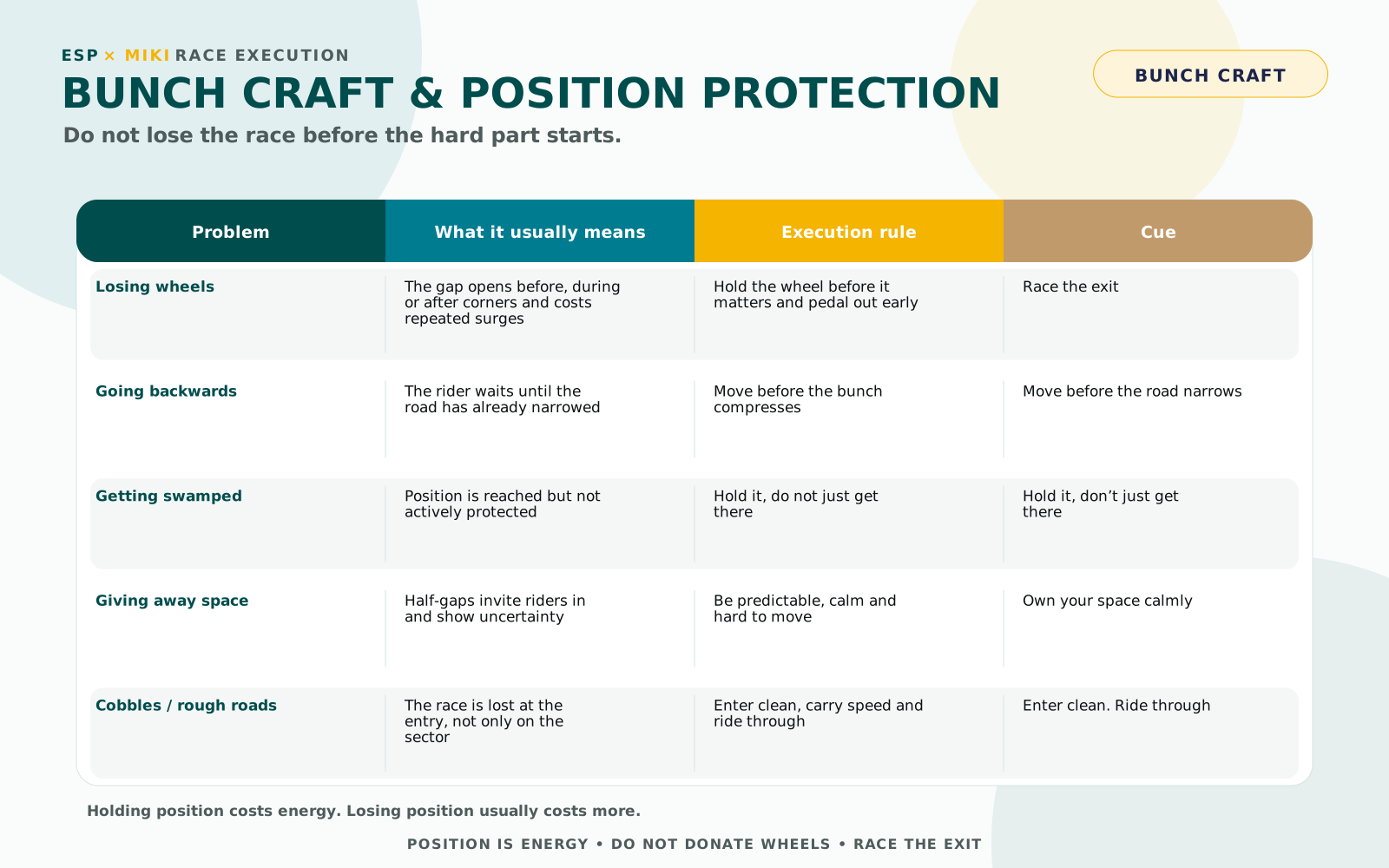
Bunch Craft and Position Protection is a major part of Race Execution, especially for riders new to larger, faster, more assertive bunches.
Many riders are fit enough, but lose the race through wheels, corners, narrow roads, cobbles, road furniture, crosswinds, and repeated bunch pressure.
The aim is not to ride dangerously. The aim is to stop giving away position unnecessarily.
Own your space calmly. Give nothing away for free.
Core Ideas
- The wheel is not just a wheel; it is position, shelter, rhythm, and race access
- Corners are not neutral; poor cornering creates repeated surges
- Narrow roads require early decisions
- Cobble entries are position battles before they are surface battles
- Bigger bunches require presence, predictability, and calm assertiveness
- Holding position costs energy; losing position usually costs more
Bunch Craft Decision Rules
| Decision | Rule | Cue |
|---|---|---|
| Hold the wheel or give space? | If the wheel matters and it is safe, close it early | Do not donate wheels |
| Push back or yield? | Hold your line calmly when the space is yours. Yield when safety or race sense requires it | Own your space calmly |
| Apex or wider line? | Choose the line that gives the best exit and protects the next section | Race the exit, not just the corner |
| Attack before a section or sit in? | If the entry matters more than the effort, move before the bunch reacts | Spend before chaos |
| Back off slightly or fight through? | Sometimes creating a small gap before the corner lets you carry more speed through the exit | Create space to carry speed |
Execution Skills Need Training
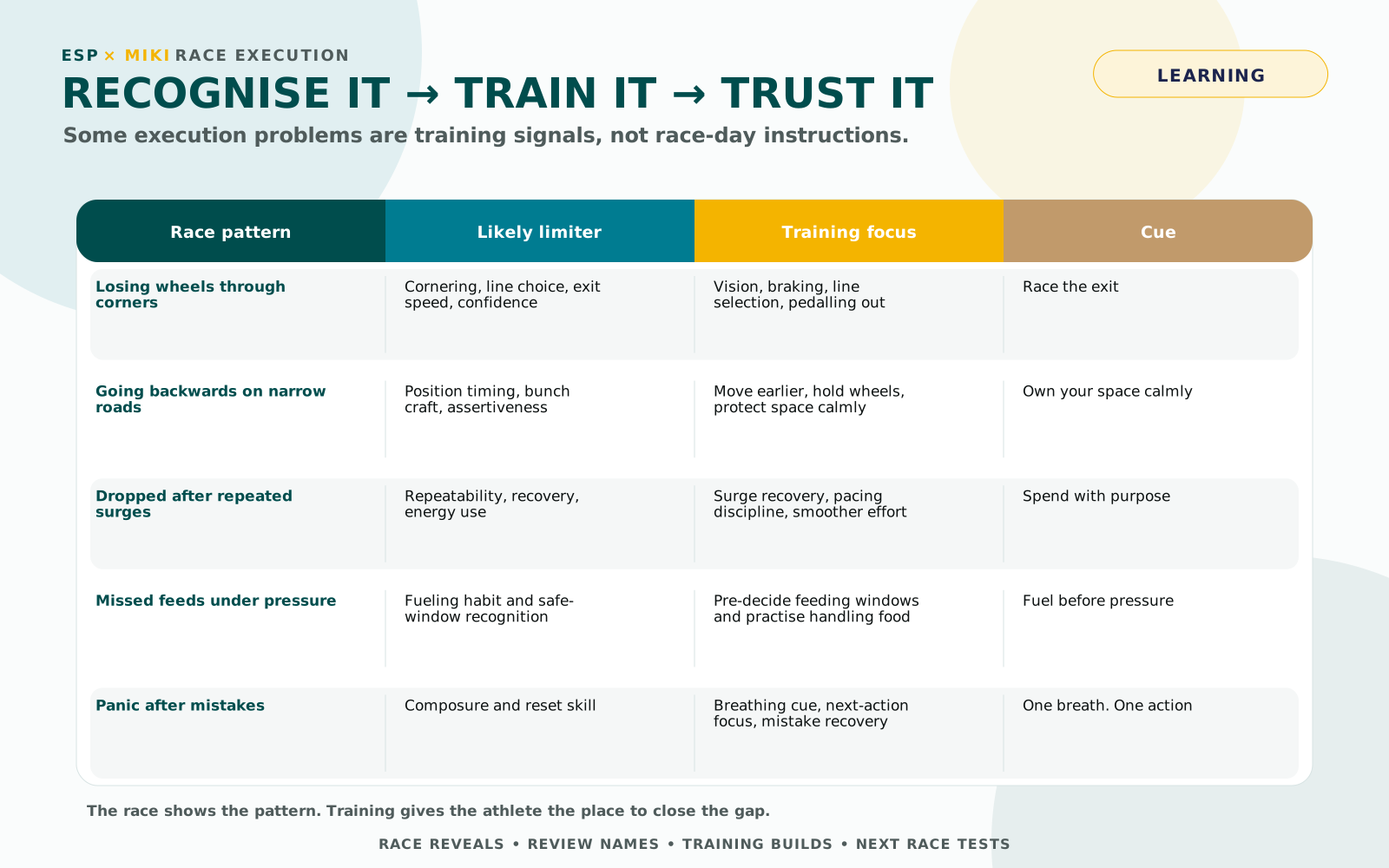
Some Race Execution cues can be applied immediately. Others need to be trained before they can be trusted in a race.
If an athlete is losing wheels through corners, braking too early, giving away space, descending nervously, or losing speed over cobbles, they may understand the cue but still need time to build the skill, confidence, and physical feel to execute it under pressure.
This is not a weakness. It is a trainable layer.
The race shows us the problem. Training gives us the place to solve it.
Race Problem to Training Skill
| Race problem | Likely skill area | Training focus | Cue |
|---|---|---|---|
| Losing wheels through corners | Cornering | Vision, braking timing, line choice, exit speed, following wheels | Race the exit |
| Losing contact on descents | Descending | Relaxed upper body, looking ahead, braking smoothly, line choice, confidence at speed | Soft body. Clear eyes. |
| Going backwards in bunches | Bunch positioning | Holding wheels, riding closer, calm assertiveness, moving early | Own your space calmly |
| Losing position before narrow roads | Pinch point awareness | Reading road and bunch behaviour, moving before compression | Move before the road narrows |
| Struggling on cobbles or rough roads | Rough-road handling | Momentum, relaxed hands, pressure on pedals, clean entry position | Enter clean. Ride through. |
| Confusion between team and personal goals | Team execution | Role clarity, communication, decision filters, review | Race the role |
Scenario Library
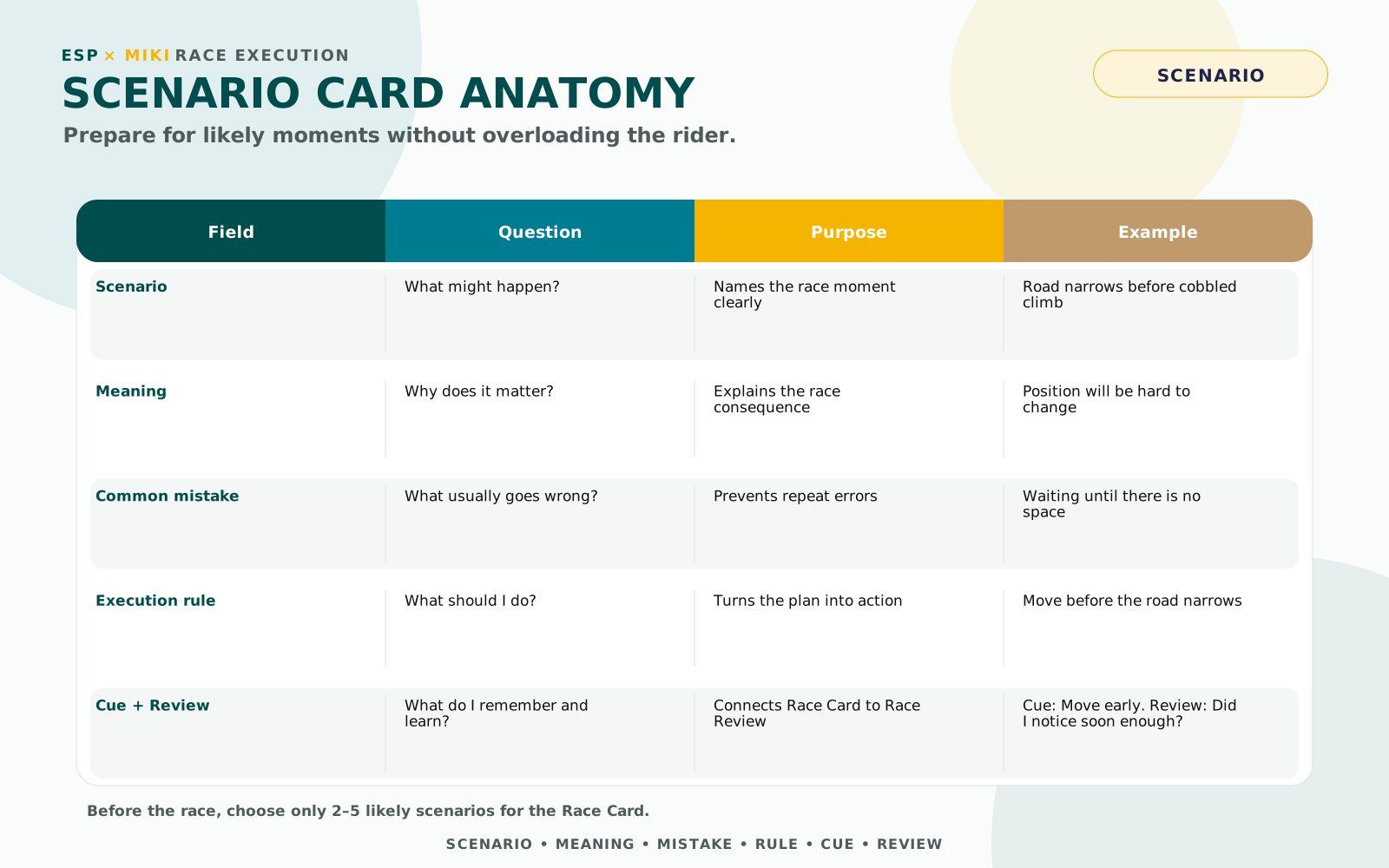
The Scenario Library turns Race Execution into a practical, athlete-friendly system.
For each race, select only the scenarios most likely to matter. These should appear on the Race Card and be reviewed after the race.
Scenario Cards
| Category | Scenario | What it usually means | Common mistake | Execution rule | Cue | Review question |
|---|---|---|---|---|---|---|
| Positioning | I am too far back | The rider is reacting from poor position and every surge, corner, split, or road change costs more | Waiting too long, then making a rushed move under pressure | Move up before the next key point, not during it | Position is energy | Did I notice poor position early enough? |
| Positioning | Road narrows | Position will become harder to change and the bunch may stretch or split | Trying to move up once there is no space left | Move before the road narrows | Move before the road narrows | Was I already in position before the road changed? |
| Positioning | I keep losing wheels through corners | The rider is braking too early, entering poorly, or exiting without speed | Trying to close the gap after the corner instead of protecting speed before and through it | Look ahead, choose line early, carry speed, and pedal out before the gap opens | Race the exit | Was I losing the wheel before, during, or after the corner? |
| Positioning | I lose position before cobbles | The rider is entering rough sections too far back, too slow, or behind nervous riders | Waiting too long and hitting cobbles from poor position | Move up before the entry, hold a strong wheel, carry speed, and ride through | Enter clean. Ride through. | Was the problem the cobbles or the entry position? |
| Team | My teammate is up the road | The team is represented and the role may be to protect that situation | Working in the chase or panicking because I am not in the move | Do not chase your own card; sit on, mark, disrupt, communicate, or save energy | Do not chase your own card | Did my actions protect the rider up the road? |
| Team | I feel good but I have a team job | There is tension between personal opportunity and team responsibility | Attacking or spending energy before completing the role | Complete the team job first; if the race opens afterwards, race from there | Job first. Race second. | Did I complete my role before chasing my own opportunity? |
| Team | The team leader misses the split but I make it | The race plan has changed and I may now be the team option | Waiting for permission that cannot come | If I am in the front group and the team card has changed, race responsibly for the best team result | If you are there, you are live | Did I recognise when my role changed? |
| Tactics | A key rider attacks | The move may shape the race | Hesitating too long or expecting someone else to respond | If the rider and moment match the plan, respond decisively | When the moment is real, commit | Did I recognise the key rider and act quickly enough? |
| Tactics | A non-key rider attacks | The move may be low threat, speculative, or useful to let go | Chasing every move and wasting energy | Check the rider, moment, group reaction, and role before responding | Do not chase emotion | Did I respond because it mattered or because I felt anxious? |
| Energy | Race starts harder than expected | The athlete is under pressure earlier than planned | Panicking, over-chasing, or abandoning the plan too early | Stay connected, protect position, avoid unnecessary surges, and wait for the race to settle if possible | Calm early. Race later. | Did I stay composed when the start was harder than expected? |
| Energy | I feel worse than expected | The athlete needs to simplify the race and focus on the next useful action | Mentally quitting too early | Shorten the race: next section, next wheel, next fuel, next useful action | Stay in the race | Did I keep making useful decisions even when I felt poor? |
| Fueling | I forgot to fuel early | The athlete may be behind the fueling plan before the decisive phase | Trying to catch up aggressively during hard or unsafe racing | Take the next safe opportunity without panic-loading | Next safe chance | What cue would have helped me fuel earlier? |
| Fueling | I missed a feed | The plan has changed and the athlete needs to adapt | Getting emotional or assuming the race is ruined | Reset the plan, use what is available, communicate if possible, and prioritise the next opportunity | Adapt the plan. Keep the purpose. | Did I adapt quickly after the missed feed? |
| Mindset | I made a mistake | The athlete has lost position, missed a move, over-spent, or made a technical error | Replaying the mistake while the race continues | Name it, breathe, reconnect, and take the next useful action | Breathe, reset, reconnect | How long did I carry the mistake? |
| Final Phase | I am in the front group | The athlete is in the race-winning or race-shaping position | Getting excited, over-working, or forgetting the finish plan | Stay composed, fuel if possible, protect position, read the group, and prepare for the decisive moment | Calm early, brave late | Did I stay clear enough to race the final properly? |
| Final Phase | I need to sprint | Position, timing, composure, and commitment matter more than perfect numbers | Starting from poor position, hesitating, or launching from panic | Hold position, stay patient, choose the wheel, then commit fully | Patient, then full | Did I sprint from choice or desperation? |
Race Card Cues
The Race Card should be short. The athlete should not carry the whole protocol into the race.
Use the five Race Card Anchors to organise the final cues: Position, Effort, Fuel, Job, Reset.
For most races, choose one cue for the most important anchors rather than filling every possible line. If environment is race-defining, add one Environment Modifier cue.
Race Card Anchor Cue Bank
| Anchor | Example cues |
|---|---|
| Position | Position is energy. Move before the road narrows. Do not donate wheels. Hold it, do not just get there. |
| Effort | Spend with purpose. Every effort needs a reason. Good legs still need good choices. Save something for the real moment. |
| Fuel | Fuel before pressure. Eat before you need it. Next safe chance. Drink before the race makes it hard. |
| Job | Race the role. Race the team picture. Job first. Race second. If you are there, you are live. |
| Reset | Breathe, reset, reconnect. One breath. One action. Race from here. The next action matters most. |
| Environment modifier | Conditions change the cost. Cool early. Shelter early. Smooth braking. Fuel for the conditions. |
Race Card Example
| Anchor | Example cue |
|---|---|
| Position | Move before the road narrows |
| Effort | Every effort needs a reason |
| Fuel | Fuel before pressure |
| Job | Cover danger, not noise |
| Reset | Breathe, reset, reconnect |
| Environment modifier | Heat: cool early, drink early, do not chase panic |
Execution Traps
Execution traps are common patterns that pull the athlete away from useful decisions.
- Chasing every move
- Donating wheels
- Waiting until the road narrows
- Fueling only when already under pressure
- Replaying mistakes while the race continues
- Confusing patience with passivity
- Confusing assertiveness with recklessness
- Spending energy without a reason
- Racing against your own team plan
- Assuming the race is over because the plan changed
- Making the race review only about result or power numbers
Where to Go Deeper
Race Execution is the central in-race operating system. Some execution issues need deeper work. If review shows the limiter was tactics, mindset, effort use, bunch craft, team role clarity, cold, altitude, or race review practice, use the linked deeper protocol to build that area before the next race.
These deeper protocols can stay as developing protocols until their full content is built. The link from Race Execution makes the system visible without forcing every detail into one protocol.
Deeper Protocol Links
| Protocol | Status | What it develops | Use when review shows |
|---|---|---|---|
| <a href="/protocols/racetactics"><strong>Race Tactics</strong></a> | Developing protocol | Follow-or-let-go decisions, attacks, chase groups, sprint timing, breakaways, and tactical race patterns. | Use when the limiter is race reading, timing, tactical choice, or commitment. |
| <a href="/protocols/racemindset"><strong>Race Mindset</strong></a> | Developing protocol | Composure, confidence, fear, hesitation, reset after mistakes, and commitment under pressure. | Use when emotion, nerves, fear, hesitation, or confidence limits execution. |
| <a href="/protocols/racereview"><strong>Race Review</strong></a> | Developing protocol | A structured review of what happened, what the athlete noticed, decided and did, and what gets trained next. | Use after every important race to turn execution into learning. |
| <a href="/protocols/raceenergy"><strong>Race Energy Management</strong></a> | Developing protocol | How athletes use effort, energy systems, matches, repeatability and pacing to serve race tactics. | Use when the limiter is fitness, repeatability, pacing, or effort spent in the wrong places. |
| <a href="/protocols/bunchcraft"><strong>Bunch Craft & Position Protection</strong></a> | Developing protocol | Holding wheels, owning space calmly, cornering, cobbles, narrow roads, descending and technical race skills. | Use when repeated small position or skill losses are deciding the race. |
| <a href="/protocols/teamraceexecution"><strong>Team Race Execution</strong></a> | Developing protocol | Role clarity, team communication, protected riders, covering moves, and resolving individual versus team goals. | Use when team roles, communication, or personal-versus-team conflict limits execution. |
| <a href="/protocols/racecold"><strong>Race Cold</strong></a> | Developing protocol | Cold-weather kit, fueling when thirst is low, warm-up, exposure, dexterity, and staying connected. | Use when cold, rain or wind chill changes the cost and risk of the race. |
| <a href="/protocols/racealtitude"><strong>Race Altitude</strong></a> | Developing protocol | Pacing, effort cost, fueling, hydration, breathing and recovery when racing at altitude. | Use when altitude changes expectations, repeatability or recovery. |
Race Execution Review
Race Execution is a learning system.
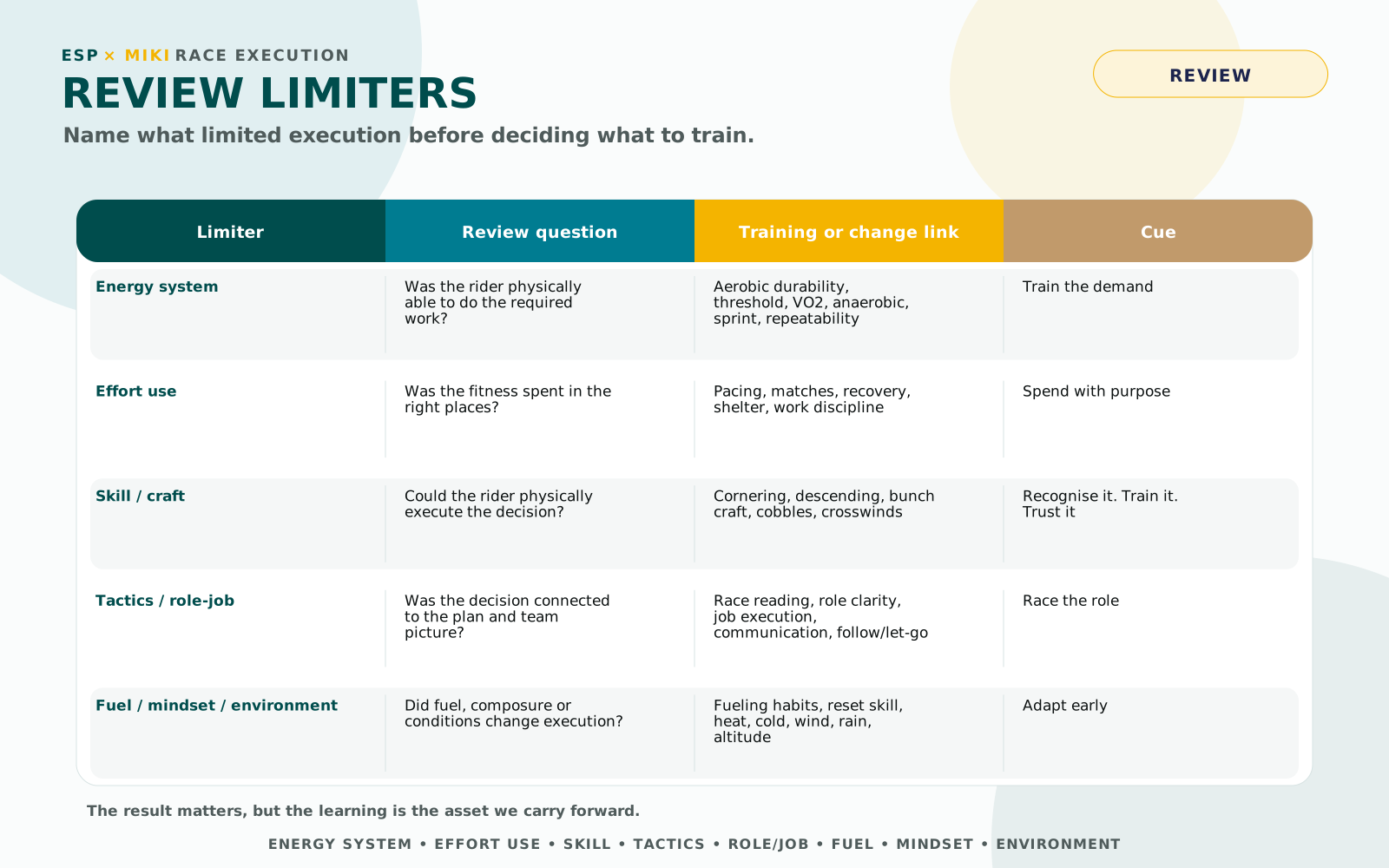
The result matters, but the learning is the asset we carry forward. A good review separates result, decision quality, role execution, skill gaps, energy system demands, energy use, fueling, communication, environment, adaptability, and learning.
Use the same loop after the race:
Notice → Decide → Act → Reset → Learn
The review question is not only were you strong enough? It is what limited execution?
Execution Review Questions
- What happened?
- What was the plan or intended response?
- What did I notice?
- What did I decide?
- What did I do?
- Was it aligned with my role?
- Was it aligned with the team picture?
- What was the outcome?
- What most limited execution?
- Was this mainly energy system, energy use, skill, tactic, role, fueling, environment, or composure?
- What changes next time?
- What cue or training focus carries forward?
Review Limiters
| Limiter | What it helps identify |
|---|---|
| Energy system / fitness | Whether the athlete lacked the physical capacity or energy system for the required work: aerobic durability, threshold, VO2, anaerobic capacity, sprint, repeatability, recovery, heat tolerance, or fatigue resistance. |
| Energy use / pacing | Whether the athlete had the fitness but spent it in the wrong places: chasing too much, working without purpose, surging instead of smoothing, or burning matches before the decisive point. |
| Fueling / hydration | Whether carbohydrate, fluid, sodium, gut comfort, bottle management, missed feeds, or timing limited execution. |
| Positioning / race craft | Whether bunch position, wheels, corners, cobbles, descending, crosswinds, narrow roads, braking, or line choice limited the ability to execute. |
| Tactical decision | Whether the rider read the race correctly: follow, let go, attack, sit on, work, wait, or commit. |
| Role / team execution | Whether the rider understood the team picture, role, personal opportunity, communication, and role-change triggers. |
| Composure / mindset | Whether fear, panic, hesitation, frustration, confidence, or failure to reset changed the decision or action. |
| Environment / conditions | Whether heat, cold, wind, rain, altitude, surface, visibility, or weather changed the cost, timing, risk, or cue needed. |
Review to Training and Learning
Race Review should turn execution into learning.
Not every issue needs more fitness. Some issues need a specific energy system, better energy use, better timing, better role clarity, better fueling, better environmental preparation, better communication, or a specific technical skill.
This protects the athlete from lazy conclusions and creates a clear development path.
Review to Action
| Review finding | Likely limiter | Likely next step | Example cue carried forward |
|---|---|---|---|
| Could not close repeated gaps after corners | Energy system / repeatability plus cornering skill | Train repeated accelerations and corner exit speed | Race the exit |
| Lost position before every narrow road | Positioning / race craft | Practice reading road and bunch movement earlier | The bunch tells you before the road does |
| Missed the key move because role was unclear | Role / tactical decision | Clarify team role and follow rules before next race | Cover danger, not noise |
| Was strong early but empty when the real move went | Energy use / pacing | Review where matches were spent and define follow/let-go rules | Every effort needs a reason |
| Forgot to fuel before hard section | Fueling / hydration | Add fueling opportunity to Race Card and Race Segment plan | Fuel before pressure |
| Overheated and chased panic surges | Environment / heat plus composure | Strengthen heat plan and add environment modifier cue | Cool early. Do not chase panic |
| Panicked after mistake | Composure / reset | Build micro-reset cue and review response time | Breathe, reset, reconnect |
| Worked in chase against teammate up road | Role / team execution | Review team picture and communication rules | Do not chase your own card |
Common Mistakes
- Creating a race plan but not reducing it to usable execution cues
- Giving the athlete too many scenarios to remember
- Treating every move as important
- Not clarifying role before the start
- Letting personal ambition conflict with the team plan without a decision filter
- Being too passive in the bunch and giving away wheels
- Being assertive without being predictable or safe
- Forgetting to fuel until the race is already hard
- Reviewing only the result instead of the decisions
- Assuming every problem is fitness rather than timing, skill, fueling, confidence, communication, or role clarity
- Confusing the Race Plan output with the Race Execution output
- Treating environment as separate from execution instead of a modifier that changes position, energy, fuel, role, and reset
- Calling every execution problem a fitness problem without checking energy use, skill, tactics, role, fueling, composure, or conditions
Review and Refine
Race Execution should improve race by race.
The aim is not perfect execution. The aim is clearer decisions, better role alignment, stronger skill transfer, and better learning.
After each race, choose one or two execution lessons to carry forward. Do not overload the athlete with every possible improvement.
Plan the race. Race the role. Adapt to reality. Review the decisions. Carry the learning forward.
- What execution cue worked?
- What scenario appeared that we expected?
- What scenario appeared that we did not expect?
- Where did the rider adapt well?
- Where did the rider lose clarity?
- What needs to be trained?
- What should appear on the next Race Card?
- What learning should go into the Learning Bank?