
Overview
This protocol explains how fueling is applied in racing within ESP × miki coaching.
Racing is about performance. Fueling strategies should support the demands of the race, the rider’s role, the event format, and the conditions.
Unlike training, where fueling can sometimes be adjusted to support adaptation, racing is about maximising current-day performance. In stage racing, fueling must support both today’s performance and tomorrow’s preparation.
For multi-day tours, stage races, camps, or repeated race blocks, use this protocol alongside the separate Stage Race Fueling & Recovery Protocol, which covers full-day intake, post-stage recovery, protein timing, supplement routines, appetite management, and between-stage planning.
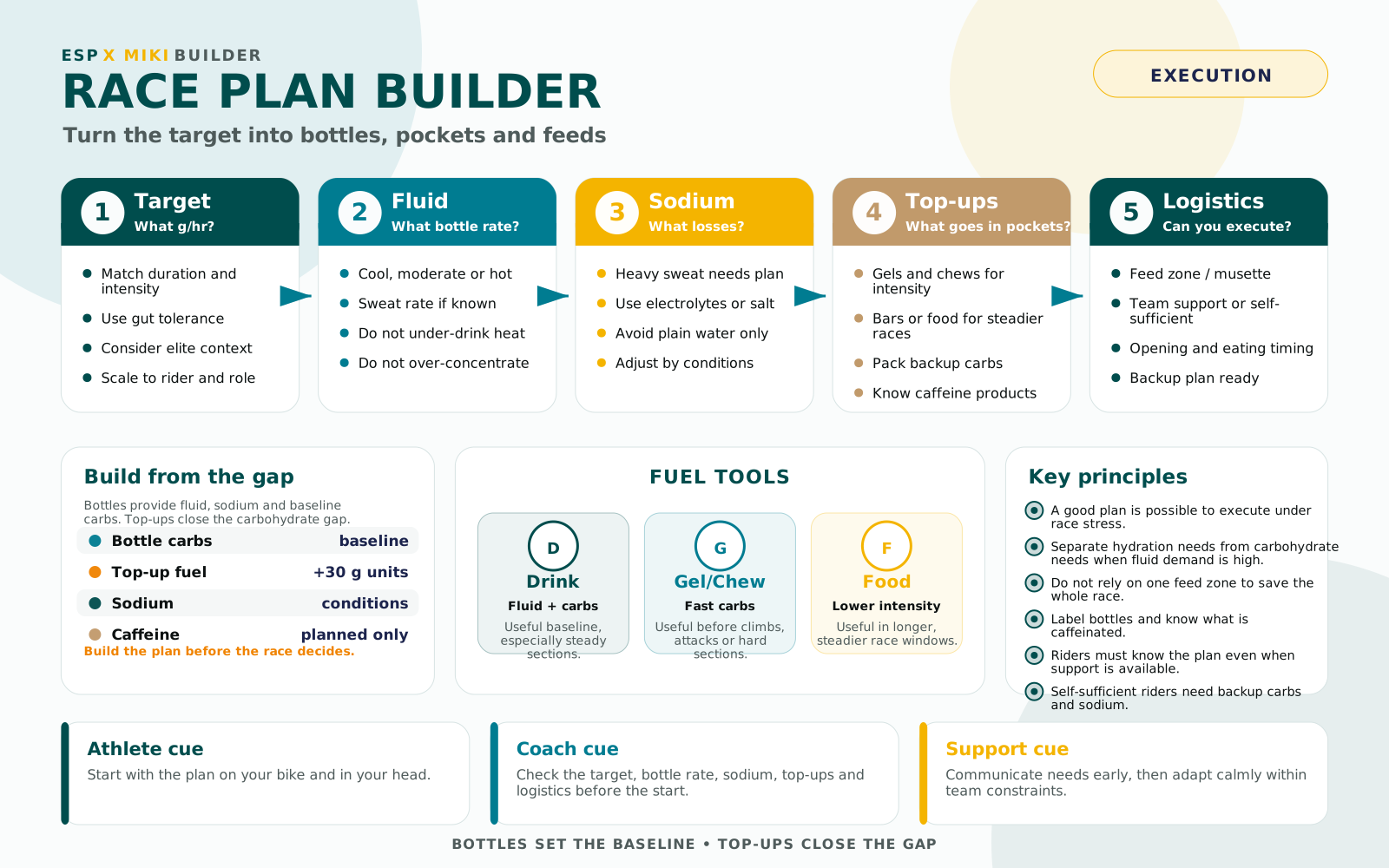
The simple method is: set the race demand, choose the carbohydrate target, drink for the conditions, use bottles as the baseline, add top-ups to close the gap, then recover early.
Most race fueling mistakes happen when athletes underfuel early, overcomplicate the system, or try to solve poor setup late in the race by forcing too much fuel in at once.
The sequence should still be:
Race role + race demand → Carb target
Conditions → Hydration + sodium
Carb system → Product type
Bottle mix → Baseline fuel and fluid
Top-up fuels → Reach target and time intake around key moments
Fuel for the work. Drink for the conditions. Keep the system simple enough to repeat.
In racing, fueling success is determined by execution, not knowledge.
Who This Guide Is For
This is an athlete-facing protocol, supported by coaches, parents, soigneurs, and team staff.
Riders should understand the simple routine and why it matters. Coaches and support people help prepare the plan, prompt execution, and adapt details for the rider, race and conditions.
- The rider should know the basic fueling and recovery sequence.
- The coach or support person should make the routine easier to execute, not more complicated.
- The detail sections provide the numbers and tools needed to individualise the plan when required.
Protocol Guidance
The values shown throughout this protocol — including carbohydrate intake, fluid intake, sodium guidance, and pre- and post-race strategies — are guiding ranges, not strict prescriptions.
These ranges are based on current endurance sport research, applied sports nutrition practice, and race-environment coaching experience. They provide a clear starting framework that can be repeated, reviewed, and refined over time.
Fueling should be individualised based on the athlete, the race, the conditions, the products available, and the demands of the event.
Where possible, a food-first approach should underpin fueling, with supplements used to support specific performance outcomes rather than replace the basics.
Any supplement use should follow a cautious, informed approach. Where relevant, use reputable manufacturers and batch-tested products through recognised programmes.
Fueling Rules
- Fuel for the race demand.
- Drink for the conditions.
- Fuel early.
- Keep bottle concentration sensible.
- Use top-ups to reach carb targets.
- Keep it simple under pressure.
- Practice race fueling in training.
Fueling Priorities in Racing
Racing isn’t about perfect plans — it’s about making the best possible decisions with what is available.
Riders often have limited control over exactly when and what they can eat or drink. Bottles may be missed, feed zones can be chaotic, and race dynamics may override planned timing.
For that reason, effective race fueling is built on prioritisation — knowing what matters most in each moment.
Fueling decision priorities
| Priority | Focus | Why it matters |
|---|---|---|
| 1 | Hydration when conditions demand it | Dehydration quickly limits performance, especially in heat. |
| 2 | Carbohydrate availability before key efforts | Fueling before climbs, attacks, sectors, and finales supports performance. |
| 3 | Maintaining a steady baseline intake | Prevents large energy deficits later in the race. |
| 4 | Optimising product choice | Secondary to getting enough fluid and carbohydrate overall. |
Control vs constraint
- Control what you can: what you start with, what you carry, and how you use it.
- Adapt to what you cannot control: bottle availability, feed access, race dynamics, and support limitations.
- Use pocket fuels to maintain some control when bottle options are limited.
Race reality
- You may not get the exact bottle you planned.
- You may miss a feed or be unable to reach the car.
- You may need to prioritise hydration over carbohydrate, or carbohydrate over bottle strength, depending on the moment.
- You may need to fuel earlier or later than planned depending on race flow.
How to Use This Guide
Follow the steps in order.
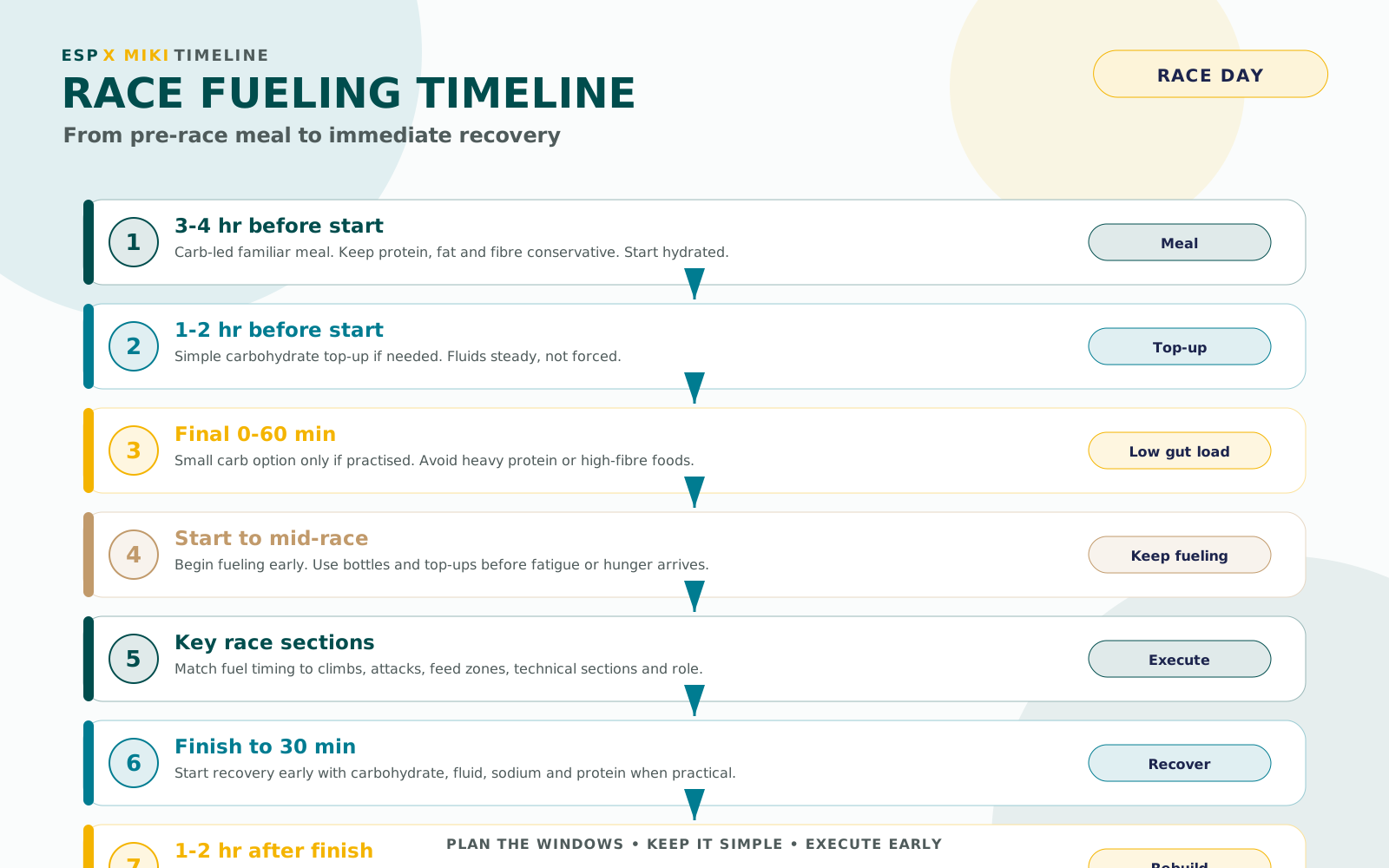
How to Build the Plan
| Step | What to do | Why |
|---|---|---|
| 1 | Define your race demand and role | Determines carbohydrate need and timing priority |
| 2 | Check the conditions | Determines fluid and sodium needs |
| 3 | Choose the carb system | Helps select product type and intake structure |
| 4 | Set the bottle baseline | Bottles provide baseline hydration, sodium, and some carbs |
| 5 | Add top-up fuels | Closes the gap to reach race carb target |
| 6 | Adjust for race logistics | Determines what is actually possible to execute |
| 7 | For multi-day racing, link to the Stage Race Fueling & Recovery Protocol | Ensures today’s race plan supports tomorrow’s performance |
Fueling Quick Start
Use this example to see how the system works in practice.
The Fueling Decision Guide later in this protocol shows how to build your own race fueling plan step by step.
The full protocol explains each step in more detail.
Quick Start Race Fueling Table
| Conditions | Bottles/hr | Bottle carbs | Baseline carbs | Top-up needed to reach ~90 g/hr |
|---|---|---|---|---|
| Cool | 1 | ~40 g | ~40 g | ~50 g |
| Moderate | 1.5 | ~40 g | ~60 g | ~30 g |
| Hot | 2 | ~30 g | ~60 g | ~30 g |
Visual Quick Start
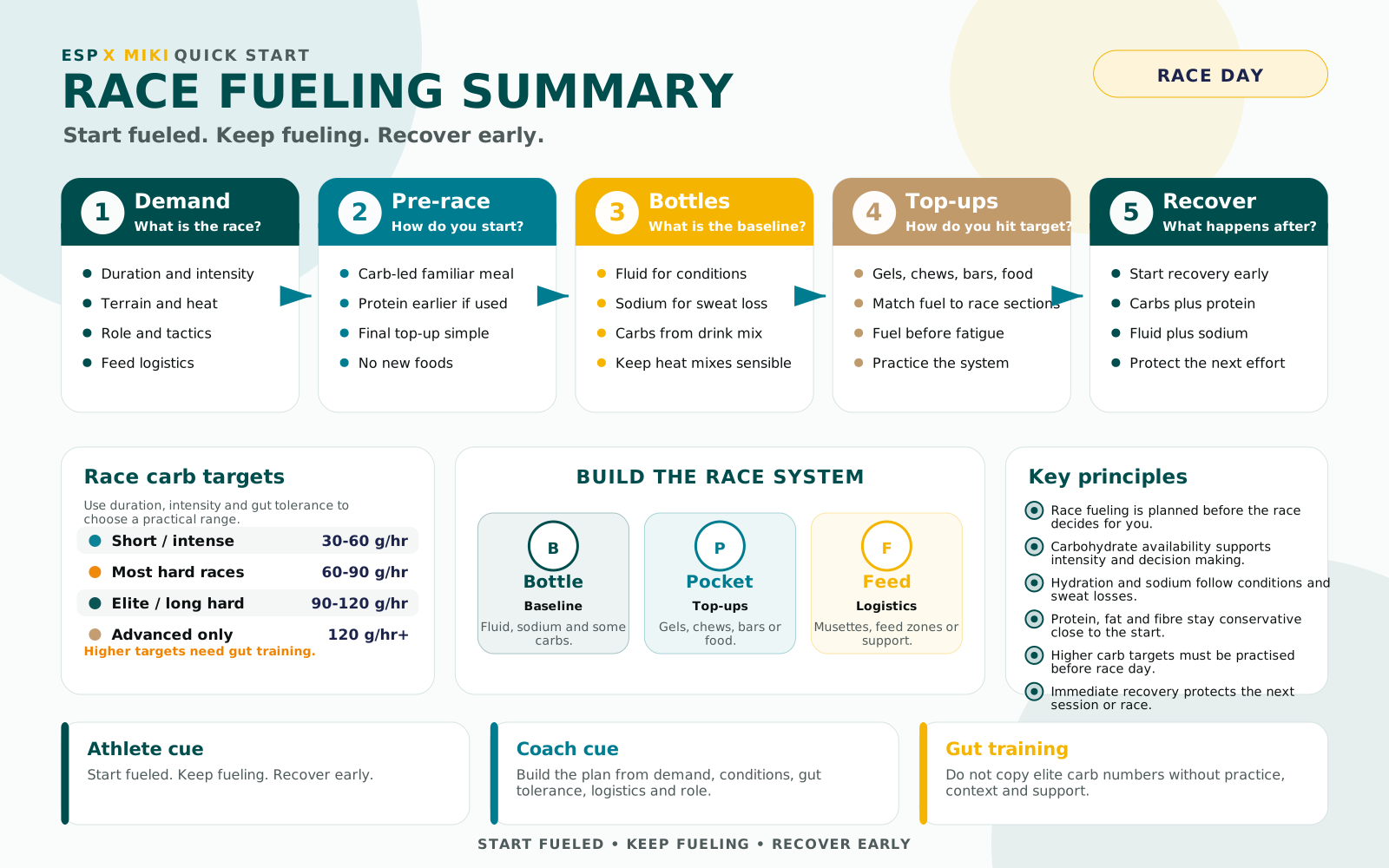
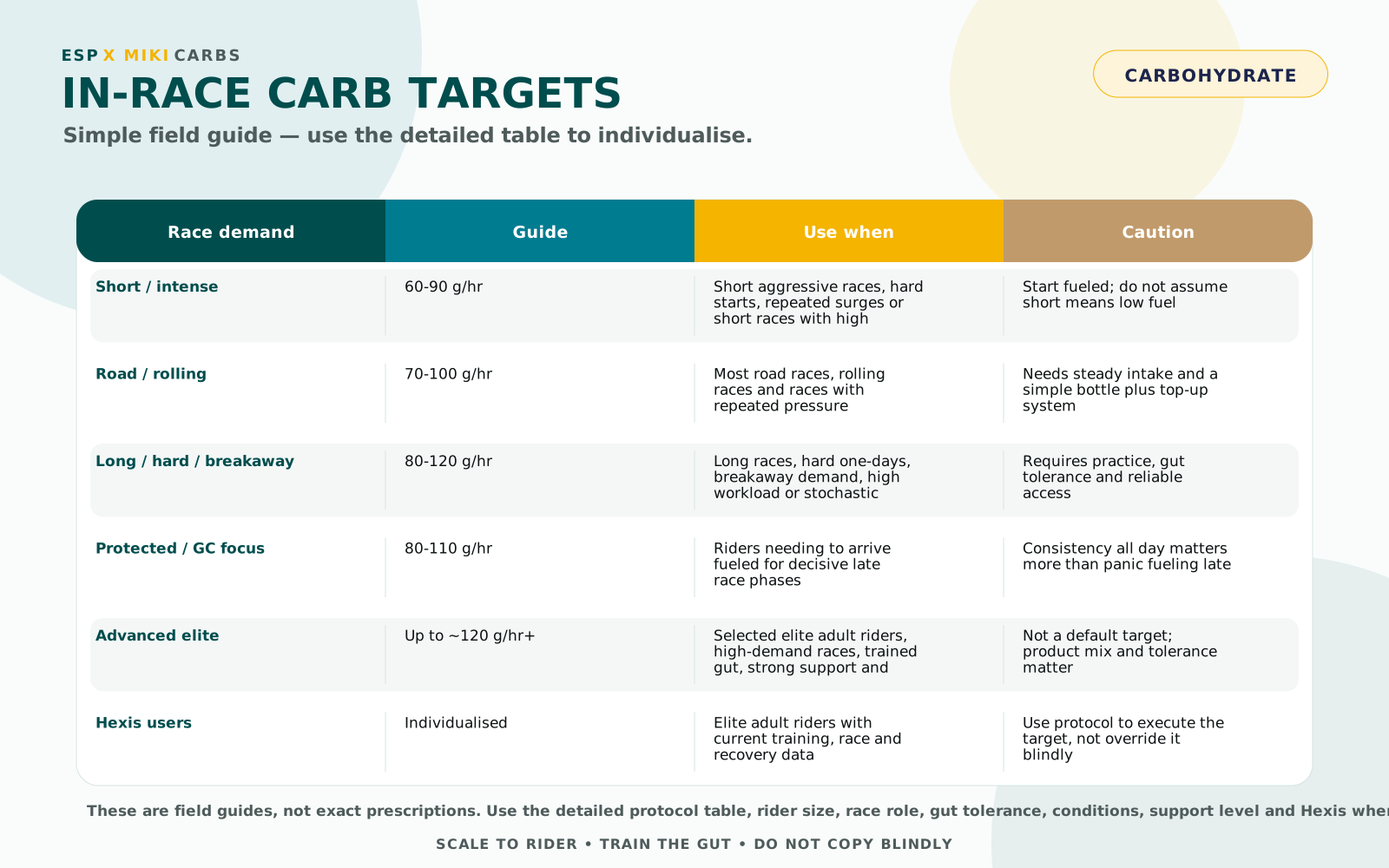
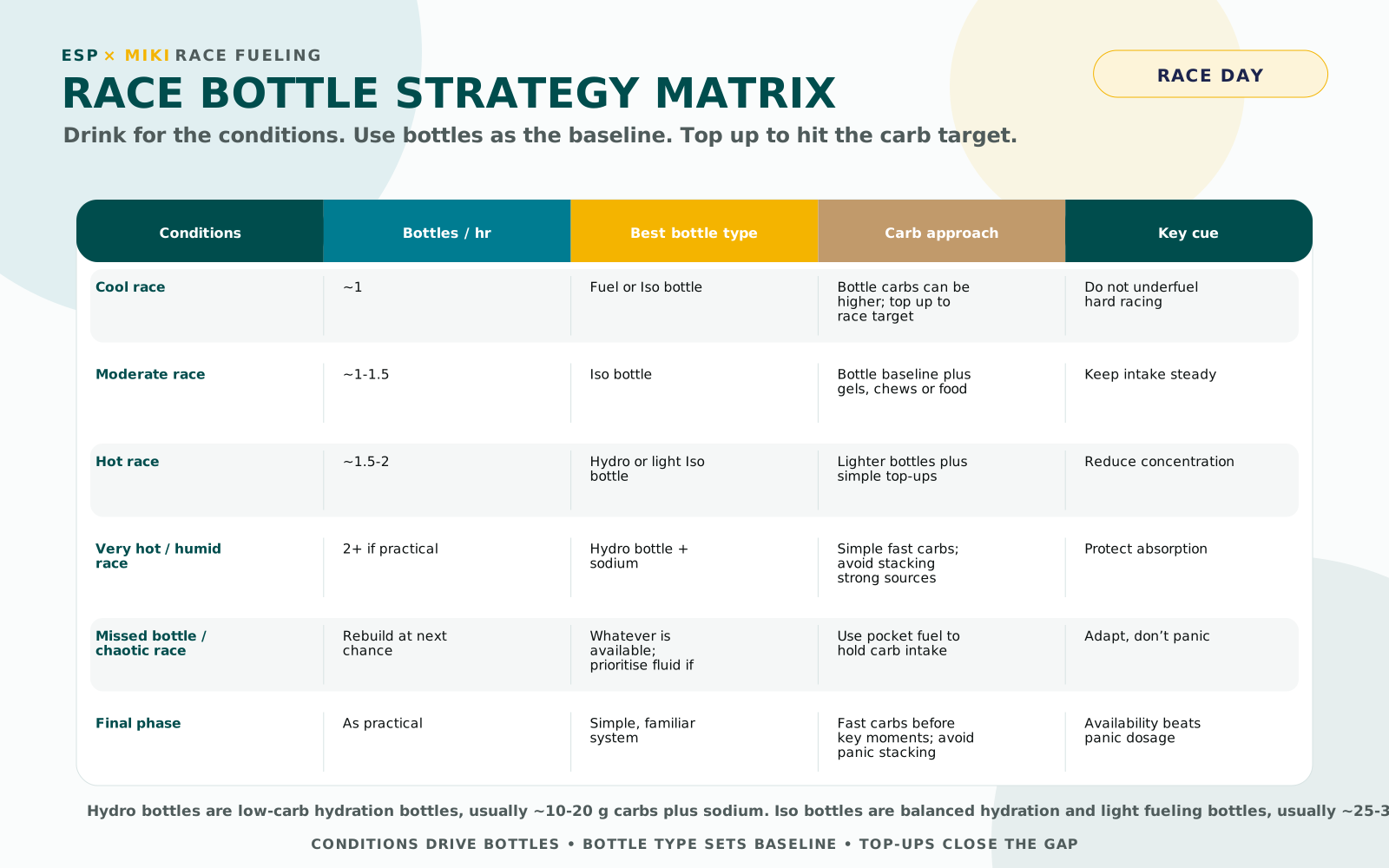
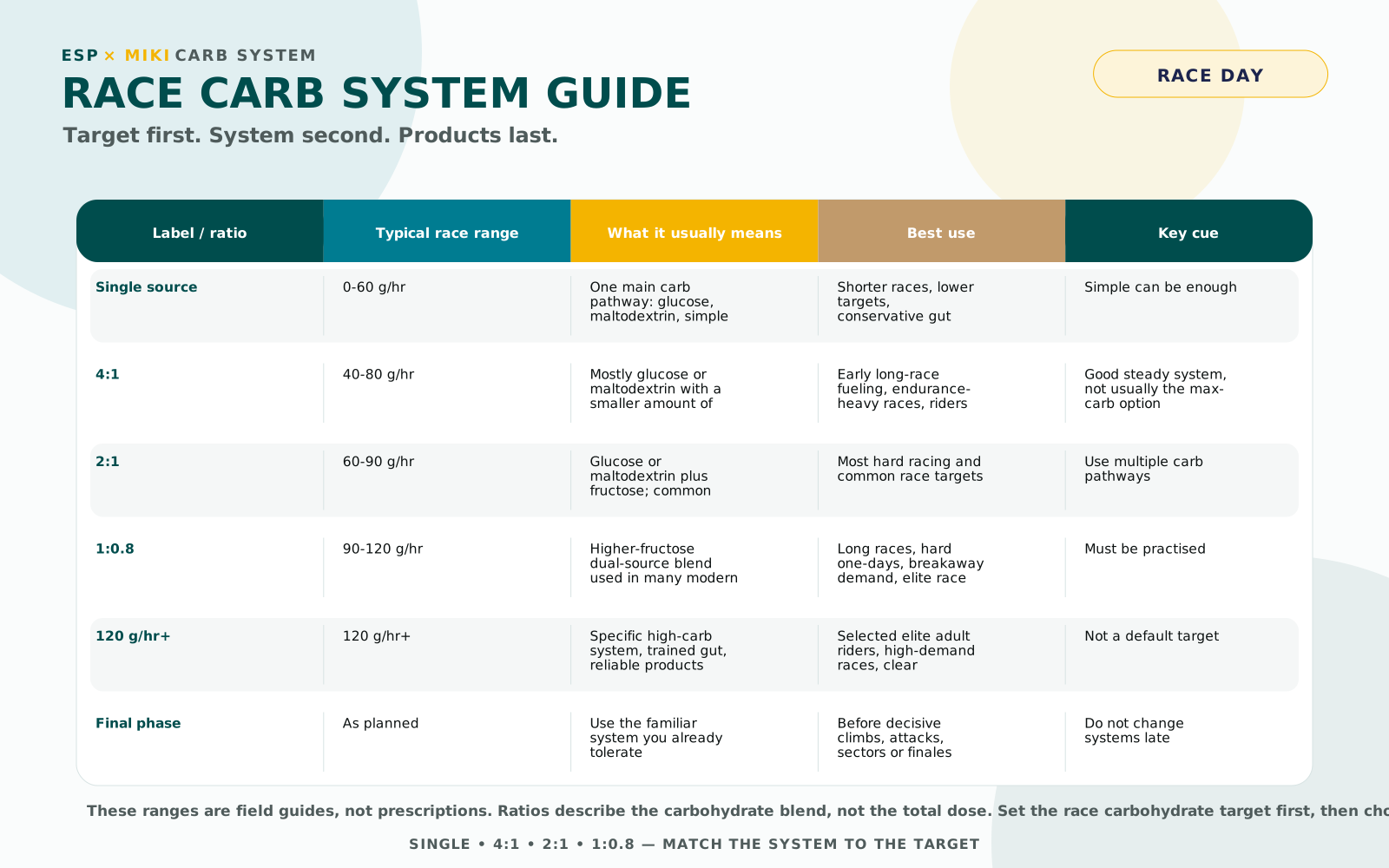
Use these visuals as the field guide: understand the system, choose the carb target, choose the carb system, match bottles to conditions, then build the plan.
Visuals are quick guides. Use the detailed tables below to individualise by rider size, race role, gut tolerance, support level, conditions, and Hexis where available.
Race Planning and Fueling Strategy
Fueling should not be planned in isolation. It should reflect your role, goals, and expected race dynamics.
Different riders in the same race may need different fueling strategies depending on whether they are supporting teammates, targeting a result, riding defensively, or trying to make a move early.
A clear race plan removes guesswork under pressure.
Define your role and goals
| Role | Typical focus | Fueling implication |
|---|---|---|
| Team leader / protected rider | Final result or decisive moments | Prioritise carbohydrate availability for key phases and finales. |
| Domestique / support rider | Supporting team strategy | Fuel consistently early and maintain flexibility around workload changes. |
| Breakaway rider | Sustained high output from early race phases | Start topped up and fuel aggressively early. |
| Defensive / survival | Stay in race / make selection | Prioritise hydration and steady fueling to avoid collapse. |
Fueling and race role
- Breakaway riders may require higher early carbohydrate availability and faster access to simple carbs.
- Domestiques often need a flexible system that still works if race tasks change unexpectedly.
- Protected riders usually prioritise consistent fueling all day so they arrive at the decisive phase with high availability.
- Race role influences not only how much fuel is needed, but when it becomes most important.
Align fueling with race phases
- Opening phase → high unpredictability, often hard to eat or drink, so start fueled.
- Middle phase → establish and protect steady baseline intake.
- Final phase → simplify delivery and increase carbohydrate availability before decisive efforts.
Plan your execution
- Define your bottle plan: what bottle types you will start with and what you hope to access later.
- Define your pocket plan: gels, chews, and any food carried at the start.
- Define your feed plan: what will come from the car, roadside support, or aid stations.
- Define your backup plan if a bottle or feed is missed.
Use simple, repeatable cues
- Time-based cues: every 15–20 minutes.
- Course-based cues: before key climbs, sectors, or technical sections.
- Team or staff reminders where available.
- Stem notes or simple reminder instructions can help when race stress is high.
Role-specific scenarios
| Scenario | Fueling priority | Practical implication |
|---|---|---|
| Early breakaway attempt | High early carb availability | Start topped up, have fast carbs accessible, fuel before the move if possible. |
| Controlled bunch race | Steady baseline intake | Use calmer phases to establish rhythm and build toward the final. |
| Late decisive finale | Rapid availability + tolerance | Use simple, fast carbs before the key phase, not all at once during it. |
Pre-Race Fueling
Pre-race fueling prepares the body for competition. The goal is to start the race with high carbohydrate availability, good hydration, and minimal gastrointestinal stress.
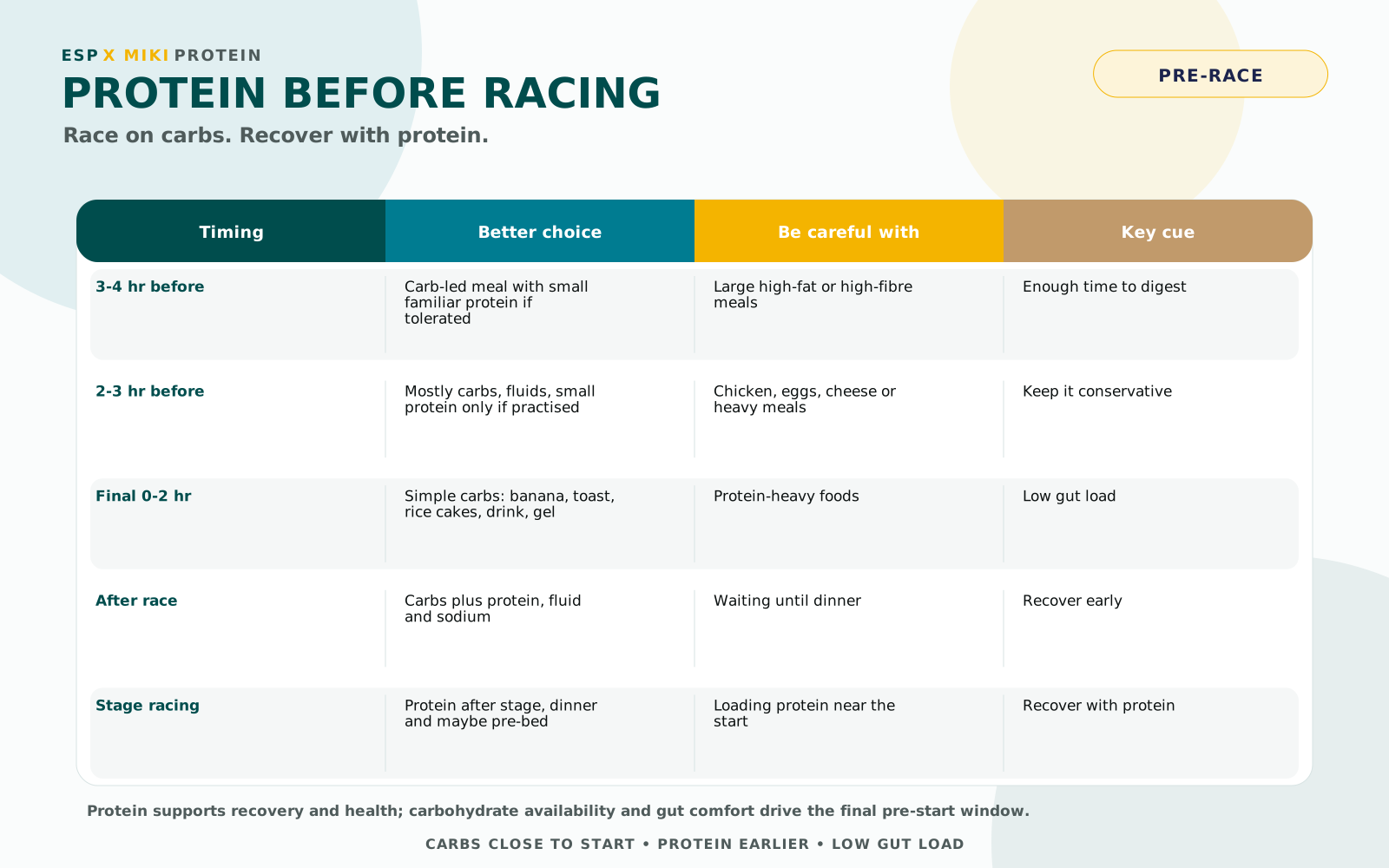
Simple rule: pre-race carbs first, protein earlier, hydration steady. Arrive at the start line well-fueled, well-hydrated, and comfortable — not heavy, bloated, or under-fueled.
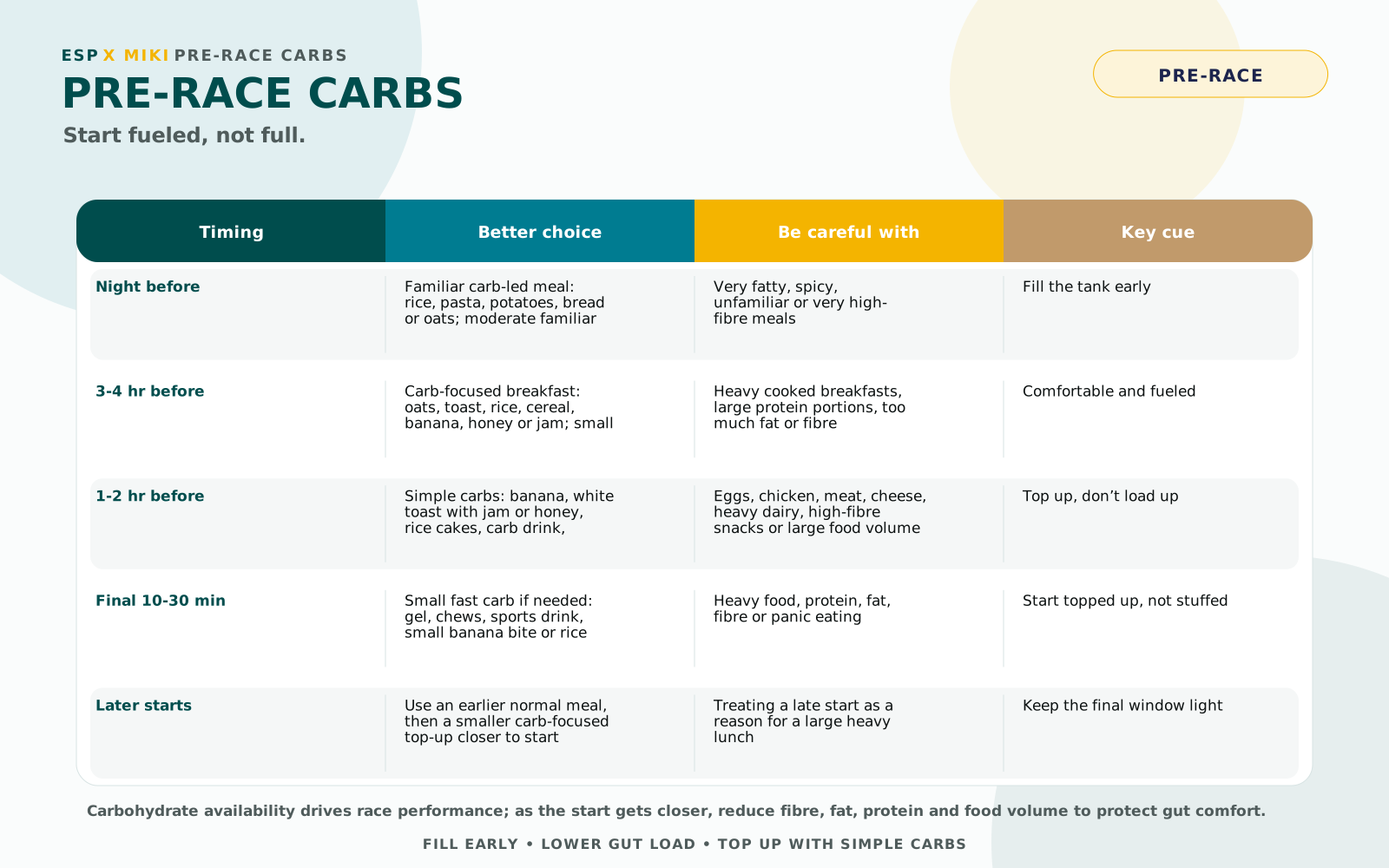
Use the visuals first, then open the detail sections only where you need to refine the plan.
Pre-Race Carbs
Purpose: fill the tank before the race starts while lowering gut load as the start gets closer.
The closer the rider gets to the start, the more food choice should shift toward familiar, easy-to-digest carbohydrate.
- Increase carbohydrate intake in the 24–48 hours before key races or stages.
- Focus on familiar, easily digested foods.
- Avoid large last-minute changes in diet.
- Reduce very high-fibre foods before racing if prone to GI issues.
- Avoid excessive fat or unfamiliar foods immediately before racing.
- Lower-fibre choices are often useful in the final 24 hours before key races.
- Main pre-race meal is typically 2–4 hours before the start.
- A top-up of carbohydrate may be useful closer to the start, especially if the opening phase is hard or unpredictable.
- Avoid starting the race already chasing intake.
- Simple cue: fill early, lower gut load, top up with simple carbs.
| Timing | Carbohydrate focus | Key cue |
|---|---|---|
| 24–48 hr before | High-carb familiar meals: rice, pasta, potatoes, oats, bread or similar | Increase glycogen stores |
| 3–4 hr before | Carb-focused breakfast: oats, toast, rice, cereal, banana, honey or jam | Comfortable and fueled |
| 1–2 hr before | Simple carbs: banana, white toast with jam or honey, rice cakes, carb drink, small low-fibre bar | Top up, don’t load up |
| Final 10–30 min | Small fast carb if needed: gel, chews, sports drink, small banana bite or rice cake | Start topped up, not stuffed |
| Later starts | Earlier normal meal, then smaller carb-focused top-up closer to start | Keep the final window light |
Pre-Race Protein
Purpose: keep normal athlete nutrition in place without letting protein, fat or fibre compromise gut comfort near the start.
Protein is useful, but the final pre-start window is driven by carbohydrate availability and low gut load.
- Protein foods such as chicken, eggs, meat, fish, cheese, and high-protein meals can slow digestion and increase gut load if eaten too close to the start.
- These foods are not banned on race day, but timing and portion size matter.
- Use a conservative approach with juniors and GI-sensitive riders. Keep protein earlier, smaller, familiar, and away from the final pre-start window.
- Small amounts of familiar protein may be appropriate in the main pre-race meal when eaten early enough.
- Avoid large protein portions, fried foods, creamy sauces, high-fat meals, and large salads close to the start.
- In the final 1–2 hours before racing, prioritise simple carbohydrate options rather than protein-based meals.
- Simple rider rule: recover with protein, race on carbs.
| Timing before start | Protein guidance | Practical examples |
|---|---|---|
| 4+ hr before | Normal meal can include moderate protein if familiar and well tolerated. | Rice + small chicken portion, toast + eggs, oats + yogurt |
| 2–4 hr before | Keep protein small and conservative; prioritise carbohydrate. | Rice + small amount of egg, oats + banana, toast + honey, cereal + yogurt |
| 1–2 hr before | Avoid protein-based meals; use mostly carbohydrate. | Banana, white toast + jam or honey, rice cakes, carb drink, small low-fibre bar |
| Final 60 min | Carbohydrate only; no protein-based foods. | Gel, chews, sports drink, banana, small rice cake |
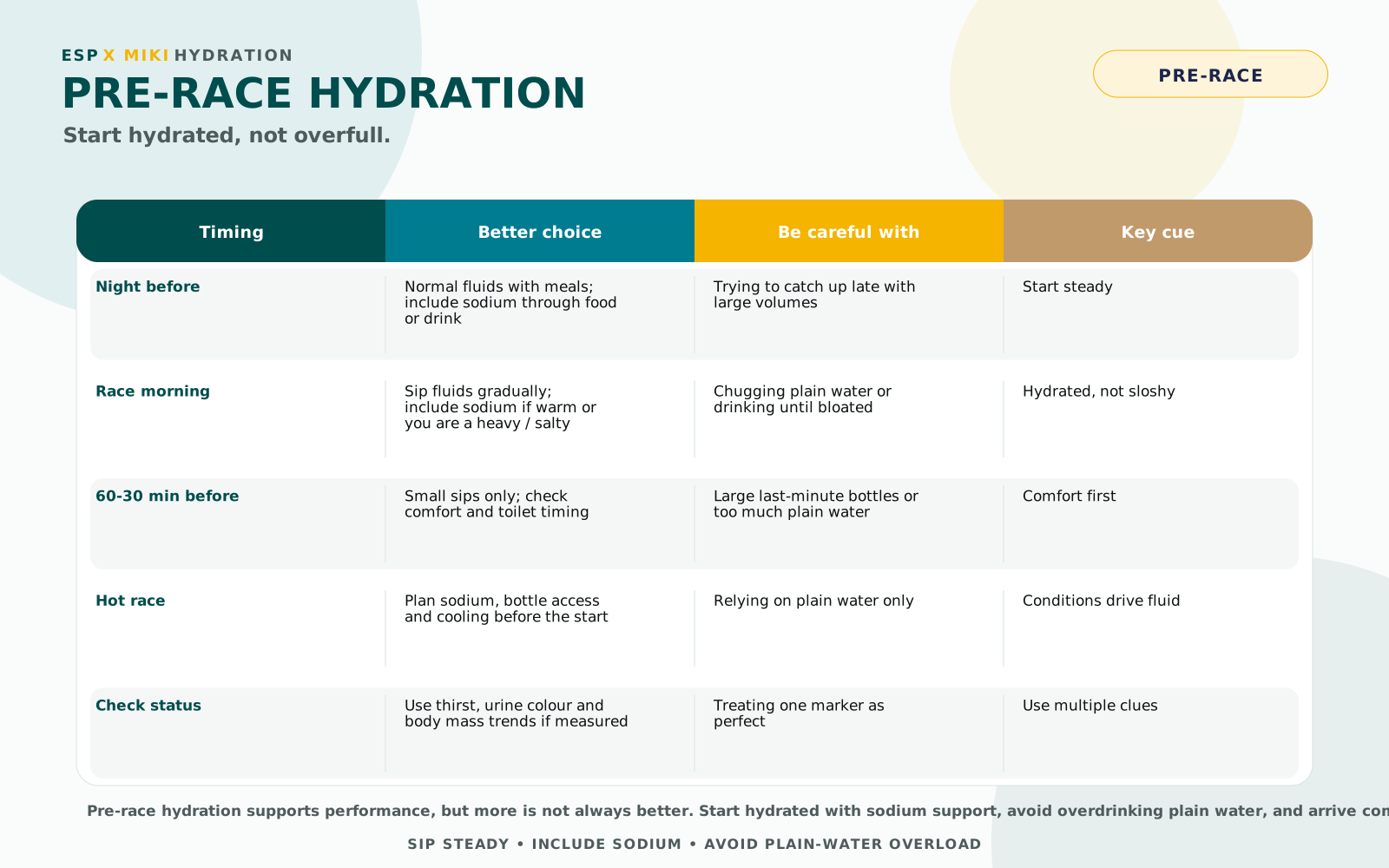
Pre-Race Hydration
Purpose: start hydrated with sodium support, not overfilled with plain water.
Sip steadily, include sodium where appropriate, and avoid arriving at the start line sloshy or bloated.
- Start the race well hydrated.
- Include sodium in fluids before the race.
- Avoid overdrinking plain water.
- Use small, steady sips rather than last-minute chugging.
- Check urine colour and thirst, but use them as guides rather than perfect measures.
- In hot races or for salty sweaters, include more deliberate sodium planning.
| Timing | Hydration focus | Be careful with | Key cue |
|---|---|---|---|
| Night before | Normal fluids with meals; include sodium through food or drink | Trying to catch up late with large volumes | Start steady |
| Race morning | Sip fluids gradually; include sodium if warm or heavy sweater | Chugging plain water | Hydrated, not bloated |
| 60–30 min before | Small sips only; check comfort | Starting with a sloshy stomach | Comfort first |
| Hot race | Plan sodium and bottle access before the start | Plain water only | Conditions drive fluid |
| Signs to check | Thirst, urine colour, body mass trends if measured | Treating one marker as perfect | Use multiple clues |
Fructose and liver glycogen (pre-race)
Including a small amount of fructose-containing carbohydrate before racing may help support liver glycogen availability, particularly after an overnight fast.
This is usually achieved through normal foods rather than specific products.
- Include fruit or fruit-based options alongside your main carbohydrate sources.
- Examples: banana, berries, fruit juice, honey.
- This complements glucose-based foods such as rice, oats, or bread.
- Particularly useful before early starts or hard opening phases.
Practical Pre-Race Fueling Options
| Timing | Example options | Purpose |
|---|---|---|
| 24–48 hr before | High-carb meals: rice, pasta, potatoes, oats | Increase glycogen stores |
| 2–4 hr before | Rice + small amount of egg, oats + banana, toast + honey, cereal + yogurt | Carb-focused pre-race meal with low gut load |
| 60–30 min before | Banana, small bar, carb drink | Top-up carbs |
| 10–15 min before | Gel or carb drink (~20–30 g) | Immediate availability |
Advanced Pre-Race Hydration
- Hyperhydration strategies may be useful in hot conditions.
- Glycerol-based strategies may increase fluid retention in some cases.
- These strategies should only be used if practiced and well tolerated.
Typical Portion Guidance
- Main pre-race meal: roughly ~1–3 g carbohydrate per kg body weight depending on timing and tolerance.
- Pre-start top-up: roughly ~20–30 g carbohydrate.
- Enough to fuel, not enough to feel heavy.
Step 1: Fuel for the Race
Fuel for the demands of the race, not just the duration.
Short races can still require high carbohydrate availability if the intensity is high. Longer races usually demand both higher total intake and better timing across the day.
The athlete’s role, workload, and likely race pattern all matter. A rider trying to make the early break may need a very different early fueling strategy from a rider protected for the final.
Carbohydrate Targets by Race Demand
| Race demand | Typical duration | Typical carbs / hr | Notes |
|---|---|---|---|
| Short aggressive race | <2 hr | 60–90 g | High intensity can justify high availability despite shorter duration. |
| Road race / rolling race | 2–4 hr | 70–100 g | Steady baseline plus well-timed top-ups. |
| Long race / hard one-day | 4–6+ hr | 80–120 g | Requires a practiced system and consistent execution. |
| Breakaway or highly stochastic race | Variable | 80–120 g | Early phases may require higher availability and aggressive early fueling. |
| Protected rider / GC focus | Variable | 80–110 g | Consistency all day so the rider arrives fueled for the key phase. |
Fueling Demand by Race Phase
| Race phase | Fueling focus | Practical implication |
|---|---|---|
| Opening hour | High readiness | You may not get a safe chance to fuel early, so start fueled and have quick carbs accessible. |
| Middle race | Baseline protection | Establish rhythm and prevent energy drift. |
| Final 60–90 min | Availability before decisive efforts | Simplify delivery and time intake before key moments. |
Opening phase of the race
- The early phase of races is often high intensity and unpredictable.
- Opportunities to eat and drink may be limited.
- Ensure carbohydrate availability is already high before the start.
Early breakaway strategy
- Start with carbohydrate stores fully topped up before the race.
- Have fast carbohydrates immediately available.
- Fuel before and during the move where possible, not only after it succeeds.
- Do not rely on later race fueling to correct early deficits.
Applied coaching notes
- Larger riders and riders producing higher absolute power usually sit toward the upper end of the range.
- More intense races and more demanding roles require earlier and more deliberate fueling.
- Consistency matters more than occasional large intakes.
- The final hour is often the highest carbohydrate-demand phase of the race.
Step 2: Drink for the Conditions
Hydration needs are driven by conditions, intensity, and individual sweat rate. Sodium should be considered together with fluid intake, not in isolation.
In racing, how you drink matters almost as much as how much you drink.
Fluid Targets by Conditions
| Conditions | Temp | Bottles / hr (500 ml) | Sodium target / hr | Approx sodium / bottle |
|---|---|---|---|---|
| Cool | <20°C | 1 | 300–500 mg | 300–500 mg |
| Moderate | 20–25°C | 1.5 | 500–700 mg | 350–450 mg |
| Hot | >25°C | 2 | 700–1400 mg | 350–700 mg |
Drinking strategy
- Drink in small, regular sips rather than large infrequent amounts.
- Use calmer moments in the race to drink.
- Avoid drinking only when very thirsty.
- Steady intake usually improves comfort and absorption.
Drinking behaviour
- Frequent small sips improve absorption and comfort.
- Large, infrequent drinks can increase gut discomfort.
- Use natural race lulls to drink regularly.
Cool vs hot race strategy
- Cool conditions usually allow slightly stronger bottles.
- Hot conditions require more fluid and usually lighter bottles.
- Use more top-up fuels in the heat if total carbs still need to stay high.
Hydration notes
- Heavy sweaters often sit toward the upper end of the fluid range.
- Salty sweaters often sit toward the upper end of the sodium range.
- Humidity can increase sweat rate even when temperatures are only moderate.
A note on sodium during exercise
Sodium alone is not a guaranteed solution for cramping, and muscle cramps during exercise are influenced by multiple factors including fatigue, pacing, and neuromuscular load.
However, sodium still matters because it supports fluid absorption, fluid retention, thirst, and overall drink effectiveness.
For this reason, race bottles generally work better when they include electrolytes and some carbohydrate rather than relying heavily on plain water.
Step 3: Choose Your Carb System
Choose your carb system based on your hourly intake target.
In racing, the best system is usually the one the athlete tolerates well, has practiced in training, and can repeat under pressure.
Carb System Guide
| Carb intake | System type | Typical composition | Why it works |
|---|---|---|---|
| ≤60 g/hr | Single transport | maltodextrin, glucose, or simple foods | Simple system, often easy on the gut |
| 60–90 g/hr | Dual transport | glucose / maltodextrin + fructose (~2:1) | Uses multiple intestinal transporters |
| 90–120 g/hr | High dual transport | glucose / maltodextrin + fructose (~1:0.8 or similar) | Supports higher absorption when practiced |
How this fits with product labels
| Ingredient | What it usually indicates |
|---|---|
| Maltodextrin | Main glucose-based carb source |
| Glucose / dextrose | Simple glucose source |
| Fructose | Second transport pathway |
| Cyclic dextrin | Lower-osmolality carbohydrate option |
| Electrolytes / sodium | Hydration support |
Practical notes
- Most modern endurance products are already built around these systems.
- Do not overthink ratios if the product works and is tolerated.
- Do not change carb systems in the finale. Improve timing and delivery instead.
- Professional riders usually simplify delivery late in the race — they do not suddenly switch to a completely different carb strategy.
Step 4: Build Your Bottle Mix
Use bottles to set your hydration and baseline fuel.
In racing, bottles usually provide the baseline. Pocket fuels and top-ups usually close the gap to the full carbohydrate target.
Basic bottle types
| Bottle type | Typical carbs | Use |
|---|---|---|
| Hydro bottle | 10–20 g | Hydration-focused |
| Iso bottle | 25–30 g | Hydration + light fueling |
| Fuel bottle | 40–60 g | Higher carbohydrate delivery |
| Cooling bottle | Water / cooling use | Cooling rather than drinking |
Bottle carbohydrate by conditions
| Conditions | Default carbs / bottle | Why |
|---|---|---|
| Cool | ~40 g | Often tolerated because bottle turnover is lower |
| Moderate | ~40 g | Useful default in many race scenarios |
| Hot | ~30 g | Supports higher fluid intake with lower gut load |
Choosing drink mix products
Choose drink mixes that are targeted and simple for the task you need them to perform.
Where possible, choose reputable manufacturers and consider using batch-tested products, particularly when competing at a higher level.
Minimal unnecessary additives is usually a good principle. Artificial sweeteners are not automatically bad, but they are often unnecessary in on-bike fueling products and some athletes find they reduce tolerance during long races.
Advanced low-osmolality systems
Maurten-style hydrogel systems can be useful for high-carbohydrate fueling, especially when athletes are chasing higher carb intakes with good gut tolerance.
However, these products are not designed as high-sodium hydration products. Maurten drink mixes are built around a specific formulation, and adding extra electrolytes directly into the mix may interfere with how the system is designed to work.
For heavy sweaters, salty sweaters, or hot conditions where sodium needs are high, choose this type of product carefully. If an athlete is chasing 90+ g/hr in the heat, a cyclic dextrin / cluster dextrin system may be a better option for some riders, as it can offer a lower-osmolality way to push carbohydrate while allowing more flexibility with sodium strategy.
- Maurten hydrogel technology
- Cyclic dextrin (cluster dextrin)
Step 5: Add Top-Up Fuels
Bottles set your baseline. Top-ups complete the plan.
Additional carbohydrate is often needed to reach race targets. Top-up fuels are what allow the rider to close the gap, adapt to the race, and time carbohydrate around key efforts.
Top-Up Fuel Guide
| Fuel type | Typical carbs | How often | Fluid needed | Osmolality / gut load | Best use |
|---|---|---|---|---|---|
| Real food (banana, rice cake) | 20–40 g | Every 30–45 min | Small sips helpful | Low–moderate | Early race, lower intensity, long races |
| Bars | 20–40 g | Every 30–45 min | Small sips helpful | Moderate | Early or mid race when chewing is practical |
| Chews | 20–30 g | Every 20–30 min | Sip fluid | Moderate | Mid or late race when more practical than bars |
| Standard gels | 20–30 g | Every 20–30 min | Drink with fluid | Higher | Racing and key efforts |
| Isotonic gels | 20–25 g | Every 20–30 min | Optional | Moderate | Racing where fluid access is limited |
| Hydrogel / cyclic options | 20–40 g | Every 20–30 min | Optional | Lower | High-carb racing where gut load matters |
What ~30 g of carbohydrate looks like
| Fuel | Typical portion | Approx carbs |
|---|---|---|
| Gel | 1 standard gel | ~25–30 g |
| Chews | 1 pack | ~25–30 g |
| Banana | 1 medium | ~25–30 g |
| Rice cake | 1 serving | ~25–30 g |
| Bar | 1 bar | ~30–40 g |
Fuel type progression through a race
| Race phase | Typical fuel types | Why |
|---|---|---|
| Early race | Real food, bars, rice cakes | Lower intensity, easier to digest solid foods |
| Mid race | Bars, chews, some gels | Balance of energy and practicality |
| Final phase | Gels, chews, drink | Faster delivery, lower gut load, easier to consume at high intensity |
Fuel early in racing
- Begin fueling early, even if intensity feels low.
- Do not wait until fatigue or hunger appears.
- Early underfueling is difficult to correct later.
When you can’t eat or drink
- There will be periods where it is difficult or unsafe to eat or drink.
- Plan to fuel before these sections when possible.
- Use calmer moments in the race to re-establish intake.
Before the decisive phase
- Fueling should increase before the key phase of the race.
- Do not rely on fueling during decisive moments.
- Plan intake 10–20 minutes before major efforts where possible.
- In the final phase, focus on rapidly available carbohydrates rather than large total doses all at once.
Palate fatigue
- Taste fatigue can reduce intake late in long races.
- Sweet-only strategies can become difficult over time.
- Including some variation in flavour or texture can help maintain intake.
- Simplify again toward the final phase.
Fueling Decision Guide
Use this to quickly build a race fueling plan.
Step 1 — Choose carb target
| Race demand | Target carbs/hr |
|---|---|
| Short / hard racing | 60–90 g |
| Road race / rolling race | 70–100 g |
| Long race / hard one-day / breakaway demand | 80–120 g |
Step 2 — Determine bottle baseline
| Conditions | Bottles/hr | Carbs per bottle | Baseline carbs |
|---|---|---|---|
| Cool | 1 | ~40 g | ~40 g |
| Moderate | 1.5 | ~40 g | ~60 g |
| Hot | 2 | ~30 g | ~60 g |
Step 3 — Add ~30 g fuel units
| Fuel | Portion | Carbs |
|---|---|---|
| Gel | 1 | ~25–30 g |
| Chews | 1 pack | ~25–30 g |
| Banana | 1 medium | ~25–30 g |
| Rice cake | 1 | ~25–30 g |
| Energy bar | 1 | ~30–40 g |
Step 4 — Check race logistics
- Can you actually access this many bottles?
- What will come from your pockets, the car, or feed zones?
- What happens if you miss a bottle or feed?
Putting It Together
Hydration determines how many bottles you drink per hour. Bottles provide baseline carbohydrate and sodium. Foods, gels, or chews are used to reach the target for the race.
Bottles provide the baseline. Top-ups close the gap.
Baseline bottles + top-up requirements
| Target carbs/hr | Cool baseline (1 bottle) | Top-up needed | Moderate baseline (1.5 bottles) | Top-up needed | Hot baseline (2 bottles) | Top-up needed |
|---|---|---|---|---|---|---|
| 60 g | 40 g | ~20 g | 60 g | none | 60 g | none |
| 80 g | 40 g | ~40 g | 60 g | ~20 g | 60 g | ~20 g |
| 100 g | 40 g | ~60 g | 60 g | ~40 g | 60 g | ~40 g |
| 120 g | 40 g | ~80 g | 60 g | ~60 g | 60 g | ~60 g |
How the race changes the plan
- More bottles in the heat usually means lighter bottles and more reliance on gels or chews.
- More chaotic racing usually means greater value from pocket fuels and simpler delivery.
- The stronger the final phase, the more important early baseline intake becomes.
Recovery & Stage Race Fueling
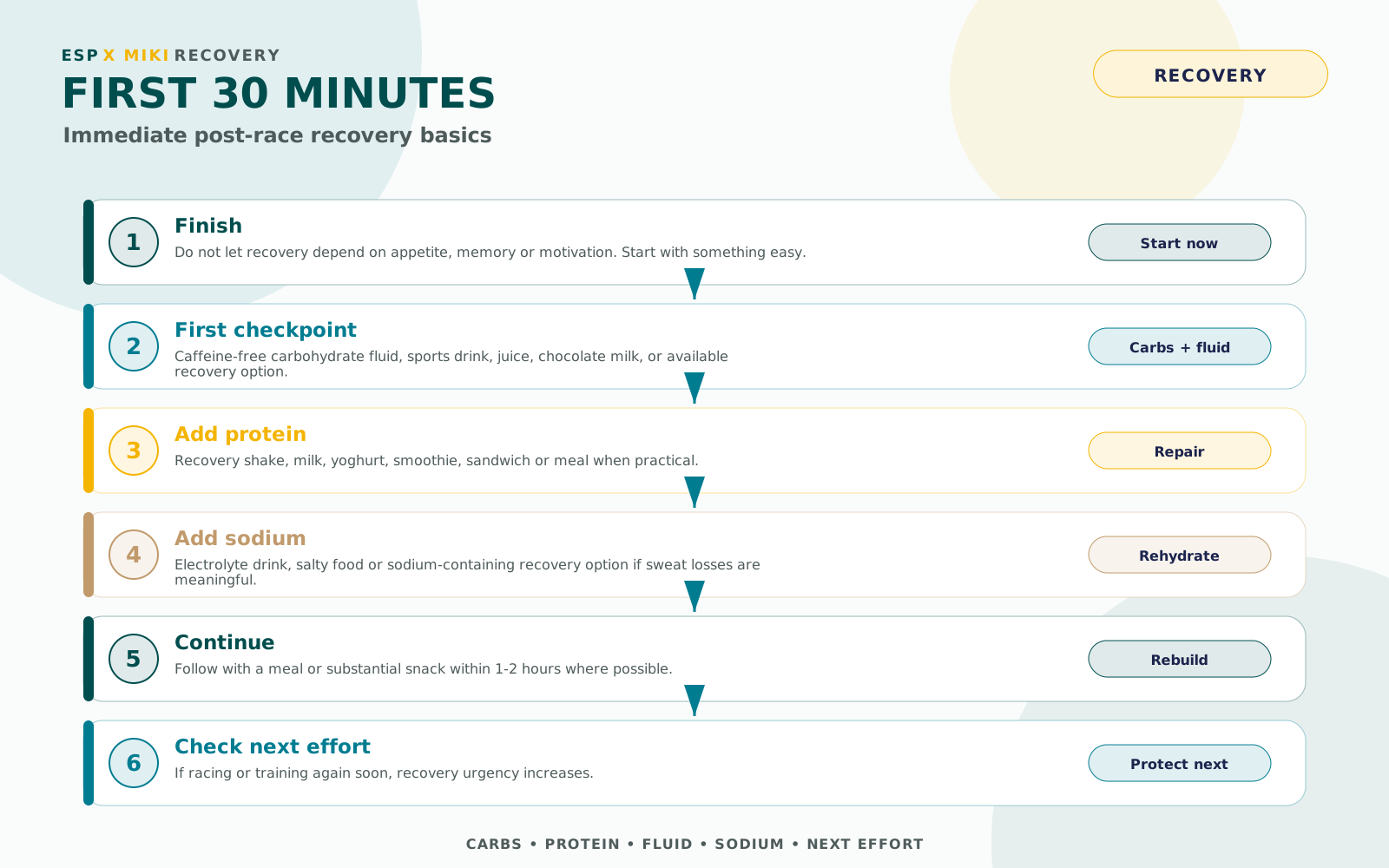
Recovery is part of the race fueling plan. The job is not finished at the finish line.
After racing, the priorities are simple: rehydrate with sodium, restore carbohydrate availability, include protein, and protect the next performance.
For stage races, tours, camps, or repeated race blocks, use this section with the separate Stage Race Fueling & Recovery Protocol.
When to use the Stage Race Fueling & Recovery Protocol
This section provides the race-day recovery basics. For multi-day tours, stage races, camps, or repeated race blocks, use the separate Stage Race Fueling & Recovery Protocol.
- Use this Race Fueling Protocol to plan pre-race, in-race, and immediate post-race execution.
- Use the Stage Race Fueling & Recovery Protocol when the rider must recover and race again the next day.
- The stage-race protocol should cover full-day energy intake, repeated carbohydrate restoration, protein timing, recovery shakes, tart cherry use, hydration between stages, dinner and breakfast planning, and appetite management.
- In stage racing, the goal is not only to finish today fueled, but to avoid accumulating small deficits across multiple days.
Immediate recovery priorities
- Rehydrate with fluid and sodium.
- Restore carbohydrate availability.
- Include protein to support recovery.
Rehydration protocol (post-race and between stages)
Replacing fluid losses after racing is critical, especially in stage races where recovery time is limited.
Fluid losses should be estimated and replaced systematically, rather than relying on thirst alone.
How to estimate fluid loss
- Weigh yourself before the race (minimal clothing, consistent conditions).
- Record how much fluid you drink during the race.
- Record any toilet stops if possible.
- Weigh yourself again after the race.
- Each 1 kg of body mass loss ≈ 1 litre of fluid loss.
- Adjust for fluid intake during the race to estimate total sweat loss.
Rehydration target
- Aim to replace ~150% of the fluid lost over the next 2–4 hours.
- Example: if 1 kg is lost, aim to drink ~1.5 L of fluid.
- Include sodium in fluids to support retention and absorption.
Practical rehydration strategy
- Start rehydration immediately after finishing.
- Use small, regular intakes rather than large volumes at once.
- Combine fluids with food where possible.
- Avoid relying on plain water alone — include electrolytes.
- Monitor urine colour and thirst as additional guides.
If you can’t measure (field-based approach)
- Start drinking immediately after the race.
- Aim for 1–1.5 bottles (500–750 ml each) in the first hour.
- Continue drinking regularly over the next 2–4 hours.
- Use electrolyte drinks rather than plain water to improve fluid retention.
- Use thirst as a guide, but do not rely on it alone.
- Monitor urine colour — pale yellow is a useful target.
- Combine fluids with meals and snacks.
Immediate recovery options
| Timing | Example options | Purpose |
|---|---|---|
| 0–30 min post | Recovery drink, carb drink + protein, chocolate milk | Start recovery quickly |
| 1–2 hr post | Rice, pasta, potatoes + protein source | Restore glycogen and support repair |
| Ongoing | Regular meals + snacks | Continue recovery process |
Recovery targets
- Carbohydrate: roughly ~1.0–1.2 g/kg in early recovery when rapid replenishment matters.
- Protein: roughly ~20–30 g in early recovery.
- Fluid: replace losses gradually with sodium support.
Recovery support options
In many professional and high-performance environments, riders are often given simple recovery aids immediately after racing.
- Tart cherry products are commonly used as part of early recovery routines.
- Often provided soon after the finish alongside fluids and recovery nutrition.
- Typically used across race blocks rather than as a one-off intervention.
Stage racing practical strategy
- Eat and drink within 30 minutes of finishing where possible.
- Continue fueling regularly through the afternoon and evening.
- Prioritise carbohydrate intake across the day.
- Think about tomorrow as soon as today finishes.
Fueling across stage races
- Fuel to perform on the current stage.
- Prioritise recovery immediately after the stage.
- Increase carbohydrate intake the day before key stages where useful.
- Avoid accumulating small deficits across multiple days.
Athlete Ownership and Support
Support levels vary. Some riders will have coaches, parents, soigneurs, feed zones, or team staff. Others, especially when travelling, guest riding, or racing overseas, may need to prepare and manage more of the plan themselves.
The rider should understand the plan well enough to protect the basics when support is limited, while communicating clearly and respectfully when team support is available.
Communicating With Team Support
When racing with a team, communicate fueling and recovery needs clearly and respectfully before the race or stage. Understand the team system and work within it while still protecting the core priorities: carbohydrate, fluid, sodium, recovery timing, food safety, and sleep.
Race Strategy
Race strategy affects when fueling is possible, what is practical, and which moments matter most.
Good race fueling is not only about totals — it is about timing, delivery, and adaptation.
Opening phase of the race
- The early phase is often hard, nervous, and unpredictable.
- Opportunities to eat and drink may be limited.
- This is why pre-race setup and immediate availability matter so much.
Pocket fueling strategy
- Carry enough fuel to bridge gaps between feeds.
- A common starting point is 2–4 gels or equivalent, depending on race format.
- Pockets give you control when the race doesn’t.
If you miss a bottle or feed
- Do not panic — adjust the plan.
- Use pocket fuels to maintain carbohydrate intake.
- Prioritise hydration if conditions are hot.
- Take the next opportunity to re-establish the plan.
Keep it simple under pressure
- Use familiar products and routines.
- Avoid overly complex plans in racing.
- Simple systems are easier to execute under fatigue.
The last bottle problem
- Taking a bottle late in the race does not guarantee you will be able to drink it.
- Technical sections, positioning, and intensity often limit intake.
- Plan to fuel before the final phase, not rely on the last bottle.
- Use simple, accessible fuels in the lead-in to decisive moments.
Final hour strategy
- The final hour is often the most important fueling phase of the race.
- Increase carbohydrate availability before the key phase, not during it.
- Shift toward simple, fast, low-chew options as intensity rises.
Final phase fueling considerations
Increasing carbohydrate intake before the decisive phase must still respect the principles of absorption, osmolality, and gut tolerance.
Rapidly consuming large amounts of carbohydrate all at once — especially multiple gels without fluid or stacked with strong bottles — can overwhelm the gastrointestinal system and reduce effective carbohydrate delivery.
- Increase intake progressively, not all at once.
- Take gels with fluid to support absorption.
- Avoid combining multiple highly concentrated sources at once.
- Use only strategies that have been practiced in training.
Race Fuel Logistics
In racing, fueling is not just physiology. It is also logistics.
The best fueling plan is not the theoretical optimum — it is the best plan you can execute with the fuel you can actually access.
Where fuel comes from in racing
| Source | What is available | Limitations |
|---|---|---|
| Start / personal supply | Own bottles, preferred products, specials | Limited quantity; must last until next access point |
| Team car | Team bottles and fuel | Access depends on race situation and positioning |
| Roadside / soigneurs | Pre-prepared bottles or support items | Short window; timing and recognition matter |
| Feed zones / aid stations | Bottles, musettes, race support | May be missed or chaotic |
| Neutral service | Standard bottles | Limited choice, not personalised |
| Pockets / on-bike storage | Gels, chews, bars, food | Carrying capacity limited |
Carry vs access balance
- More fuel carried increases security but can reduce accessibility.
- Too many items in pockets can make fueling harder under pressure.
- Balance quantity with ease of access.
- Place priority fuels where they are easiest to reach.
Personal vs team fueling strategy
- Riders often start with personal specials and then transition to team-provided products later in the race.
- Train with team products before racing to avoid surprises.
- Know what is in team bottles before the race.
Bottle marking and team logistics
- Teams often mark bottles to identify them quickly.
- Simple systems matter: e.g. no mark = hydro, X = fuel, XX = high-carb or other agreed code.
- Practice bottle recognition and combinations in training.
Professional vs amateur racing
| Context | Fueling reality | Key consideration |
|---|---|---|
| Professional racing | Team car + multiple feeds | More access, but still position-dependent |
| Amateur road racing | Often limited or no car support | Carry more and plan more conservatively |
| Local / unsupported racing | Minimal support | Self-sufficiency becomes critical |
Gravel and unsupported racing
- Carry all fuel or plan carefully around aid stations.
- Expect longer gaps between refueling opportunities.
- Balance weight against fueling needs.
- Frame bags, top-tube bags, and hydration packs can become part of the strategy.
Hydration packs / CamelBak-style systems
- Useful when fluid carrying capacity is the main limitation.
- Particularly relevant in unsupported gravel, marathon MTB, and hot events with limited refill access.
- They solve some logistics, but do not remove the need for a clear carb and sodium strategy.
Example Fueling Setups
These examples show how the race fueling system works in practice.
Example Race Fueling Setups
| Scenario | Example setup | Approx carbs / hr |
|---|---|---|
| Short aggressive road race | 1 bottle (~40 g baseline across hour) + 1 gel before key phase | ~65–80 g |
| Long road race | 1.5 bottles/hr (~60 g baseline) + gel / chews | ~80–100 g |
| Hot race | 2 hydro / iso bottles (~60 g baseline total) + gels | ~80–100 g |
| Breakaway rider | Fast carbs accessible early + bottle baseline + aggressive early gel use | ~90–110 g |
| Protected rider / GC focus | Steady baseline all day + simple fast carbs before finale | ~80–110 g |
| Amateur unsupported race | Start with full pockets + planned bottle load + conservative execution | Variable |
| Supported gravel race | Higher carry capacity + mixed fueling + refill planning | ~70–100 g |
| Unsupported gravel race | Bottles + hydration pack + pocket food + aid station plan | Variable |
Advanced Fueling Techniques
Use this section after the basics are in place. Advanced strategies can refine performance, but they do not replace carbohydrate availability, fluid, sodium, recovery, and simple execution.
Open these details when the rider is targeting higher intakes, racing at elite level, managing heat, training the gut, or preparing for repeated race demands.
Fueling periodisation within a race
| Race phase | Example carb intake | Why |
|---|---|---|
| Early race | ~60–80 g/hr | Establish baseline and protect early availability |
| Middle race | ~80–90 g/hr | Maintain energy and avoid drift |
| Final phase | ~90–120 g/hr if tolerated | Support decisive efforts and finales |
Timing vs total intake
- Total carbohydrate intake matters, but timing often matters more.
- Even intake across the race improves absorption and availability.
- Large, infrequent intakes increase GI stress and reduce effectiveness.
- Fuel before key efforts, not after.
Carbohydrate mouth rinse (high-intensity support)
Rinsing the mouth with a carbohydrate drink without swallowing can provide a small performance benefit through central nervous system pathways.
- Useful in very high-intensity efforts or finales.
- Can help when gut tolerance is reduced.
- Swill carbohydrate drink for ~5–10 seconds, then swallow or spit.
- Not a replacement for proper fueling — a small additional tool.
Heat fueling adjustments
- Hot races usually require more fluid, lighter bottles, and more reliance on simple top-ups.
- As fluid intake rises, bottle concentration should usually fall.
- Hydration often becomes the limiter before total carbs in extreme heat.
Gut training
- Athletes targeting 90–120 g/hr should gradually train the gut.
- Practice high-carb strategies during training, including race-pace efforts.
- Repeat similar fueling patterns to improve tolerance and confidence.
Elite Adult and WorldTour-Level Carbohydrate Context
Elite adult and WorldTour-level race fueling may sit above simple field ranges when the race demand, rider role, gut tolerance, and support justify it. These are advanced strategies, not default targets for every rider.
- Modern elite road racing commonly targets ~90 g/hr on the bike in demanding races.
- Selected hard stages, finals, or race simulations may target ~120 g/hr or higher when trained and tolerated.
- Higher on-bike fueling can support today’s performance and reduce the recovery job after the finish.
- High intakes should use multiple transportable carbohydrates and be practised progressively.
- Do not copy professional intake numbers without considering rider size, race duration, intensity, product mix, gut tolerance, and support.
Practice race fueling in training
Fueling strategies should be practiced regularly in training, not introduced for the first time in racing.
- Practice fueling at race intensity, not only endurance pace.
- Rehearse bottle and pocket strategies.
- Test fueling before key efforts and in race simulations.
- Use the same products and combinations planned for racing.
Fueling ahead in stage races
- Stage racing requires balancing today’s performance with preparation for tomorrow.
- Increase carbohydrate intake in the day before key stages where appropriate.
- Avoid creating large deficits on easier stages if a major stage follows.
- Fuel the stage before the stage.
Key advanced fueling principles
- More carbs only help if they are absorbed and tolerated.
- Finale fueling is about availability, not just total dose.
- Consistent intake across the race beats occasional large intakes.
- Complex plans fail under pressure.
Ergogenic Aids in Racing
Supplements are optional support tools, not the foundation of race fueling. Use them only after the core plan is clear: carbohydrate, fluid, sodium, recovery, and sleep.
Any ergogenic aid should be planned, practiced, appropriate for the race role, and batch-tested where relevant. Nothing new close to competition.
This section focuses on practical race use rather than detailed supplement physiology.
Caffeine
- Commonly used to enhance alertness and performance.
- Can be taken pre-race and/or during the race.
- Often used before key phases such as climbs, finales, or late decisive moments.
- Timing often matters more than total dose.
Nitrates (e.g. beetroot)
- Can support endurance performance and efficiency.
- Often used before races or key stages.
- Typically taken 2–3 hours before the start.
- May be used across multiple days in stage racing.
Sodium bicarbonate
- Used to support buffering during high-intensity efforts.
- Typically taken pre-race or before key race phases, depending on protocol.
- Requires individual testing due to GI risk.
Beta-alanine
- Requires consistent use over time rather than acute race-day dosing.
- Supports high-intensity efforts across repeated bouts.
Practical considerations
- Use only what has been tested in training.
- Align use with race role, race demands, and stage context.
- Ergogenic aids support the plan — they do not replace it.
- Nothing new on race day.
Athlete Variation
Athletes differ — that’s why these are ranges.
Body size, power output, sweat rate, sodium loss, tolerance, race role, and conditions all influence the right final plan.
Common variation points
- Larger riders and higher-power riders usually sit toward the upper end of carbohydrate ranges.
- Heavy sweaters often sit toward the upper end of fluid ranges.
- Salty sweaters often sit toward the upper end of sodium ranges.
- GI-sensitive athletes may need simpler or lower-gut-load options.
Estimating your sweat rate
- Weigh before the session.
- Record drinks consumed during the ride.
- Record toilet stops.
- Weigh again after the session.
- Add drinks and subtract toilet losses to estimate total sweat loss.
- Repeat in different conditions and intensities.
Fueling Planning Hierarchy
Race fueling can be planned with or without Hexis. For elite adult riders using Hexis, Hexis should normally provide the individualised carbohydrate, energy, and meal-timing targets. This protocol explains the race-execution framework and how to apply the plan under pressure.
For elite adult and WorldTour-level riders, Hexis and actual race data may justify targets above general field ranges when the rider is trained, supported, and the race demand requires it.
Elite Adult Riders Using Hexis
Use Hexis as the primary individualised tool for day-by-day carbohydrate, energy, and meal-timing guidance where available. Use this protocol to apply those targets to race role, race demands, weather, logistics, gut tolerance, caffeine decisions, and immediate recovery.
- Review the Hexis plan before race day and make sure the rider understands the execution plan.
- Translate targets into bottles, pocket fuel, feed-zone options, and top-up timing.
- Adjust only when there is a clear coaching, gut-tolerance, logistics, medical, or data-quality reason.
Riders Not Using Hexis
For riders not using Hexis, use the protocol builder to set carbohydrate targets, bottle intake, sodium, and top-up fuels from race demand, role, duration, weather, terrain, and what the rider can execute.
- Use the race builder to turn the target into bottles and top-up fuels.
- Use course and conditions to adjust fluid and sodium.
- Keep the plan simple enough to execute under race pressure.
Common Mistakes
These are the most common race fueling mistakes.
- Starting the race under-fueled.
- Waiting too long to begin eating or drinking.
- Over-concentrating bottles.
- Using plain water without enough sodium in long or hot races.
- Trying to catch up with multiple gels at once late in the race.
- Taking too many strong bottles early in hot races.
- Using products or supplements that have not been practiced.
- Eating a heavy protein, fat, or fibre-rich meal too close to the start.
- Treating a later race start as permission to eat a large heavy lunch too close to racing.
- No backup plan if a bottle or feed is missed.
- Plans that are too complex to execute under pressure.
Fueling Troubleshooting
Use this section to troubleshoot the most common race fueling problems.
Race Fueling Troubleshooting Table
| Problem | Likely cause | Fix |
|---|---|---|
| Bonking / sudden energy drop | Too little carbohydrate or missed early intake | Take fast carbs immediately and improve early baseline next time |
| Bloating | Bottle too concentrated or too much at once | Reduce concentration and spread intake more evenly |
| Stomach sloshing | Too much fluid without enough sodium, or too much gut load at once | Add sodium, reduce concentration, steady intake |
| GI distress late in race | Panic fueling before finale, too many strong sources stacked | Simplify final-phase fueling and take gels with fluid |
| Heavy stomach before start | Too much protein, fat, fibre, or food volume too close to the race | Move protein earlier, reduce portion size, and use simpler carbohydrate closer to the start |
| Nausea or poor appetite early in race | Pre-race meal too heavy, unfamiliar, or too close to start | Review timing, reduce gut load, and use tested low-fibre carbohydrate options |
| Cramping late in rides or races | Sodium loss / dehydration / underfueling / pacing issues | Review sodium, fluid, carbohydrate, and race execution together |
Review and Refine Your Fueling Strategy
Review fueling after races and key sessions.
The best fueling strategies are built over time through review, not guessed once in advance.
What to review
- Was the carbohydrate target achieved?
- Did hydration match the conditions?
- Was sodium appropriate?
- Were there energy drops, fatigue, or bonking?
- Was there any GI discomfort or reduced tolerance?
- How did race dynamics affect opportunities to fuel?
Key questions
- What worked well and should be repeated?
- What did not work and why?
- Was the plan realistic based on race dynamics and access to fuel?
- Were there missed chances to eat or drink?
- Was the plan too complex for the situation?
Applying the learning
- Adjust carbohydrate targets if needed.
- Refine bottle strategy and product choice.
- Improve timing around key efforts.
- Simplify the plan if execution was inconsistent.
- Practice revised strategies in training before racing again.
Fueling Glossary
Fueling Glossary
| Term | Meaning |
|---|---|
| Bidon | Cycling term for bottle |
| Hydro bottle | Low-carb hydration bottle (~10–20 g) |
| Iso bottle | Light-carb bottle (~25–30 g) |
| Fuel bottle | Higher-carbohydrate bottle (~40–60 g) |
| Hydrogel | Carbohydrate delivery system used by products such as Maurten |
| Dual transport carbs | Glucose / maltodextrin + fructose system |
| Osmolality | Concentration affecting gastric emptying and absorption |
| Cyclic dextrin | Lower-osmolality carbohydrate option |
| Salty sweater | Athlete with high sodium loss in sweat |
| Musette | Feed bag used in some race contexts |
| Specials | Personal preferred bottles or feeds prepared for specific moments |
| Neutral service | Race support not personalised to the rider |
| Hydration pack | Wearable fluid-carrying system used in some race formats |
References
This protocol is based on current endurance fueling research and applied practice.
- AIS sports nutrition guidance and applied race fueling practice
- Review literature on carbohydrate intake and multiple transportable carbohydrates
- Review literature on sodium, hydration, and sweat losses during exercise
- Literature on exercise-induced gastrointestinal symptoms and gut training
- High-performance supplement frameworks relevant to caffeine, nitrates, bicarbonate, and beta-alanine
- Applied race practice from elite and professional cycling environments
- UCI Sports Nutrition Project: Race Nutrition for Road Cycling — elite road racing context for on-bike carbohydrate intake, gut training, and energy balance