
Category

Health

Using Heat For Health and Performance

General Health

Benefits

  • Reduces blood pressure.
  • Improved relaxation
  • Increase sweating therefore increases the ability to cool the body.
  • Reduced arterial stiffness and improved endothelial function.

therefore

  • Decrease in cardiovascular diseases.
  • Lowered incidence of hypertension
  • Lowered incidence of respiratory disease
  • Reduced incidence of Alzheimer’s disease

Protocol

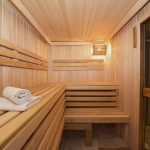
Sauna  

  • Dry or Wet, no evidence to support infrared
  • Use a Dry Sauna at 80-90 degree C or Wet sauna at 60 degree C
  • 2-4 times week
  • 5-25 mins (build time in sauna as your body tolerates the heat)

Hot Water Immersion (spa or bath)

  • 40 degrees C
  • 2-4 times week
  • 10-15 mins

Performance

Benefits

  • Ability to tolerate racing in the heat.  Increase in blood volume which increases ability to sweat therefore cool yourself in hot conditions. Your resting core and exercise core temperature is reduced. Therefore, your ability to cope with hot environments is improved.
  • Physiological adaptations.  Increased plasma volume, increased red blood cells and increased oxygen carrying capacity.

Protocols

Natural Heat Acclimatization

This is when you can go to the hot environment prior to racing.  Takes 2-3 weeks to naturally adapt to the hotter environment.

Passive Heat Acclimation

Used prior to racing in hot environments and to gain cardiovascular gains. This protocol places extra stress on the body so needs to be managed alongside training stress.

  • Use a Dry Sauna at 80-90 degree C or Wet sauna at 60 degree C
  • 9 days in a row
  • Done immediately post exercise. Within 5-20mins of finishing your bike session.
  • If unable to get immediately into a sauna do a 10min primer in the sauna, then 5mins out then back into the sauna.
  • Spend 20-30mins in the Sauna. (Build time in sauna as your body tolerates the heat)
  • While in the sauna don’t hydrate, ideally take your protein recovery as solid food or sip slowly on your recovery shake.
  • Rehydrate slowly over the next 2-3hrs (this dehydrated state is required to signal the kidneys to produce more EPO and get the cardiovascular benefits of heat training)
Healthy Travel

Before

Be prepared and pack early.

Don’t Forget

  1. Your own medications, multivitamins, probiotics, Imodium and cold medicine
  2. Hand sanitizer and wipes
  3. Eye mask, ear plugs and travel pillow
  4. Face masks
  5. Foam roller
  6. Compression tights
  7. Plug adaptor
  8. Snacks
  9. Pack essentials that you will have trouble replacing if lost in your carryon – shoes, helmet and one set of kit

Sleep

  1. “Bank “some sleep hours. Get in some extra sleep 2-4 days prior to travel
  2. Slowly move your sleep schedule by 30 to 60 minutes a night in the week leading up to travel to adjust to your new time zone.

During Travel

Sleep

  1. When you’re on the plane, adjust your watch to the time of your destination and start sleeping and eating according to the new time zone right away.
  2. Use tools to improve sleep quality like an eye mask and ear plugs or headphones.

Hydration

The dry air that circulates in a plane cabin maintains a super-low humidity of about 15 to 20%, which causes your mucus membranes and skin to dry out. On a 10-hour flight, you can lose up to two litres of water, making long-distance air travel very dehydrating. To mitigate headaches and fatigue stay hydrated while traveling.

Drink 1 glass of water per hour of travel (do not limit fluid intake to prevent using the restroom). Avoid diuretics including caffeine or high sugar drinks while traveling.

Mobilization

When flying your risk for developing blood clots increases 2-4 times.

To prevent blood clots from forming in your legs you should:

  1. Wear compression stockings to promote blood flow
  2. Get up and walk at least every 2 hours
  3. Perform light exercises like ankle pumps, marches, knee kicks, and glute squeezes at least every half hour.

Hygiene

  1. Avoid touching surfaces
  2. Wipe down tray
  3. Regularly hand sanitise – particularly before meals
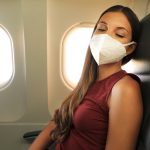
  4. Wear a mask

After Arrival

How to minimise jet lag:

  1. Adjust to the local sleep/wake patterns as soon as possible after arrival.
  2. A short sleep before noon may be OK if arriving in the early morning after an eastward flight. But try to avoid extra naps during the daytime! Prolonged daytime napping (more than 1 hour) in the new location should be avoided for a few days, as this may act to keep you with your old rhythms.
  3. Utilize melatonin supplements of 0.5 to 5 milligrams two hours before bedtime to aid in falling asleep.
  4. Utilize caffeine to help with daytime drowsiness
  5. Expose yourself to day light -. The sun’s light tells your body it’s time to be awake. If you can, get outside in the sunlight during prime daylight hours once you get to your location. This can help reset your body clock and reduce symptoms of jet lag.
  6. Finally, consider meal composition: protein-rich meals may help with alertness while carbohydrate-rich meals may help induce drowsiness

Time Shifter App

https://www.timeshifter.com/

This app helps to speed up our circadian clock’s adaptation to a new time zone therefore decreasing jet lag. It tells you what to do in relation to light exposure, melatonin supplementation and caffeine intake. It takes the guess work out.

You will need a supply of melatonin which in NZ requires a doctors prescription. The app starts giving advice a few days prior to your travel.

1 2