
Overview
This protocol explains the ride fueling system used across ESP × miki coaching.
The aim is to build simple, repeatable fueling habits that support session quality, adaptation, recovery, and long-term athlete health.
Ride fueling is not only about total daily energy intake. A healthy athlete also needs fuel available at the right time: before, during, and after training.
Most fueling mistakes happen when athletes choose products first instead of matching fueling to the session, conditions, and desired training outcome.
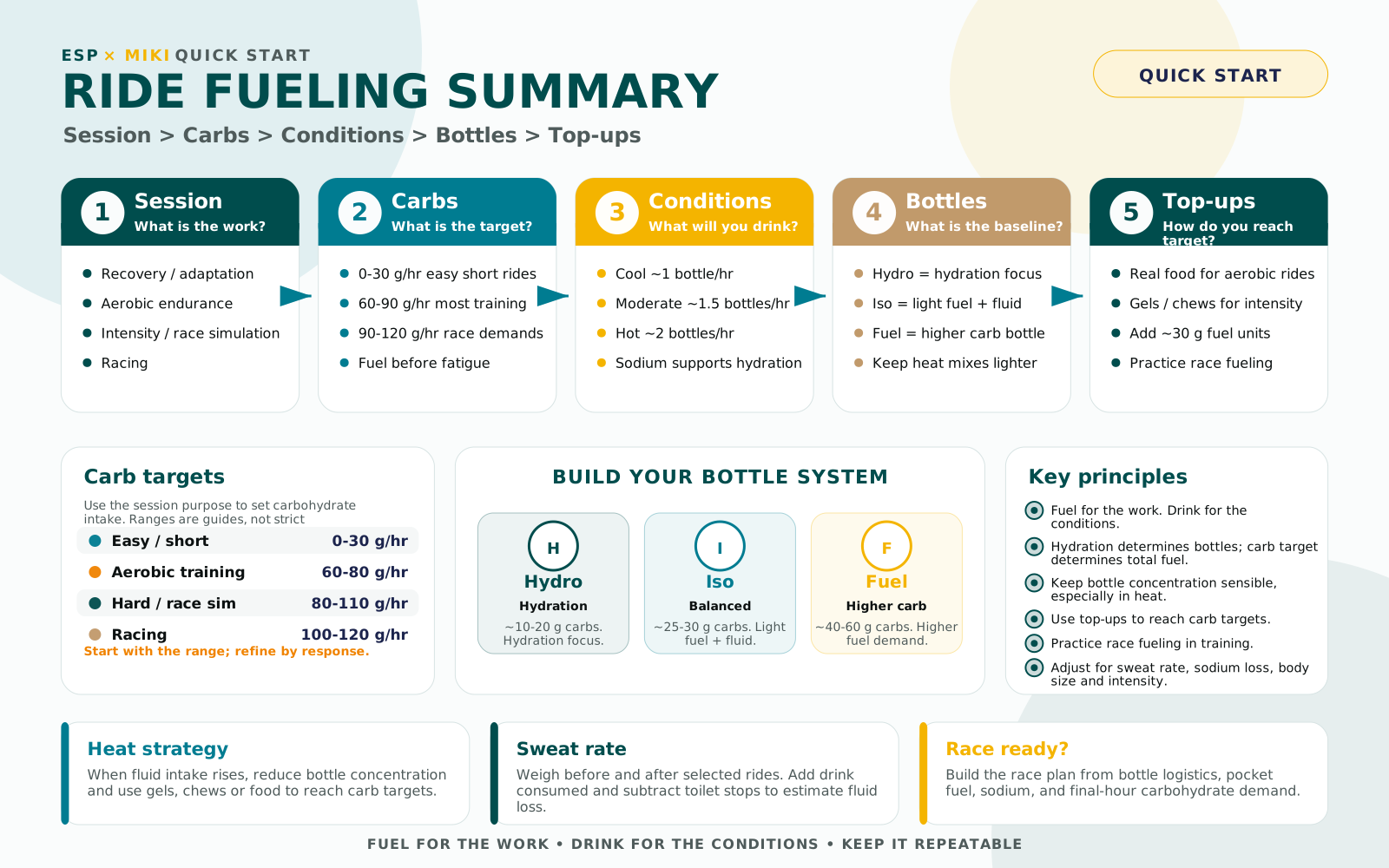
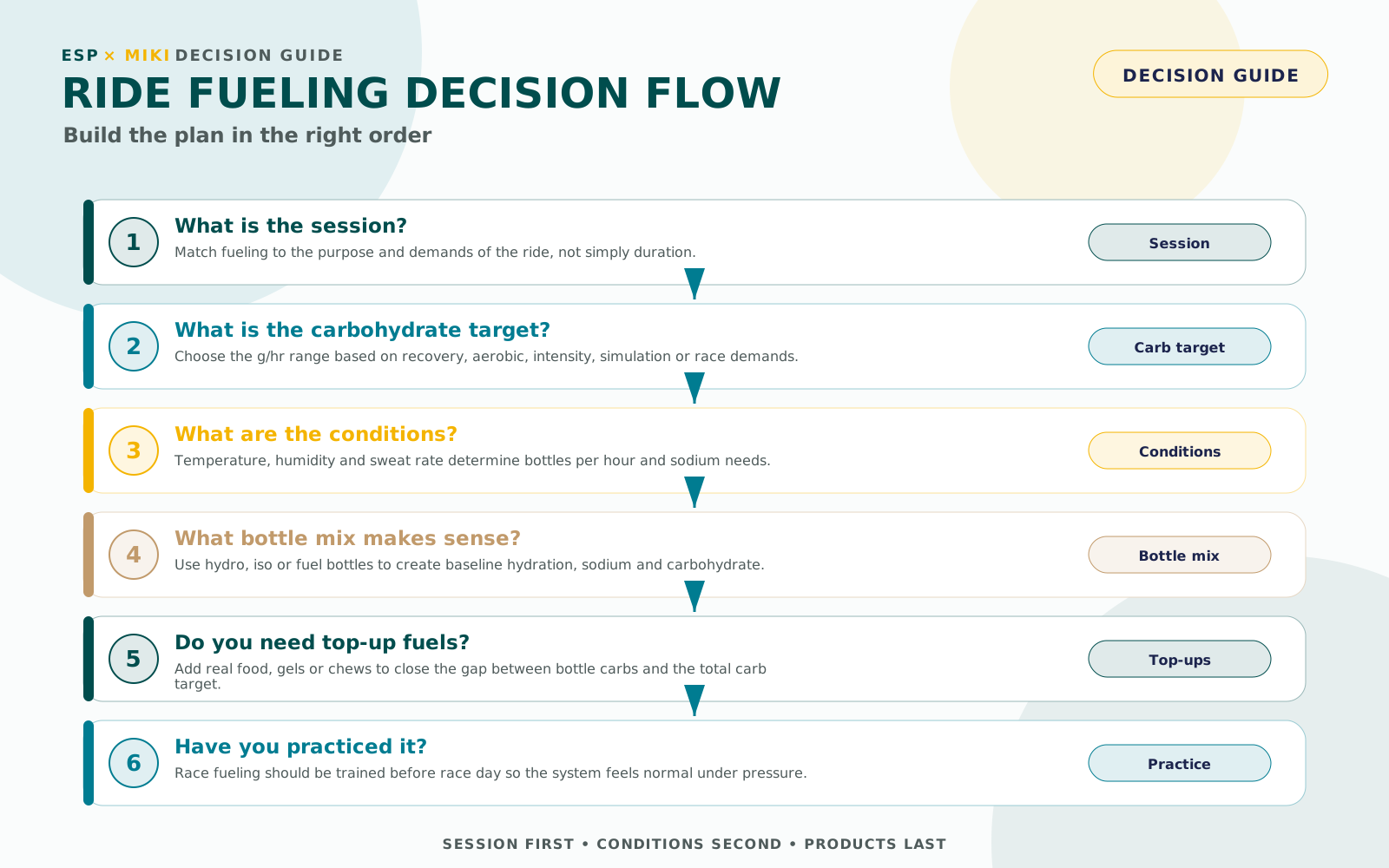
The sequence should always be:
Session purpose → Carb target
Conditions → Hydration + sodium
Carb system → Choose product type
Bottle mix → Set baseline fuel and fluid
Top-up fuels → Reach the target
Post-ride recovery → Adapt and prepare for the next session
Fuel the work. Drink for the conditions. Recover the athlete.
Who This Guide Is For
This is an athlete-facing protocol, supported by coaches, parents, support staff, and team environments where relevant.
Riders should understand the simple routine and why it matters. Coaches help individualise the details around session goals, training load, body size, gut tolerance, conditions, and recovery demands.
- The rider should know the basic before-during-after fueling sequence.
- The coach helps match fueling to session purpose, training phase, health, and adaptation goals.
- The detail sections provide the numbers and tools needed to individualise the plan when required.
Protocol Guidance
The values shown throughout this protocol — including carbohydrate intake, fluid intake, and sodium targets — are guiding ranges, not strict prescriptions.
These ranges are based on current endurance sport research, published sports nutrition guidance, and practical coaching experience across athletes and race environments.
Individual needs vary depending on body size, sweat rate, sodium loss, power output, environmental conditions, and race intensity.
The purpose of this protocol is to provide a clear starting framework that athletes can apply consistently and refine over time.
Why Fuel Timing Matters
Total daily energy intake matters, but timing also matters. The body adapts best when the athlete has enough energy and carbohydrate availability to complete the planned work and recover from it.
For key sessions, long rides, intensity, gym-plus-bike days, race simulations, and heavy training blocks, fuel should be planned before, during, and after the work.
Some sessions may intentionally use lower carbohydrate availability when guided by a coach, but this should not become accidental underfueling or chronic low energy availability.
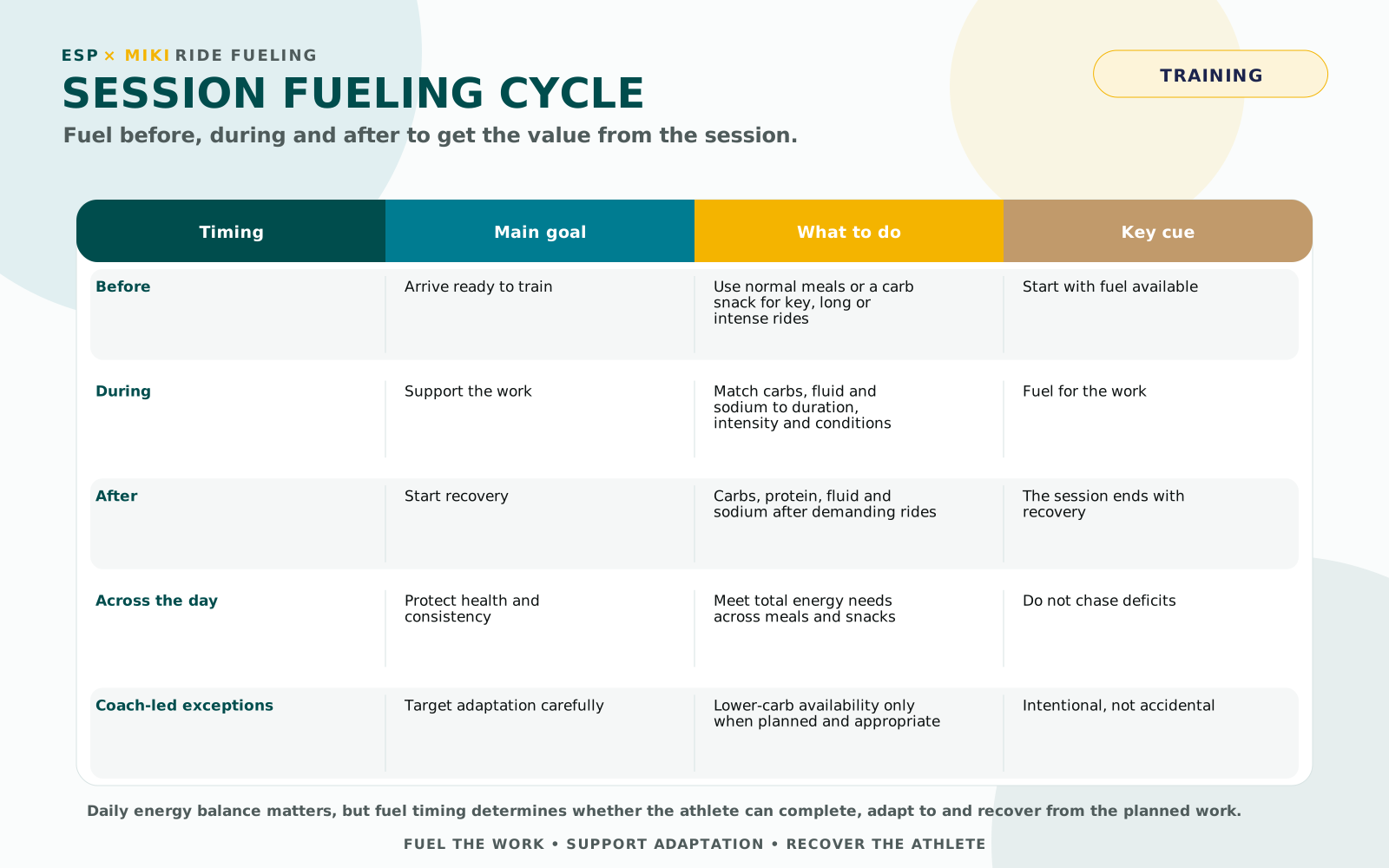
- Before: arrive with enough fuel to complete the planned work.
- During: support the work, hydration, gut comfort, and session quality.
- After: replace energy, carbohydrate, fluid and protein so adaptation can occur.
- Across the day: maintain enough total energy for health, hormones, immune function, mood, and consistency.
Fueling Rules
- Fuel for the work.
- Drink for the conditions.
- Keep bottle concentration sensible.
- Use top-ups to reach carb targets.
- Practice race fueling in training.
Fueling Priorities in Training
Ride fueling is about matching intake to the purpose of the session. Not every ride needs race-level fueling, but key sessions should not be compromised by accidental underfueling.
Fueling decision priorities
| Priority | Focus | Why it matters |
|---|---|---|
| 1 | Health and energy availability | Chronic underfueling increases risk and reduces consistency. |
| 2 | Session quality | Fuel should support the work the session is designed to deliver. |
| 3 | Adaptation and recovery | The training response depends on doing the work and recovering from it. |
| 4 | Practice and confidence | Training is where race fueling systems become automatic. |
Training reality
- Easy rides may need lighter fueling, especially if normal meals are close to the ride.
- Intensity, long rides, race simulations and back-to-back days require more deliberate fueling.
- Lower-carbohydrate availability should be intentional and coach-led, not accidental.
How to Use This Guide
Follow the steps in order.
How to Use This Guide Table
| Step | What to do | Why |
|---|---|---|
| 1 | Choose the training type | Determines carbohydrate target |
| 2 | Check the conditions | Determines fluid and sodium needs |
| 3 | Choose the carb system | Helps choose product type |
| 4 | Mix bottles | Bottles provide baseline hydration and fuel |
| 5 | Add top-up fuels | Reach higher carbohydrate targets |
Fueling Quick Start
Use this simple example to understand how the fueling framework works in practice.
The Fueling Plan Builder later in this protocol shows how to build your own ride fueling plan step by step.
The full protocol explains each step in more detail.
Before: start with enough fuel for the work.
During: match carbohydrate, fluid and sodium to session demand and conditions.
After: recover deliberately so the session can create adaptation.
Quick Start Fueling Table
| Conditions | Bottles/hr | Bottle carbs | Baseline carbs | Top-up needed to reach 90 g/hr |
|---|---|---|---|---|
| Cool | 1 | ~40 g | ~40 g | ~50 g |
| Moderate | 1.5 | ~40 g | ~60 g | ~30 g |
| Hot | 2 | ~30 g | ~60 g | ~30 g |
Visual Quick Start
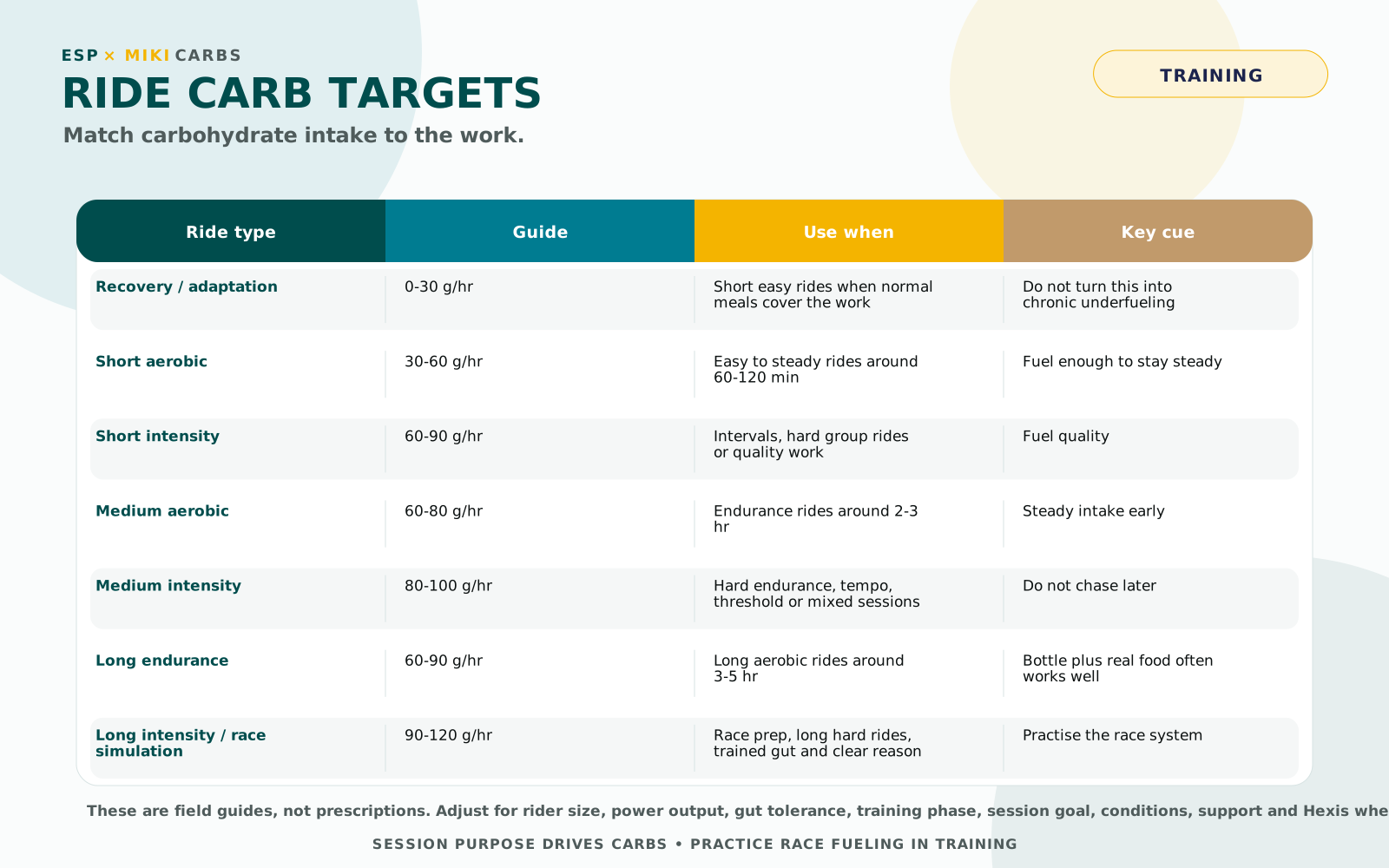
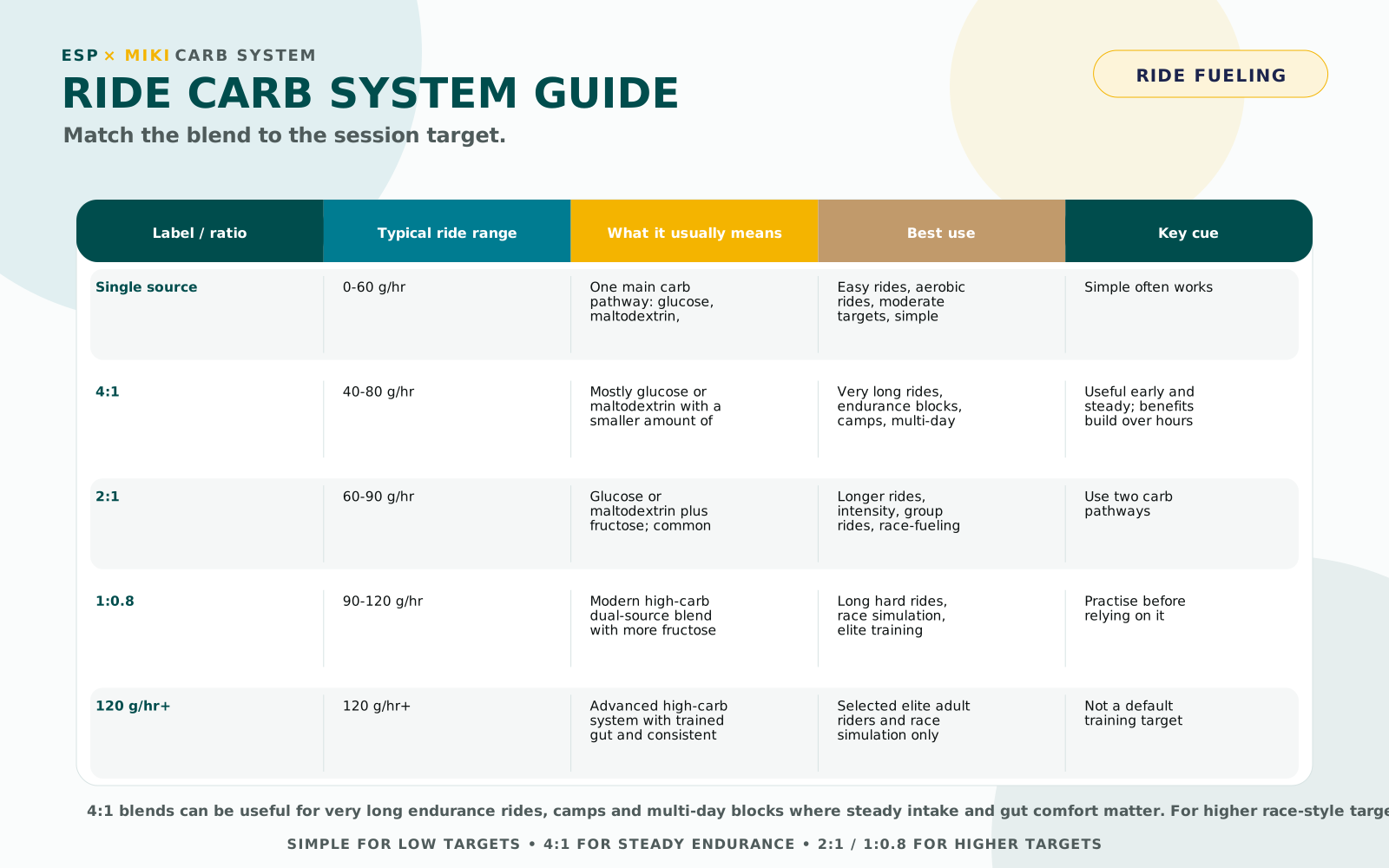
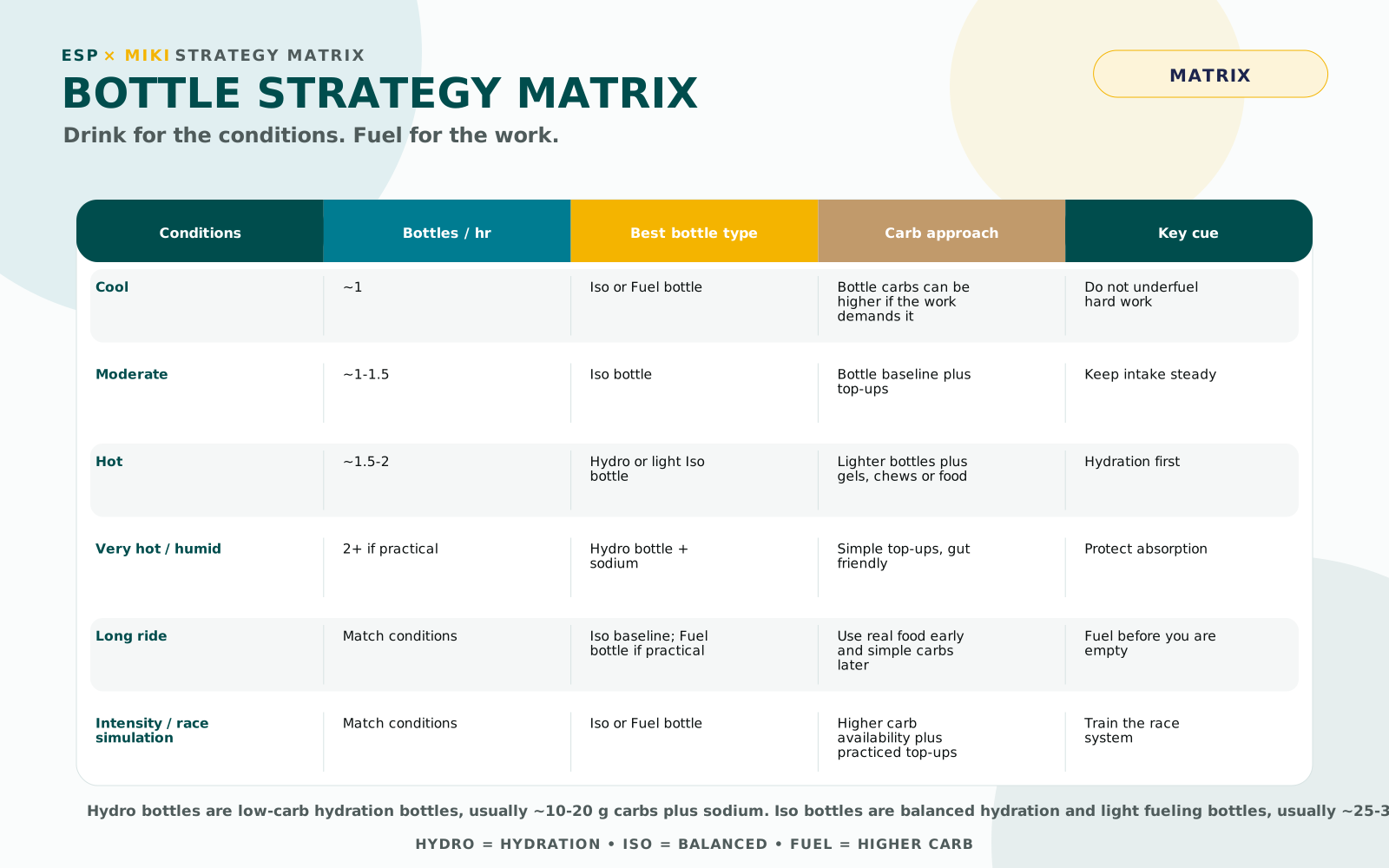
Start with the visuals. They give the field guide; the detailed tables below help individualise the plan.
Pre-Ride Fueling
Pre-ride fueling helps the athlete start the session with enough fuel available to complete the planned work well.
Not every ride needs a large pre-ride meal, but key rides, intensity sessions, long rides, race simulations, early rides, and heavy training blocks should not start from an empty tank unless that is a deliberate coach-led strategy.
Pre-Ride Fueling Guide
| Ride type | Pre-ride approach | Key cue |
|---|---|---|
| Easy short ride | Normal meal pattern may be enough; small snack if hungry or riding early | Do not overthink it |
| Endurance ride | Carb-containing meal or snack before; start stable, not empty | Start steady |
| Intensity / intervals | Prioritise carbohydrate before the ride; top up if needed | Fuel quality |
| Long ride | Eat before the ride and start fueling early | Do not chase later |
| Early ride | Small carb snack before, then fuel early on the bike | Start, then build |
Simple pre-ride snack options
- Banana
- Toast with honey or jam
- Rice cake
- Small low-fibre bar
- Carb drink
- Cereal or oats if there is more time
Coach-led lower-fuel sessions
Some sessions may use lower carbohydrate availability for a specific adaptation goal. This should be planned, monitored and balanced against athlete health, training quality, recovery, and the wider training block.
- Use intentionally, not by accident.
- Avoid stacking low-fuel sessions into heavy training blocks without a clear reason.
- Do not use lower-fuel approaches when the session goal is high quality intensity or race simulation.
Step 1: Fuel for the Work
Carbohydrate intake should reflect the work being done. Match fueling to the purpose and demands of the session, not simply the duration of the ride.
Carbohydrate Target Table
| Training type | Typical duration | Carbs / hr |
|---|---|---|
| Recovery / adaptation | <90 min | 0–30 g |
| Short aerobic | 60–120 min | 30–60 g |
| Short intensity | 60–120 min | 60–90 g |
| Medium aerobic | 2–3 hr | 60–80 g |
| Medium intensity | 2–3 hr | 80–100 g |
| Long endurance | 3–5 hr | 60–90 g |
| Long intensity / race simulation | 3–5 hr | 90–120 g |
Real food during aerobic rides
During longer aerobic rides many athletes prefer combining bottle fueling with simple real foods. This often works well because aerobic intensity makes solid food easier to digest.
- Bananas
- Rice cakes
- Simple bars
- Sandwiches
- Simple baked foods
Applied coaching notes
- Larger riders and riders producing higher absolute power usually sit toward the upper end of the range.
- Harder and longer sessions require more carbohydrate; easier aerobic rides may require less.
- Waiting until fatigue appears usually means fueling too late.
Step 2: Drink for the Conditions
Hydration needs depend mainly on temperature, sweat rate, and exercise intensity. Sodium should be considered together with fluid intake, not in isolation.
Hydration by Conditions Table
| Conditions | Temp | Bottles / hr (500 ml) | Sodium target / hr | Approx sodium / bottle |
|---|---|---|---|---|
| Cool | <20°C | 1 | 300–500 mg | 300–500 mg |
| Moderate | 20–25°C | 1.5 | 500–700 mg | 350–450 mg |
| Hot | >25°C | 2 | 700–1400 mg | 350–700 mg |
Hydration notes
- Sweat rate varies significantly between athletes.
- Heavy sweaters often sit toward the upper end of the fluid range.
- Salty sweaters often sit toward the upper end of the sodium range.
- Humidity can increase sweat rate even when temperatures are only moderate.
A note on sodium during exercise
There is some debate within sports nutrition literature about how much sodium supplementation is required during exercise.
Sodium alone is not a guaranteed solution for cramping, and muscle cramps during exercise are influenced by many factors including fatigue, neuromuscular load, hydration status, and pacing.
However, in practical coaching and endurance racing environments, sodium still matters because it supports fluid absorption, fluid retention, thirst, and overall drink effectiveness.
For this reason, this protocol generally favours bottles that include electrolytes and a small amount of carbohydrate, rather than relying on plain water during longer rides.
Step 3: Choose Your Carb System
Choose the carbohydrate system based on how much carbohydrate you are trying to deliver per hour.
Carbohydrate System Table
| Carb intake | System type | Typical composition | Why it works |
|---|---|---|---|
| ≤60 g/hr | Single transport | maltodextrin, glucose, or simple real foods | Simple system, easy on the gut |
| 60–90 g/hr | Dual transport | glucose/maltodextrin + fructose (~2:1) | Uses multiple intestinal transporters |
| 90–120 g/hr | High dual transport | glucose/maltodextrin + fructose (~1:0.8) | Maximises carbohydrate absorption |
How this fits with product labels
| Ingredient | What it usually indicates |
|---|---|
| Maltodextrin | Main glucose-based carb source |
| Glucose / dextrose | Simple glucose source |
| Fructose | Second transport pathway |
| Cyclic dextrin | Lower-osmolality carbohydrate option |
| Electrolytes / sodium | Hydration support |
Practical notes
- Single carbohydrate systems work well up to roughly 60 g/hr.
- At higher intakes, dual carbohydrate systems improve absorption and tolerance.
- Most modern endurance products are already designed around these systems.
- Frequently switching products can reduce consistency and make race fueling more complex.
Step 4: Build Your Bottle Mix
Use bottles to provide baseline hydration, sodium, and carbohydrate. Bottle concentration should remain sensible, especially in the heat.
Basic bottle types
| Bottle type | Typical carbs | Use |
|---|---|---|
| Hydro bottle | 10–20 g | Hydration focused |
| Iso bottle | 25–30 g | Hydration + light fueling |
| Fuel bottle | 40–60 g | Higher carbohydrate fueling |
Bottle carbohydrate by conditions
| Conditions | Default carbs / bottle |
|---|---|
| Cool | ~40 g |
| Moderate | ~40 g |
| Hot | ~30 g |
Choosing drink mix products
Choose drink mixes that are targeted and simple for the task you need them to perform.
For most rides this means prioritising carbohydrate when fueling is required, sodium when hydration support is required, and minimal unnecessary additives.
Artificial sweeteners are not automatically a problem, but they are often not necessary in on-bike fueling products and some athletes find they reduce gut tolerance during longer rides.
Advanced low-osmolality systems
Maurten-style hydrogel systems can be useful for high-carbohydrate fueling, especially when athletes are chasing higher carb intakes with good gut tolerance.
However, Maurten drink mixes are built around a specific formulation and are not designed as high-sodium hydration products. Maurten also advises against adding extra electrolytes directly into the bottle, as this may interfere with how the hydrogel system is designed to work.
For heavy sweaters, salty sweaters, or hot conditions where sodium needs are higher, choose this type of product carefully. If an athlete is chasing 90+ g/hr in the heat, a cyclic dextrin / cluster dextrin system may be a better option for some riders, as it can offer a lower-osmolality way to push carbohydrate while allowing more flexibility with sodium strategy.
In these situations, it is usually better to think in terms of the whole fueling system — bottle concentration, sodium strategy, top-up fuels, and total fluid intake — rather than assuming one product solves everything.
- Maurten hydrogel technology
- Cyclic dextrin (cluster dextrin)
Step 5: Add Top-Up Fuels
Bottles provide baseline hydration and carbohydrate. Additional carbohydrates are often required to reach the target intake for the session.
Top-Up Fuel Guide
| Fuel type | Typical carbs | How often | Fluid needed | Osmolality / gut load | Heat tolerance | Best use |
|---|---|---|---|---|---|---|
| Real food (banana, rice cake) | 20–40 g | every 30–45 min | small sips | low–moderate | moderate | aerobic endurance rides |
| Bars | 20–40 g | every 30–45 min | small sips | moderate | lower | endurance riding |
| Chews | 20–30 g | every 20–30 min | sip fluid | moderate | good | racing or harder riding |
| Standard gels | 20–30 g | every 20–30 min | drink with fluid | higher | moderate | racing / efforts |
| Isotonic gels | 20–25 g | every 20–30 min | optional | moderate | good | racing |
| Hydrogel / cyclic systems | 20–40 g | every 20–30 min | optional | lower | good | high-carb fueling |
Heat effect
- Fluid intake increases
- Bottle carbohydrate concentration should decrease
- Gels and chews often provide the additional carbohydrates needed
High-carbohydrate strategies
When carbohydrate intake rises toward 90–120 g/hr, riders often use multiple gels or chews per hour.
What ~30 g of carbohydrate looks like
| Food / fuel | Typical portion | Approx carbs |
|---|---|---|
| Gel | 1 standard gel | ~25–30 g |
| Chews | 1 pack | ~25–30 g |
| Sports drink | 500 ml bottle (~40 g mix) | ~30–40 g |
| Banana | 1 medium | ~25–30 g |
| Energy bar | 1 bar | ~30–40 g |
| Rice cake | 1 serving | ~25–30 g |
Fueling Plan Builder
Use this to quickly build a fueling plan.
Step 1 — Choose your carb target
| Training type | Target carbs/hr |
|---|---|
| Aerobic training | 60–80 g |
| Hard training | 80–100 g |
| Race simulation | 90–110 g |
| Racing | 100–120 g |
Step 2 — Set your bottle baseline
| Conditions | Bottles/hr | Carbs per bottle | Baseline carbs |
|---|---|---|---|
| Cool | 1 | ~40 g | ~40 g |
| Moderate | 1.5 | ~40 g | ~60 g |
| Hot | 2 | ~30 g | ~60 g |
Step 3 — Add ~30 g fuel units
| Fuel | Portion | Carbs |
|---|---|---|
| Gel | 1 | ~25–30 g |
| Chews | 1 pack | ~25–30 g |
| Banana | 1 medium | ~25–30 g |
| Rice cake | 1 | ~25–30 g |
| Energy bar | 1 | ~30–40 g |
Putting It Together
Hydration determines how many bottles you drink per hour. Bottles provide baseline carbohydrates and sodium. Foods, gels, or chews are used to reach the carbohydrate target for the session.
Baseline bottles + top-up requirements
| Target carbs/hr | Cool baseline (1 bottle) | Top-up needed | Moderate baseline (1.5 bottles) | Top-up needed | Hot baseline (2 bottles) | Top-up needed |
|---|---|---|---|---|---|---|
| 60 g | 40 g | ~20 g | 60 g | none | 60 g | none |
| 80 g | 40 g | ~40 g | 60 g | ~20 g | 60 g | ~20 g |
| 100 g | 40 g | ~60 g | 60 g | ~40 g | 60 g | ~40 g |
| 120 g | 40 g | ~80 g | 60 g | ~60 g | 60 g | ~60 g |
Iso bottle option for aerobic rides
For many aerobic rides an iso-style bottle (~30 g carbohydrate per 500 ml) works very well. This keeps the drink lighter for hydration while most carbohydrate comes from real foods.
- Iso bottle + banana + small bar
- Iso bottle + rice cakes
- Iso bottle + sandwich
Heat strategy
When drinking around 1 L per hour or more, bottles should prioritise hydration. Keep carbohydrate per bottle lower and use gels or chews if you need to raise total carbohydrate intake.
Exercise in hot conditions places greater strain on the gastrointestinal system. Reduced blood flow to the gut during intense exercise and heat stress can make highly concentrated drinks harder to tolerate.
Post-Ride Recovery
Post-ride fueling helps turn the session into adaptation. The goal is to replace what was used, support muscle repair, restore carbohydrate availability, and reduce unnecessary stress before the next training demand.
The harder, longer, hotter, or more glycogen-depleting the session, the more important early recovery fueling becomes.
Post-Ride Recovery Priorities
| Priority | What to do | Why |
|---|---|---|
| Carbohydrate | Replace what the ride used, especially after long or intense sessions | Restores glycogen and supports the next session |
| Protein | Include a quality protein source after demanding rides | Supports repair and adaptation |
| Fluid + sodium | Replace sweat losses gradually, especially after hot or high-sweat rides | Supports rehydration and recovery |
| Timing | Do not wait too long after key sessions if another session or training day follows | Reduces unnecessary recovery delay |
Simple recovery options
- Normal meal with carbohydrate and protein
- Recovery shake plus carbohydrate food
- Chocolate milk plus additional carbohydrate if needed
- Rice, pasta, potatoes or bread plus eggs, chicken, dairy, tofu or other protein source
- Electrolyte drink with meals after hot rides
When early recovery matters most
- Long rides
- Intensity sessions
- Race simulations
- Hot or high-sweat rides
- Two-session days
- Heavy training blocks
- When appetite is low but recovery needs are high
Example Fueling Setups
These examples show how the system works in practice.
Example Fueling Setups Table
| Scenario | Example setup | Approx carbs / hr |
|---|---|---|
| Aerobic ride | 1 iso bottle (~30 g) + banana + small bar | ~75–85 g |
| Long endurance ride | 1 iso bottle + rice cakes + banana | ~70–90 g |
| Intensity session | 1.5 bottles (~40 g each) + gel | ~80–95 g |
| Hot race | 2 hydro / iso bottles (~30 g each) + gel or chews | ~80–100 g |
| Cool race | fuel bottle + iso bottle + gel | ~90–110 g |
Race Fueling Practice & Bottle Strategy
Racing adds logistics. Riders often have limited bottle choices from feed zones, so bottle selection becomes part of race strategy.
Race Bottle Types
| Bottle type | Typical contents | Use |
|---|---|---|
| Hydro bottle | electrolytes + ~10–20 g carbs | hydration and light fueling |
| Iso bottle | ~25–30 g carbs + electrolytes | hydration + light fueling |
| Fuel bottle | ~40–60 g carbs + sodium | higher carbohydrate intake |
| Cooling bottle | water / cooling use | cooling rather than drinking |
Typical race setup
- Hydro bottle + fuel bottle
- Iso bottle + fuel bottle + gels as top-ups
- More hydro / iso bottles in hotter races
Team logistics
- Teams often mark bottles so riders can identify them quickly.
- Example: no mark → hydro bottle, X → fuel bottle, XX → higher carb bottle.
- Practice race bottle combinations in training.
Race bottle decision guide
| Situation | Best bottle |
|---|---|
| Very thirsty / very hot | Hydro bottle |
| Balanced hydration + light fueling | Iso bottle |
| Fuel needed / decisive phase | Fuel bottle |
How to Read Your Mix
Before using a mix, read the label properly.
What to check on the label
| Label item | Why it matters |
|---|---|
| Carbohydrate per serving | Determines fueling contribution |
| Water volume | Determines drink concentration |
| Sodium per serving | Supports hydration and fluid absorption |
| Carb sources | Indicates single vs dual transport carbs |
Typical example label
| Per serving | Value |
|---|---|
| Carbohydrates | 40 g |
| Sodium | 400 mg |
| Water volume | 500 ml |
Common mixing mistakes
- Adding extra scoops to push carbs higher
- Ignoring sodium content
- Reducing water volume and accidentally over-concentrating the bottle
Advanced Fueling Techniques
Advanced fueling techniques are optional refinements. They are useful only after the basics are consistent: enough energy, appropriate carbohydrate, fluid, sodium, gut comfort, and recovery.
Use advanced strategies to support specific sessions or race preparation, not to replace the foundation.
These strategies refine the basic fueling system and are most useful for racing, long rides, high-carbohydrate fueling, heat management, and key efforts late in races.
Fueling periodisation within a ride
Fueling does not have to remain constant during a ride or race. Many athletes benefit from increasing carbohydrate intake before key efforts or during the decisive phase.
| Phase of ride | Example carb intake |
|---|---|
| Early endurance phase | ~60 g/hr |
| Middle race phase | ~80 g/hr |
| Final phase / race finale | ~100–120 g/hr |
Practical ways to periodise fueling
- Change bottle types across the ride
- Use gels before key climbs or final race phases
- Carry pocket fuels to control intake when bottle options are limited
Final hour fueling strategy
The final phase of races often requires higher carbohydrate availability.
| Race phase | Carb intake |
|---|---|
| Early race | ~60–80 g/hr |
| Mid race | ~80–90 g/hr |
| Final hour | ~100–120 g/hr |
Maurten 320 and high-carb bottles
- Maurten Drink Mix 320 provides roughly ~80 g carbohydrate per bottle.
- These bottles are usually used strategically, not continuously.
- They require adequate hydration and should be practiced in training.
Heat fueling adjustments
- Hot races often require more fluid, lighter bottles, and more reliance on gels or chews.
- Cool race → fuel bottle + iso bottle
- Hot race → hydro / iso bottles + gels
Gut training
Athletes aiming for higher carbohydrate intakes (typically 90–120 g/hr) should gradually train the gut to tolerate larger carbohydrate loads.
This usually involves progressively increasing carbohydrate intake during training sessions and practicing race fueling strategies in key workouts.
Over time the digestive system adapts, allowing athletes to tolerate higher carbohydrate intake with fewer gastrointestinal issues.
- Gradually increase carbohydrate intake in training
- Practice race fueling strategies in key sessions
- Repeat similar fueling patterns regularly
Key advanced fueling principles
- Fuel ahead of the work
- Increase carbs before decisive efforts
- Use pocket fuels for flexibility
- Reduce bottle concentration in heat
- Practice race fueling in training
Athlete Variation
The ranges in this guide exist because athletes differ.
- Higher fluid needs: athletes who sweat heavily, train in hot conditions, or produce higher absolute power often need to sit toward the upper end of the fluid ranges.
- Higher sodium needs: athletes with salt marks on kit, white residue on helmet straps, stinging sweat in the eyes, or cramping late in long rides often sit toward the upper end of the sodium ranges.
- Higher carbohydrate needs: larger riders and athletes producing higher power outputs usually sit toward the upper end of the carbohydrate ranges.
- Periodic sweat testing can help estimate sweat rate and sodium needs more accurately.
Estimating your sweat rate
Athletes can estimate their sweat rate during training using a simple test:
1) Weigh yourself before a ride
2) Record how much fluid you drink during the session
3) Record any toilet stops during the ride
4) Weigh yourself again immediately after the ride
The change in body weight provides an estimate of fluid lost through sweat.
- Add on any drink you had during the ride (1 ml ≈ 1 g).
- Subtract off any toilet stops during the ride.
- Example: 800 g weight loss + 500 ml drink − 0 toilet loss = ~1.3 L total sweat loss.
- Sweat rate is not fixed and will vary with temperature, humidity, intensity, clothing, and physiology.
- Repeat this test in different conditions and at different intensities to build a clearer picture of your hydration needs.
- Heat training and acclimation may increase sweat rate over time as the body becomes more efficient at cooling itself.
| Measurement | Example |
|---|---|
| Pre-ride weight | 70.0 kg |
| Post-ride weight | 69.2 kg |
| Weight loss | 0.8 kg (~800 ml sweat) |
HEXIS Guidance
Many high performance athletes within ESP × miki use HEXIS to guide daily fueling.
HEXIS provides personalised carbohydrate recommendations based on the planned workout or race, duration and intensity, body mass and physiology, power output and training load, and glycogen availability and recovery needs.
This protocol provides a practical fueling framework, while HEXIS may refine the exact carbohydrate amount required for a specific session.
Common Mistakes
These are the most common fueling errors we see.
- Concentrating bottles to compensate for low drinking.
- Using plain water without sodium on longer rides.
- Ignoring drink mix instructions and adding extra scoops.
- Taking too many high-carb bottles early in hot races.
- Underfueling harder sessions.
Fueling Troubleshooting
Use this section to troubleshoot the most common fueling problems.
Fueling Troubleshooting Table
| Problem | Likely cause | Fix |
|---|---|---|
| Bonking / sudden energy drop | Too little carbohydrate | Take 30–60 g fast carbs immediately |
| Bloating | Bottle too concentrated | Reduce concentration, sip steadily |
| Stomach sloshing | Too much fluid without enough sodium, or too strong overall gut load | Add sodium, reduce concentration, steady intake |
| GI distress | Too many strong bottles / too many gels without fluid | Switch to lighter bottles, take fluid with gels |
| Cramping late in long rides | Sodium loss / dehydration / underfueling | Increase sodium, fluid, and carbohydrate intake |
Review and Refine Your Fueling Strategy
Review fueling after key sessions, long rides, hot rides, and race simulations. The best fueling strategies are built over time through review, not guessed once in advance.
What to review
- Did you start the ride with enough fuel available?
- Was the carbohydrate target appropriate for the work?
- Did hydration and sodium match the conditions?
- Was gut comfort good?
- Did you recover well after the ride?
- Did the session deliver the intended training quality?
Applying the learning
- Adjust carbohydrate targets if needed.
- Refine bottle strength and sodium strategy.
- Improve pre-ride snack timing.
- Simplify the system if execution was inconsistent.
- Practice race-fueling patterns during training before race day.
Fueling Glossary
Fueling Glossary Table
| Term | Meaning |
|---|---|
| Bidon | Cycling term for bottle |
| Hydro bottle | Low-carb hydration bottle (~10–20 g) |
| Iso bottle | Light carb bottle (~25–30 g) |
| Fuel bottle | Higher carbohydrate bottle (~40–60 g) |
| Hydrogel | Carbohydrate delivery system used in Maurten |
| Dual transport carbs | Glucose + fructose system |
| Osmolality | Concentration affecting gastric emptying and absorption |
| Cyclic dextrin | Lower-osmolality carbohydrate option |
| Salty sweater | Athlete with high sodium loss in sweat |
References
This protocol is based on current endurance fueling guidance and recent review literature on carbohydrate intake, multiple transportable carbohydrates, sodium and fluid balance, hydrogel comparisons, and gastrointestinal symptoms in endurance sport.
- AIS sports drink guidance and sports supplement framework
- Recent review work on sodium during exercise and fluid balance
- Review literature on exercise-induced gastrointestinal symptoms in endurance sport
- Hydrogel comparison research